Self-defence for women: can you learn to protect yourself after 40?
Do you need physical strength to stand up to aggression? Can you learn self-defence if you have never done a martial art before? And why might knowing how to fall properly turn out to be just as useful as mastering fighting techniques? Aikido coach Andrey Lisikhin talked to Second Breath about all this.
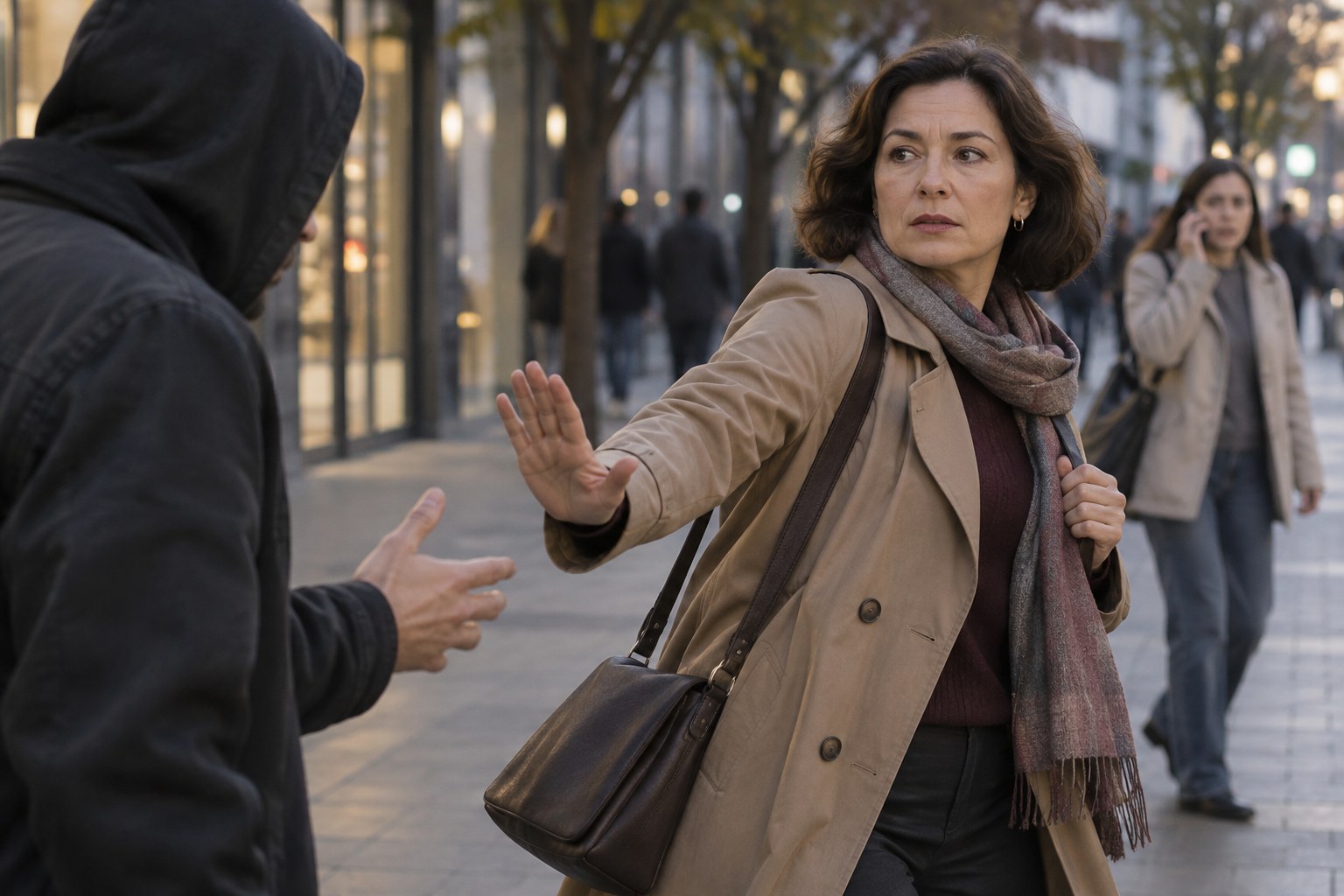 Image generated by AI
25 November is the International Day for the Elimination of Violence against Women. According to the latest global estimates from the World Health Organization, around 840 million women worldwide — almost one in three — have experienced physical and/or sexual violence from a partner or sexual violence from someone else at least once in their lives. In Kazakhstan, more than 90,000 people were held liable for domestic violence in the first nine months of 2026 alone.
Sources: World Health Organization, gov.kz portal
Self-defence skills do not solve the problem of violence in society, but they can widen a person’s options when they are physically threatened. And you don’t have to start learning them in childhood.
When training goes beyond the gym
In Andrey Lisikhin’s coaching career, there have been cases where skills learned in class helped his students in situations of real physical threat. According to the coach, one woman managed to deal with an attacker on her own, using the techniques she had learned in training.
But physical resistance is far from the right decision in every situation.
Once, for example, a woman who had survived an armed robbery came to Andrey Lisikhin for advice. Threatening her with a knife, the attacker had demanded her valuables. She did not resist, but afterwards she began to wonder whether she could have acted differently if she had known how to defend herself.
Andrey Lisikhin believes that, in the circumstances, the woman did the right thing. Staying alive and unharmed matters far more than trying to protect your belongings.
Even good physical fitness does not guarantee a successful outcome in a confrontation, especially if the attacker is armed. Being able to assess the level of threat and to recognise when not to get into a physical fight is also an important part of personal safety.
The weak against the strong
Aikido is built on the principle of using an opponent’s movement and strength against them. That is why, the coach explains, the outcome of a confrontation is not always decided by a person’s physique.
The principle of aikido is completely different. It’s using your opponent’s strength against him. The motto is: the weak defeat the strong. For that you have to work — walk into the gym and graft.
However, learning aikido does not start with spectacular throws and complex techniques at all. Beginners first have to learn to move correctly, coordinate their arms and legs, develop flexibility and gradually master the technique of falling safely.
The coach considers this last skill especially important outside martial arts too. When people fall unexpectedly, they instinctively throw their hands out in front of them, or risk hitting their head if they fall backwards. In training, students learn breakfalls and how to tuck in, so as to reduce the risk of injury.
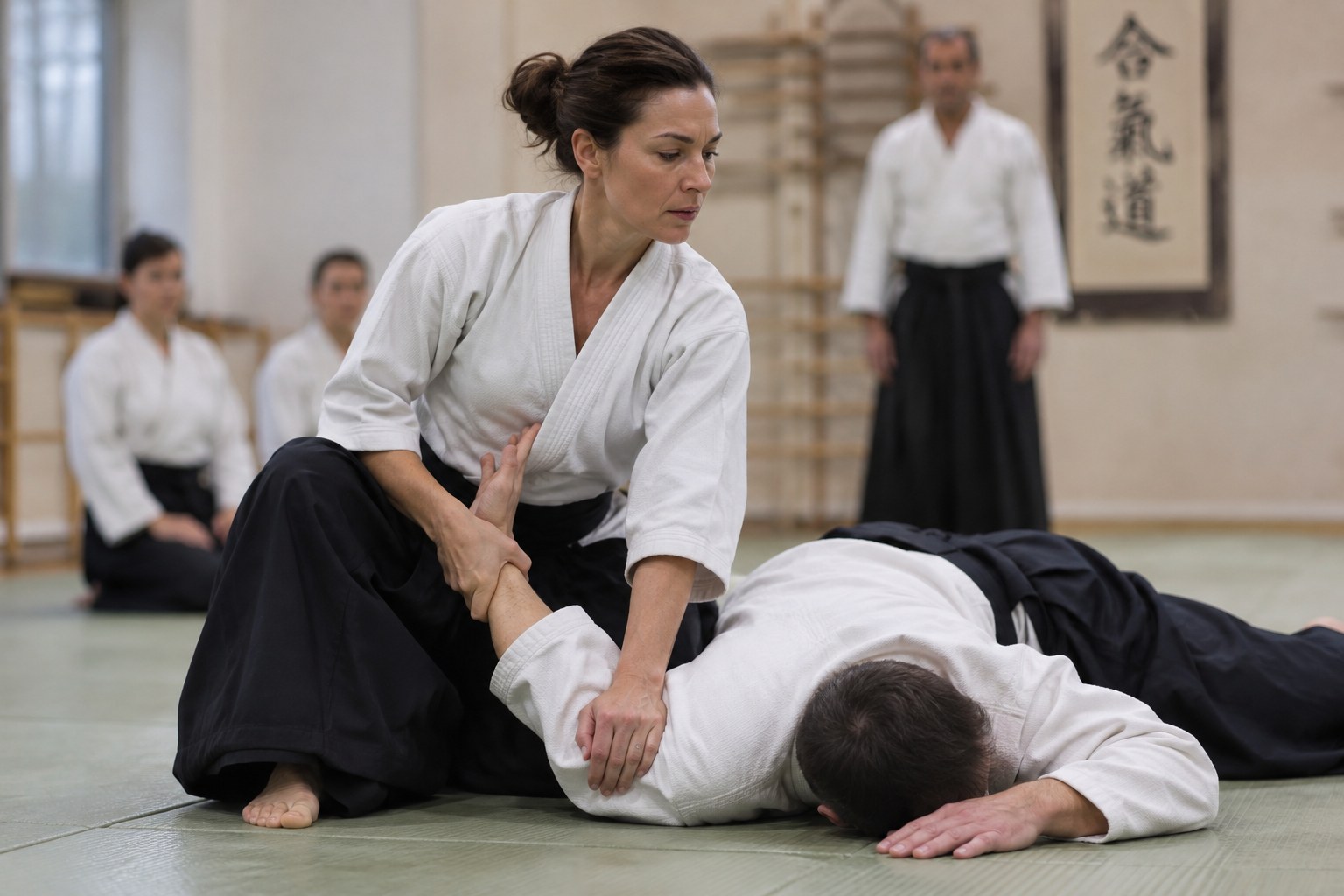
— Every session starts with basic movements. That means various ways of moving, understanding how your arms and legs should move.
Gradually, the individual elements come together into more complex movement skills.
Why the coach raises his voice
Parents who watch Andrey Lisikhin’s sessions sometimes ask why he comments on his students’ actions so loudly. From the outside, this manner can come across as excessively strict or even rude. But the coach explains it partly as a matter of psychological preparation.
A real situation of physical aggression is rarely quiet and calm. Shouting, insults, sudden movements, commotion — all of this can disorient a person, leave them confused and stop them from acting.
When people start shouting at you, it’s psychological suppression. A lot of people just freeze.
The coach’s idea is that students should gradually get used to external stimuli, learn not to be distracted by shouting and the commotion around them, and stay focused on what they are doing. In a real situation of aggression, he believes, this will help them concentrate on what matters most — their own safety.
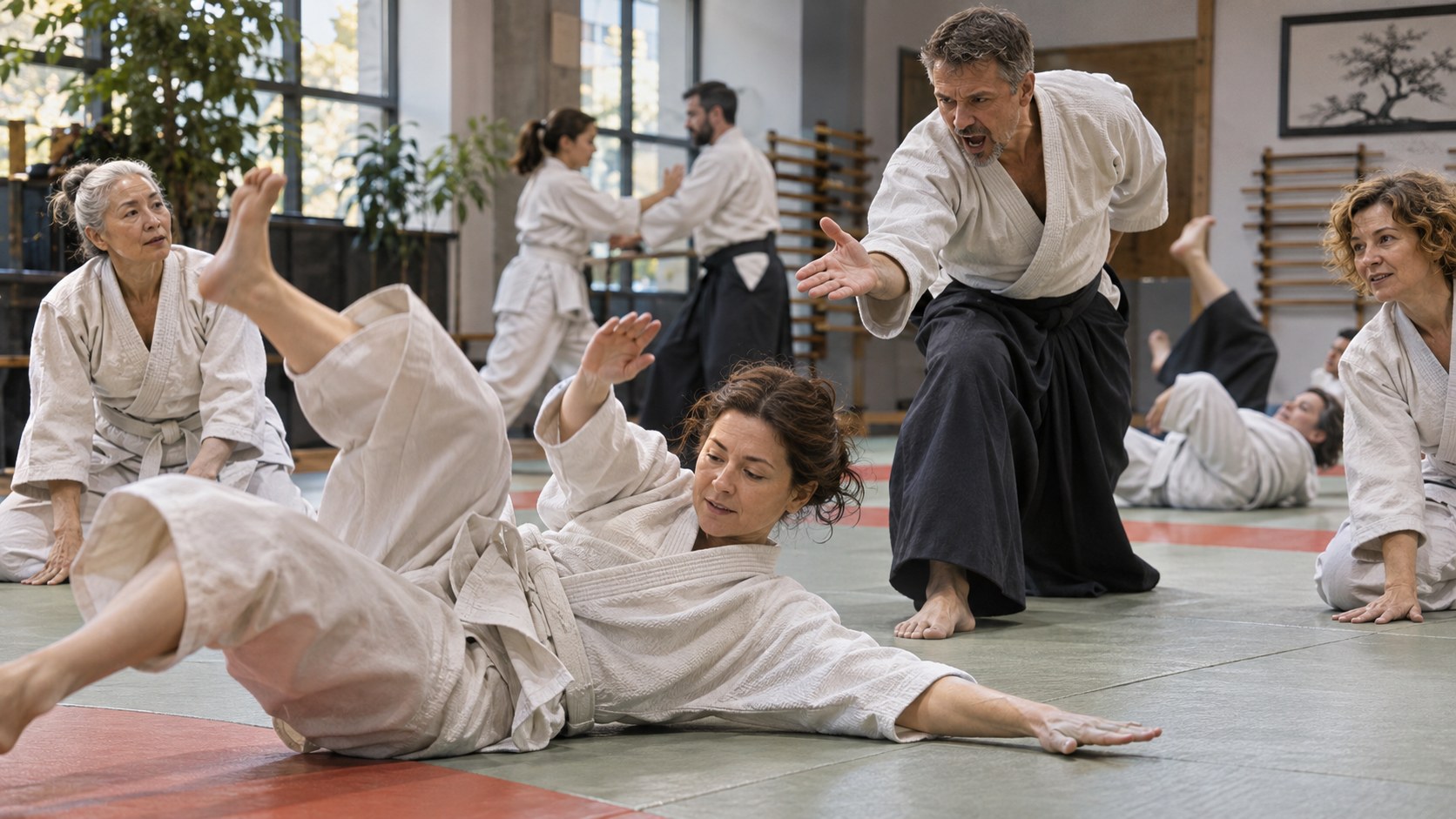
The loud comments have a practical function as well: the coach can quickly point out a mistake to a student at the other end of the gym without interrupting the rest of the group.
Repeating movements many times, in turn, gradually makes them automatic. In a stressful situation, a person may not have time to recall the sequence of actions the coach explained.
— Pure reflexes, muscle memory. The more a person trains, the more they learn.
Psychological preparation
Getting used to shouting and commotion, not freezing and staying focused on what you are doing.
Instant feedback
Pointing out a mistake to a student at the other end of the gym without interrupting everyone else.
Automaticity
Repeating movements many times turns them into reflexes and muscle memory.
At the same time, psychological preparation must not be replaced by intimidating or humiliating students, and being able to perform techniques in the gym does not guarantee they will work in a real confrontation.
Why the coach prefers mixed groups
Andrey Lisikhin has coached women of all ages. From time to time, prospective students approach him wanting to train only in women’s groups and with a female coach.
He himself prefers a different approach: men and women training together, with partners changing regularly.
In his view, working with people of different height, weight, strength and level of training gives a much more varied practical experience.
You need to keep changing partners. You need the atmosphere in the gym. Training in ideal conditions means being ready only for ideal conditions.
The coach has even held some sessions outdoors. Students could feel the difference between moving barefoot on the tatami and in shoes on an ordinary surface. Grip changes, so does freedom of movement, and so does how a fall feels psychologically.
Another important aspect of training is responsibility for your partner. A more experienced student must take a beginner’s level into account and control their own actions so as not to injure them.
At 30, 40 or 50: is it too late to start?
Andrey Lisikhin’s students have included women over 50. In his experience, the hardest stage for an adult beginner is often not learning the technique but deciding to come to the first session.
By this age, people may have certain health limitations, doubts about their physical fitness, and family and work commitments.
The most important thing is to walk into the gym. That’s what you have to push yourself through.
At Andrey Lisikhin’s school, a beginner works individually for the first month, even within a general group. The coach explains the basic movements, sets tasks and checks how they are carried out. The load and difficulty of exercises increase as the student progresses through the programme, taking their abilities into account.
According to the coach, there is no need to buy special kit before the first session. Ordinary sportswear is enough to get to know the discipline.
Decide to come
The hardest stage for an adult beginner is not the technique but the first session.
First month — one-to-one
Even within a general group, the coach explains the basic movements and checks how they are done.
The load increases gradually
Exercises get harder as you progress through the programme, taking your abilities into account.
No kit needed
Ordinary sportswear is enough to get to know the discipline.
How long does it take to learn to defend yourself?
There is no universal period after which a person is ready for a real situation of aggression.
In Andrey Lisikhin’s experience, a year and a half to two years of regular training is enough to master a number of basic practical skills. But how applicable they are will depend on the circumstances of a particular situation.
As their training experience grows, people do not simply memorise more techniques — they begin to understand the mechanics of movement better, to feel their partner and to adapt as the partner’s actions change.
The coach himself speaks of 25 years of experience, which lets him see many possible ways the same technical action can unfold.
— As in any field, you need experience.
The style of aikido that Andrey Lisikhin teaches does not involve competitions. Instead there are gradings, seminars and exchanges of experience. So you can train without having to enter sporting contests regularly, focusing on your own progress.
Who is easier to coach — children or adults?
Despite the common belief that children pick up new physical skills more easily, from a coach’s point of view adults have their own advantages.
— With children it’s emotional work. You have to explain the same thing to a child over and over, I put their foot in place myself, I put their arm in place myself. With adults, I show, I explain. If they need to, they come up and adjust something.
Children
Emotional work: explaining the same thing again and again, placing a foot and an arm. The “Mastery through play” programme.
Adults
Show, explain — if needed, they come up and adjust. A different way of presenting material and a different kind of load.
The school has a special programme for children called “Mastery through play”. The adult programme involves a different way of presenting material, different demands on physical fitness and a different kind of load.
Yet Andrey Lisikhin names lack of time as the main problem for adults. Work, family circumstances, moving house and long journeys to the gym are often what make people stop training.
Women who have to combine work with household duties face this particularly often.
Your kitchen, your washing machine, breakfasts, lunches, dinners, cleaning — they’re not going anywhere. Just walk into the gym for yourself.
You don’t have to be preparing for an attack
Aikido can also appeal to those who have no intention of learning self-defence. It is a chance to work on coordination, mobility and flexibility, learn new movement skills and keep up regular physical activity.
And being able to protect yourself does not necessarily start with mastering fighting techniques. Avoiding a dangerous confrontation, leaving the scene of a conflict and seeking help at the first safe opportunity are also ways of looking after your own safety.
It is important to remember: responsibility for violence always lies with the person who commits it, regardless of the age, physical fitness or level of training of the person who suffers it.