21 kilometres for two: a swimmer in the water, a coach in the boat
Swim Formula has released a podcast about the swim on Lake Balkhash. In the first part, Yulia Kuznetsova and her coach Danil Kazmin talk about how they prepared for the distance; in the second, about how the swim itself went.
If you can’t face watching almost two hours, here’s the first part in one sentence: the preparation took nine months, and there were plenty of twists along the way. We still recommend watching it, though. If only for the story of how, after finishing ten kilometres, Yulia thought that was it for the day, and her coach said: “Right, let’s keep swimming.”
And below is a summary of the second part.
What do you do when the race has started and your boat is nowhere to be seen? How does a swim change if you have to switch boats mid-course? And how do you explain to the person on board that you’ve been hungry for ages? If you’re preparing for your first long-distance swim, these details are especially interesting to hear from both sides.
The dialogue is based on the second part of the podcast. The remarks have been shortened and in places paraphrased. Yulia Kuznetsova is the creator of the Second Breath project.
The race has started. Where’s the boat?
D: The day before, Balkhash was almost dead calm. In the morning we go down to the shore and there are waves, the boats are rocking and banging into each other. At the briefing they told us that support crews would get into the boats in advance and meet their swimmers after the start. We had the nutrition with us and knew who to hand what to, and when. A clear plan. Until you have to switch from one boat to another in the waves.
Some of the support crews had already left, and we were still standing on the pier with our bags. And then the race starts. I look, and the boats are scattered across the water, the swimmers are fanning out in different directions. One is heading way off to the right. That’s Yulia.
Y: I didn’t know where my boat was or whether I was even swimming in the right direction. I wasn’t particularly afraid of the waves. On the shore I’d been more worried that the swim would be cancelled or shortened. But in the water it’s a different story — you’ve started, but you don’t know who to follow or whether you’ve even chosen the right direction.
If you asked me which moment of the whole swim was the hardest, I’d say the start. Over a long distance, it’s important for me to just get on with my job calmly, but all I could think was: “Am I going the right way, the wrong way, what am I doing, where am I going?” When I saw my boat and Danil, I felt much calmer. There they are. Now I know who to follow.
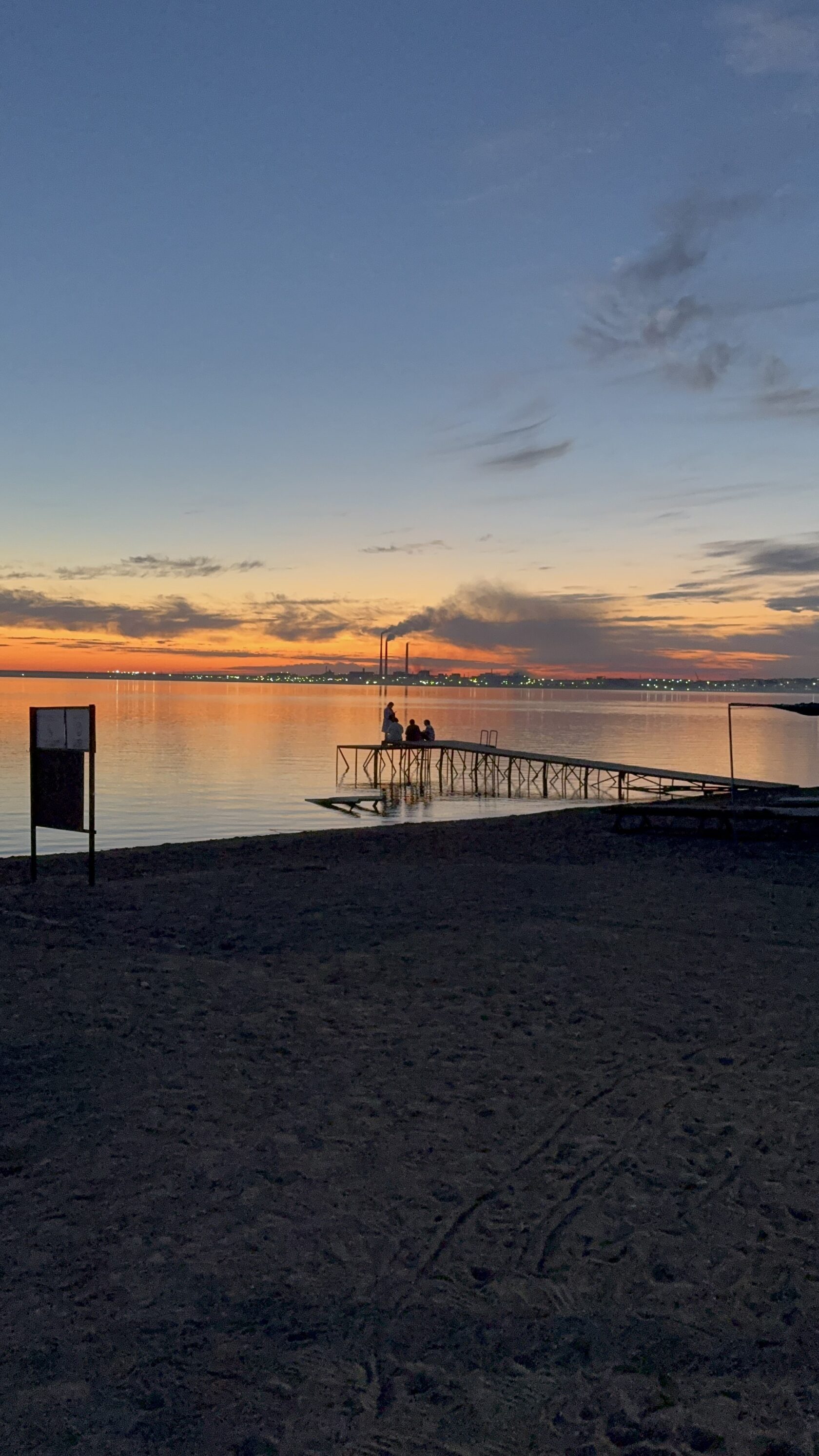
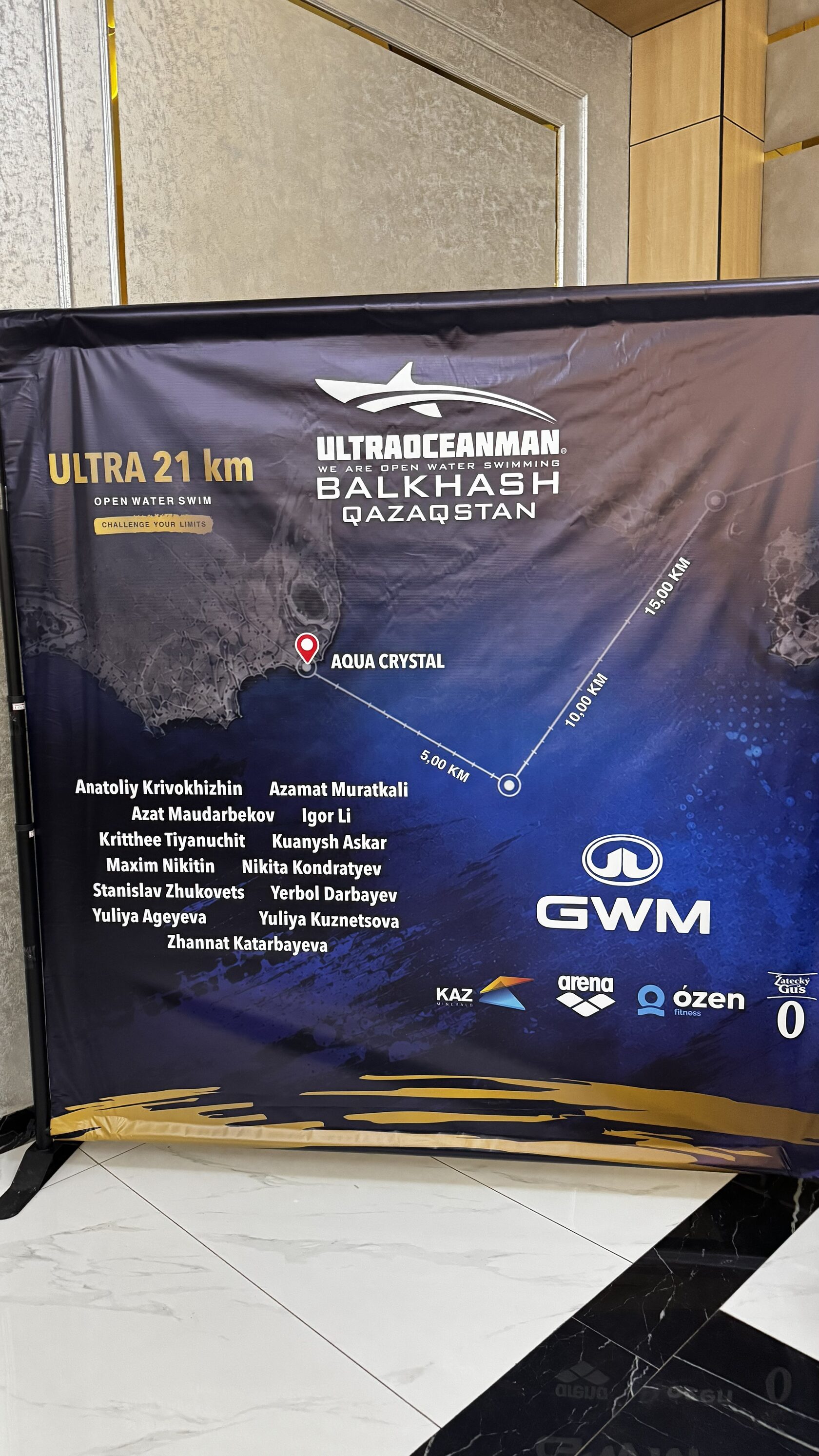
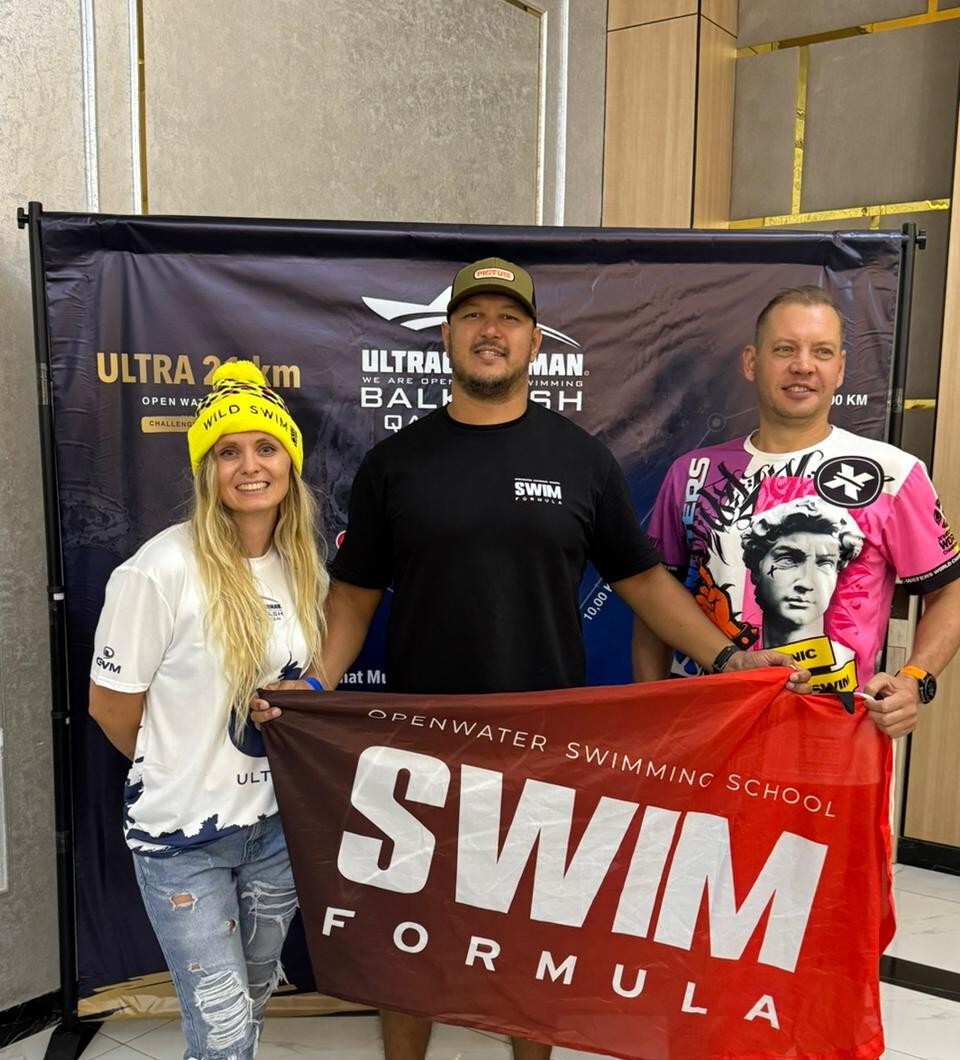
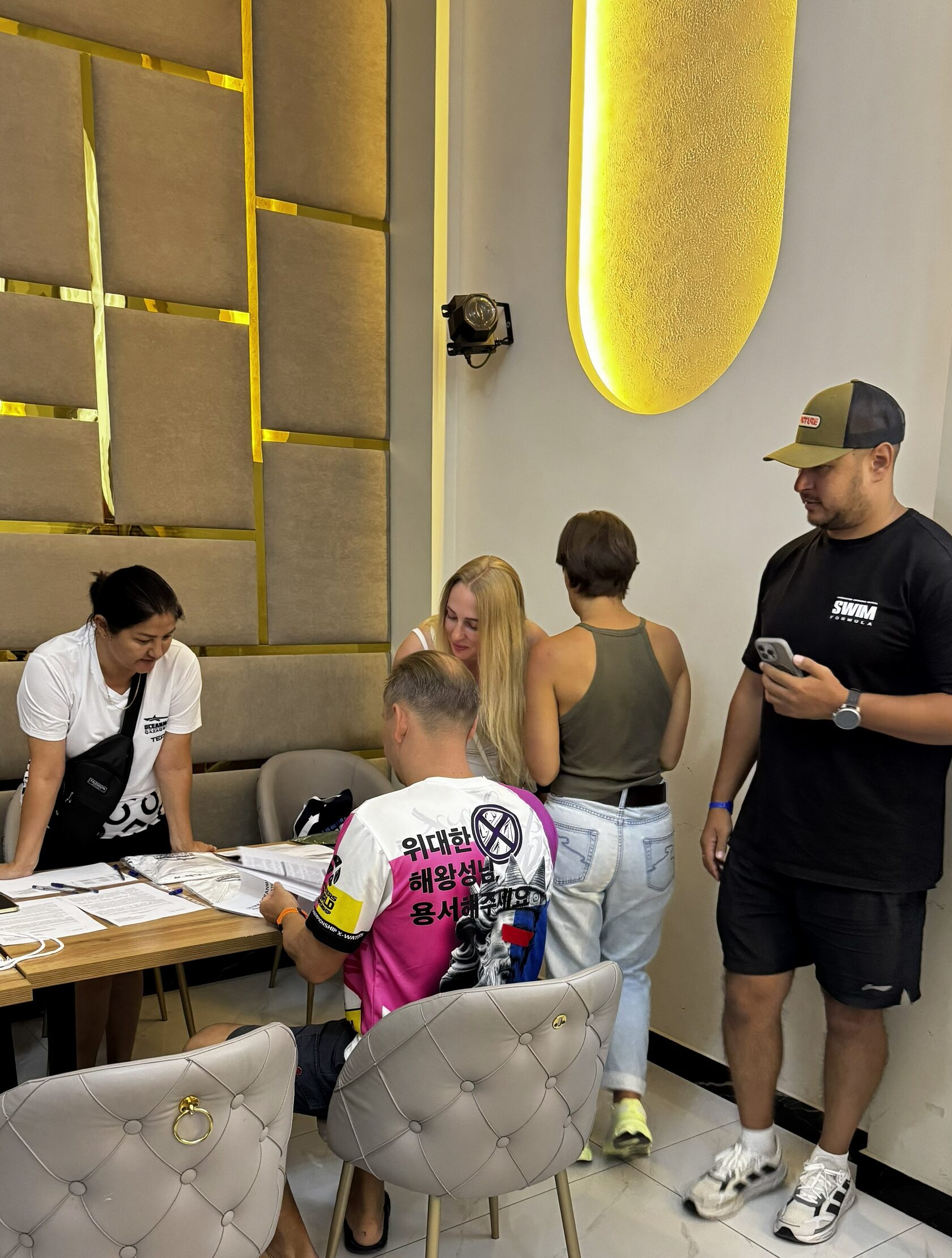
From the water and from the boat, things look different
D: Imagine you’re in the water and all around you there’s nothing but the horizon. Water and sky. The buoy is far away; you can’t make it out from there. So Yulia steered by the boat. And a lot depended on the skipper here — how he steered the boat and how easy it was for the swimmer to sight on it.
Y: When the boat was on my right, I could see it when I turned my head to breathe. I could swim at my own rhythm without lifting my head every time to see where we were. On the shore the plan looked quite simple: swim to the buoy, turn, then head for the finish. But from the water you still have to be able to see all that.
How to make friends with a wave
Y: The first five kilometres were brutal. I was ducking under the waves, and in places I tried to talk to them in my head. “Let’s be friends.” In places they weren’t having it.
After the first turning buoy, the waves came from the side — right where I was turning my head to breathe. They smacked me straight in the face, but now they were also carrying me in the right direction. Before the turn I’d felt resistance; now I could glide. I was trying to catch the moment when a wave picks you up. That was really interesting.
D: From the boat I could see how the distances between the swimmers were changing. For the first few kilometres Maxim — he’s also one of my students and eventually came second — was still relatively close; I could make out his arm coming over the water. After the turn the boats were visible in the distance, but the swimmers themselves were already hard to spot. At the feed stops I told Yulia she was in the lead.
Y: That was a boost, but I couldn’t relax. I thought: if the waves have made it easier for me, they’ve made it easier for everyone else too. They’re going to start catching me now. I kept expecting them to catch me.
“Are they going to pull us out?”
Y: At some point the organisers’ boat comes over. They’re talking to Danil about something, and I’m thinking: that’s it, they’re going to say the race is over and it’s time to climb aboard.
D: We were discussing switching boats. Our boat had been rocked hard by side waves a couple of times. In the end an emergency services boat came over; I moved across and transferred our things and the nutrition. From then on Yulia steered by that boat.
Y: And I had to get used to it all over again. The first boat had been alongside me, but the rescue boat went on ahead, stopped and waited for me to catch up. Like a buoy that moves every now and then. I had to lift my head and look forward, and that’s harder in waves. Judging by the distance, I knew the shore was somewhere close, but I still couldn’t see it from the water.
“Where’s my food?”
D: We had a feeding schedule. I kept an eye on the time; Yulia would swim up to the boat, get a gel and water and carry on. Closer to the finish I got chatting to the skipper and missed the alarm. I could see Yulia was doing well, smiling at the stops, and I relaxed a bit myself.
Y: Meanwhile I can feel it’s time to eat. I swim up to the boat — it moves off ahead. I swim up again — it moves off again. I’m already raising my hand. At some point I felt genuinely hurt: “What’s going on, where’s my food?” And I could physically feel that I had noticeably less strength. You keep swimming, but you already know what you’re missing.
D: In the end the skipper tapped me on the shoulder and said someone down there wanted something from me. That’s when I realised I’d missed a stop.
Y: I got my gel and swam on. On the shore it sounds like a trifle. In the water, when you’ve been swimming for several hours, you really count on the boat stopping at the right moment and someone noticing you.
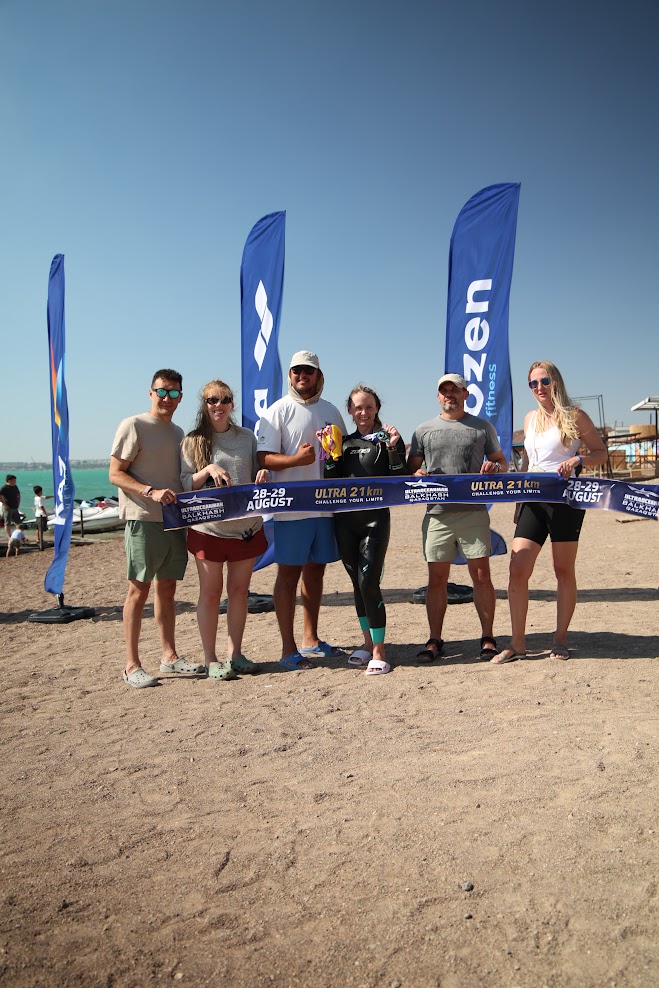
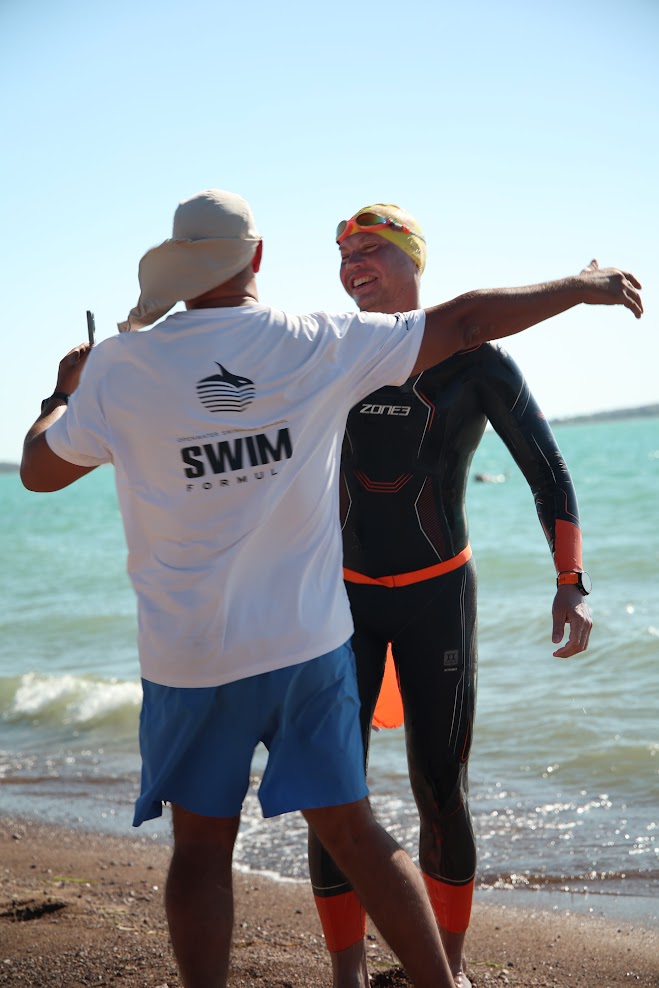
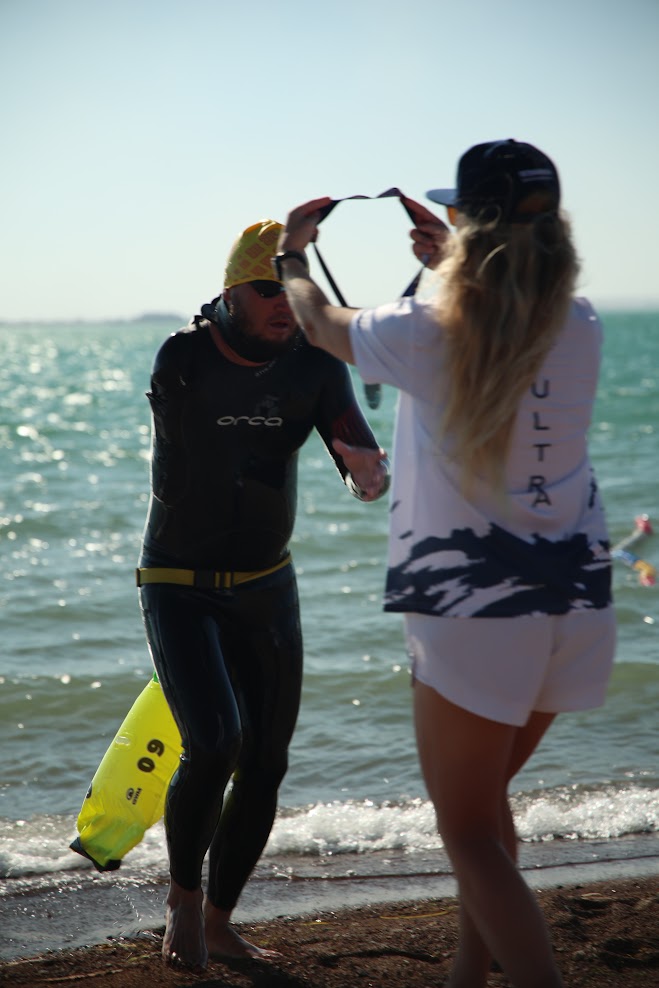
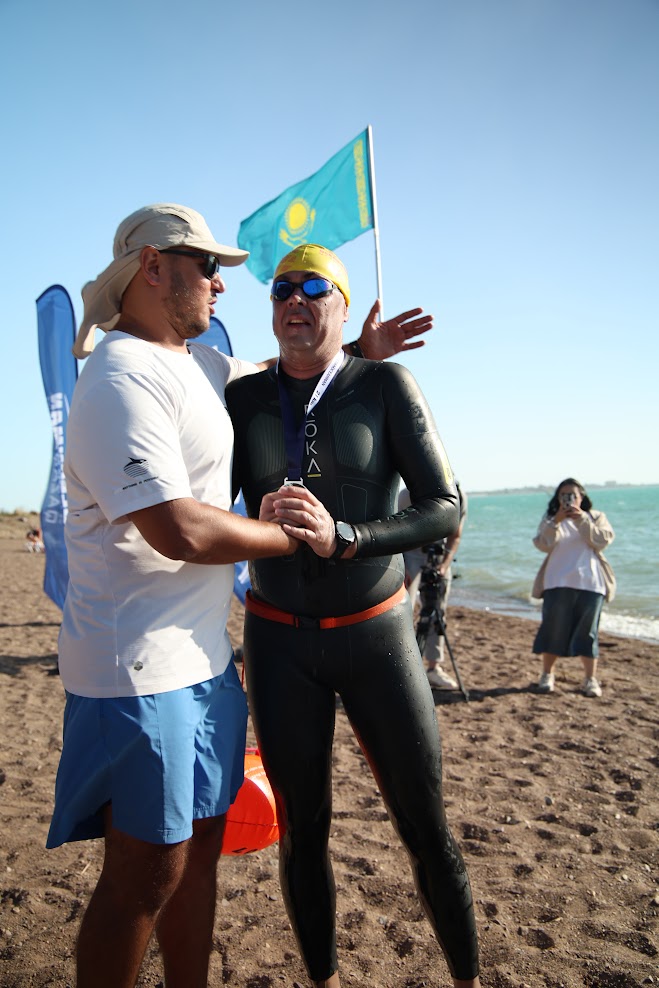
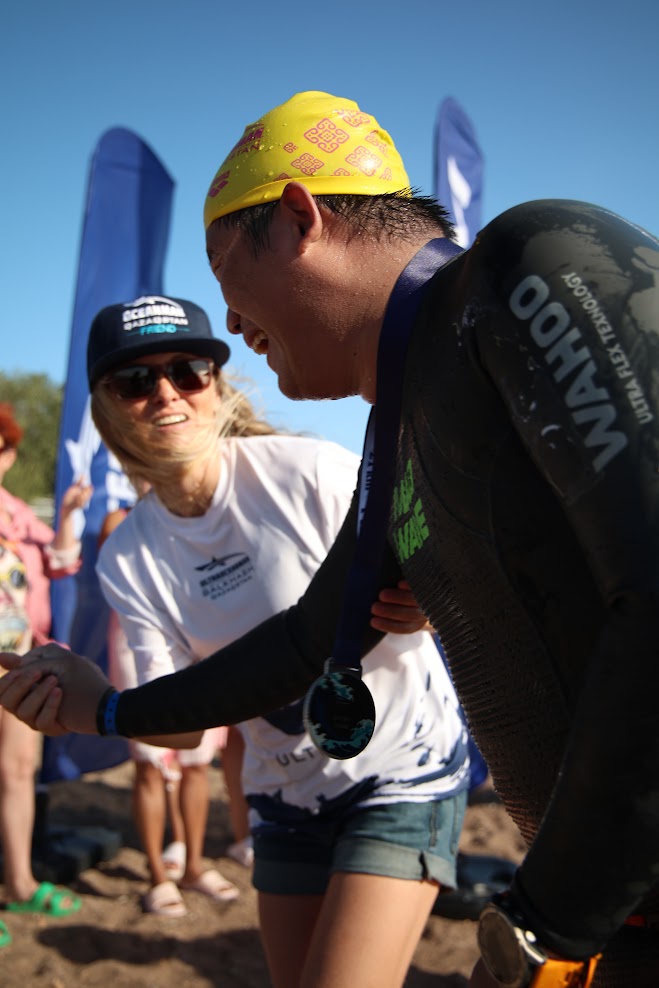
Photo courtesy of Oceanman Qazaqstan
At the finish, all I wanted was to get rid of the buoy
Y: Towards the end my shoulders ached and my wetsuit had rubbed my neck raw. I’d actually thought I might take it off somewhere along the way. But on the last stretch I hit cold water, and the urge vanished at once. I decided I’d rather it chafed and kept me warm.
But what annoyed me most by the finish was the safety buoy. The waves kept throwing it onto my back, the cord got tangled, and I couldn’t get my arm out of the water properly. We shortened the cord, but the buoy still flapped about. When I came out, I think the first thing I said was how much it had driven me mad.
D: Afterwards we discussed whether attaching the buoy differently would have helped. That has its own complications too. For example, how you stop and take on food with that kind of attachment. In waves, even a little thing like that can make itself felt for kilometres on end.
The boat came back
D: On the last kilometre the shore was already in sight. I wanted to meet Yulia and film her coming out of the water. The skipper of the emergency services boat dropped me off at the pier and went back to her.
Y: I saw them leaving and thought I’d swim the rest on my own. Then I look — the boat’s coming back. And it’s escorting me again, showing me the way. I didn’t expect that and thanked them several times.
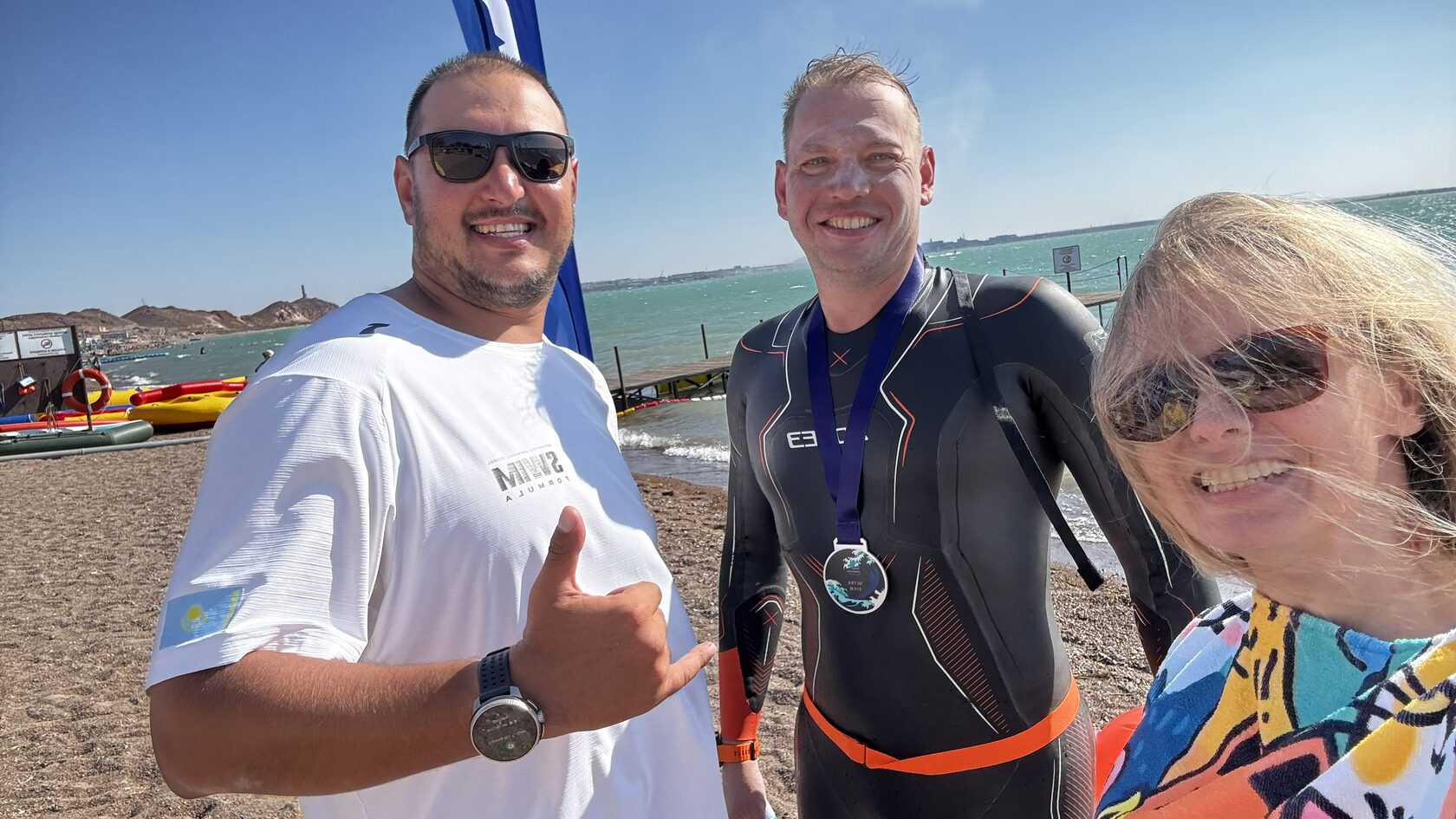
And there was another surprise on the shore. Holidaymakers applauded, then came up with their children and asked for photos. I never expected strangers to welcome me like that. And I remember very clearly how I felt at the finish. I was proud of myself and grateful to everyone who had supported me: Danil, the skipper of the first boat and the guys from the emergency services.
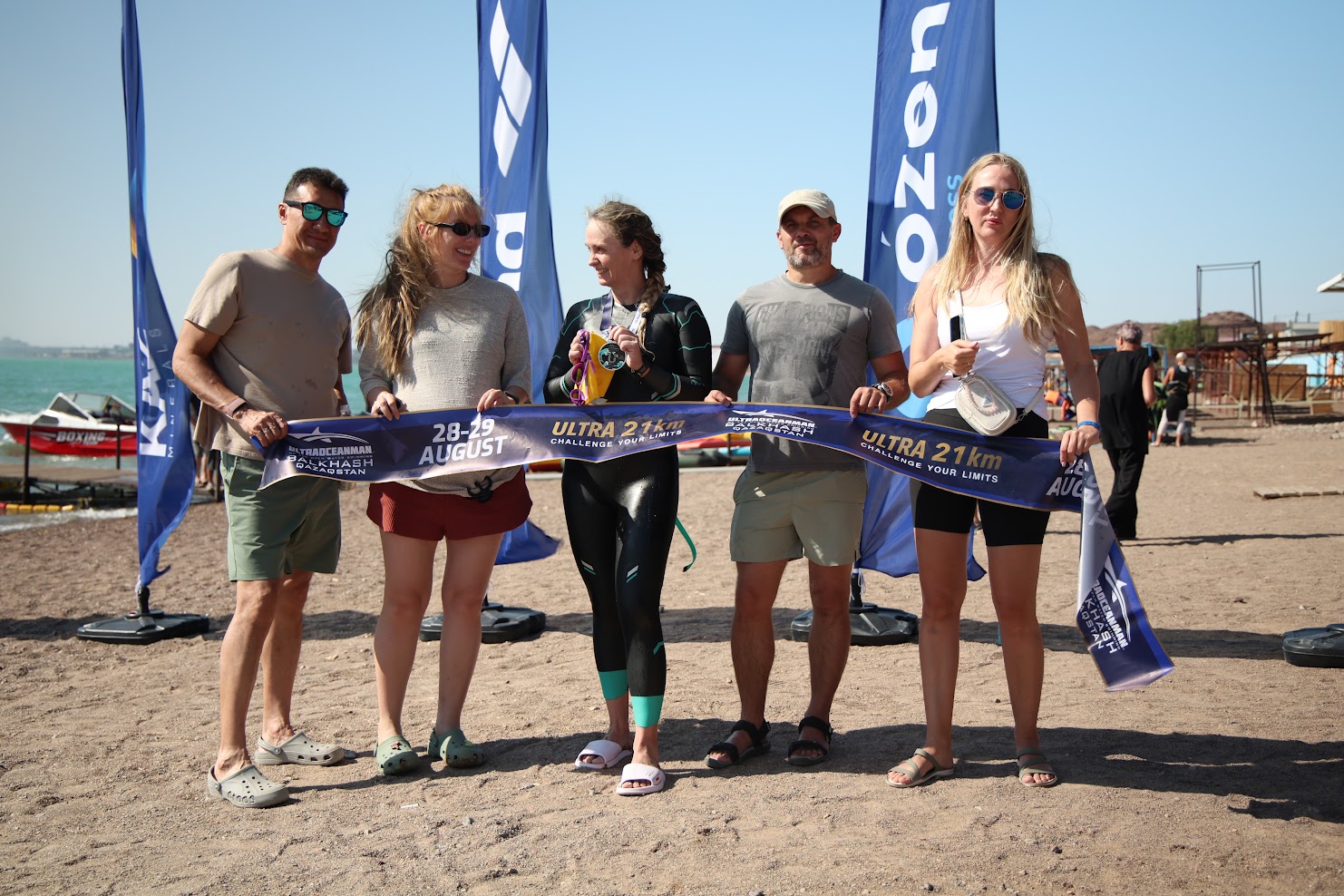
Yulia was the first to finish overall. 21.65 kilometres in 7 hours 53 minutes. After finishing, she stayed on the shore to welcome the other swimmers. In total, 9 swimmers reached the finish, all within the 12-hour cut-off.