“Where’s my medal?”
Adults train for years, go short on sleep and pay entry fees — all to get their piece of commemorative metal (plastic, wood and so on) at the finish. We look at where this tradition came from and why a finish without a medal somehow doesn’t seem to count.
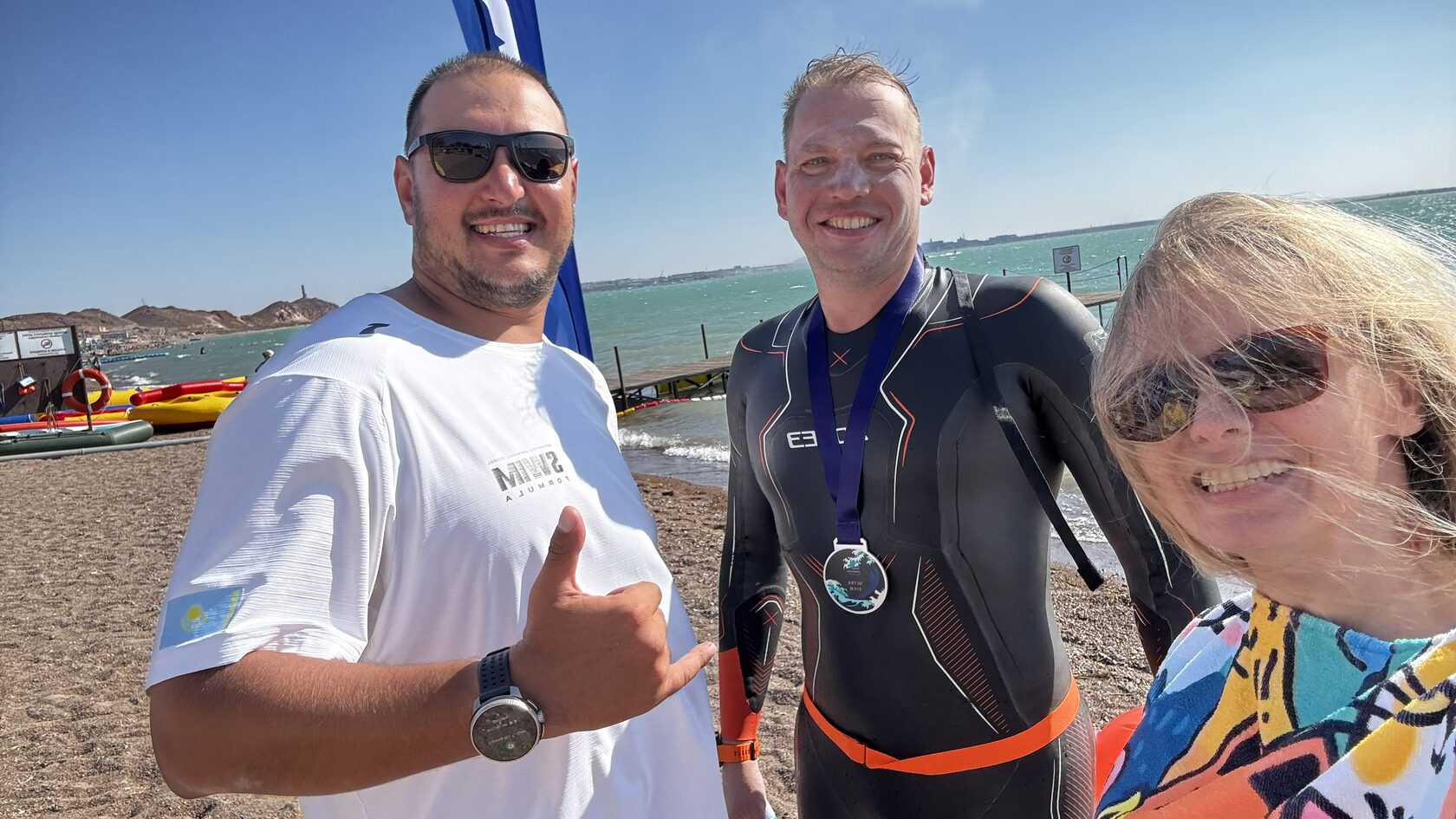
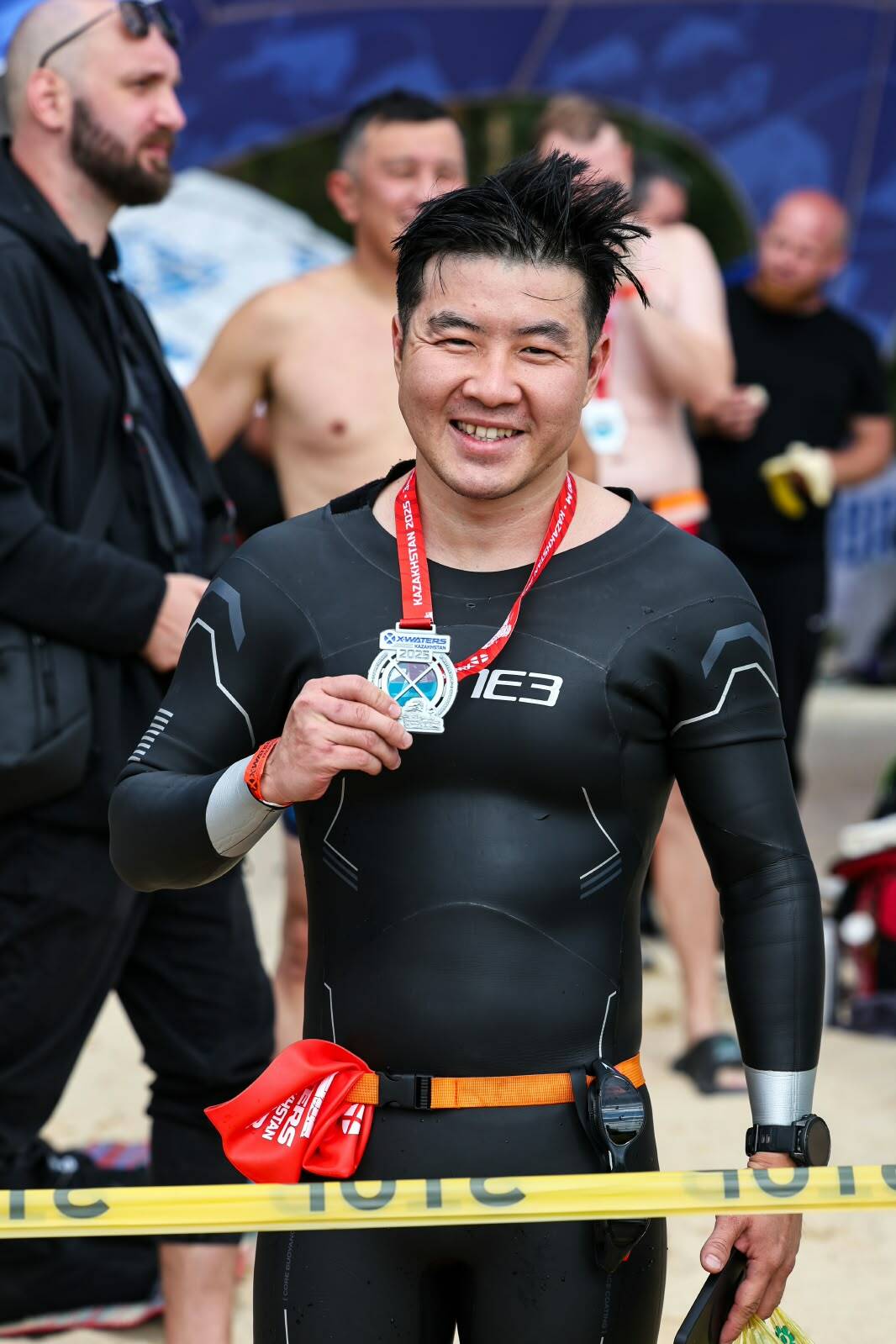
“A lot of people say: ‘So you swim for the medal?’ Well, partly for that too,” admits Igor Li, triathlete, businessman and holder of Oceanman status.
It took Igor three years to work up to 10 kilometres of open water: first 2 km, then 5, then 10. In between training sessions — family, children, business and projects. “For amateurs, the hard part is often finding the time,” he says. So for him a medal isn’t a souvenir, it’s a receipt: paid for with lost sleep, nutrition plans and training.
And therein lies the paradox. A professional gets a medal for being better than everyone else. An amateur gets one for making it at all. And it matters to both.
History: from an olive branch to a piece of the Eiffel Tower
Ancient Greece: there were no medals at all
The first thing to know is that the ancient Olympians received no medals at all. According to the Greek Ministry of Culture, the winner was given a kotinos — a wreath of wild olive from the tree that grew by the Temple of Zeus. Plus a red ribbon for the head and a palm branch for the lap of honour.
A wreath of living branches doesn’t keep for long. The champion was remembered in other ways: his home city honoured him, poets wrote odes and sculptors erected statues. Put simply, the story of a sporting feat was preserved by people and marble. Sadly, statues in your honour are rarely put up these days — which is why you need a medal.
The Renaissance: the medal was born as a “keepsake photo”
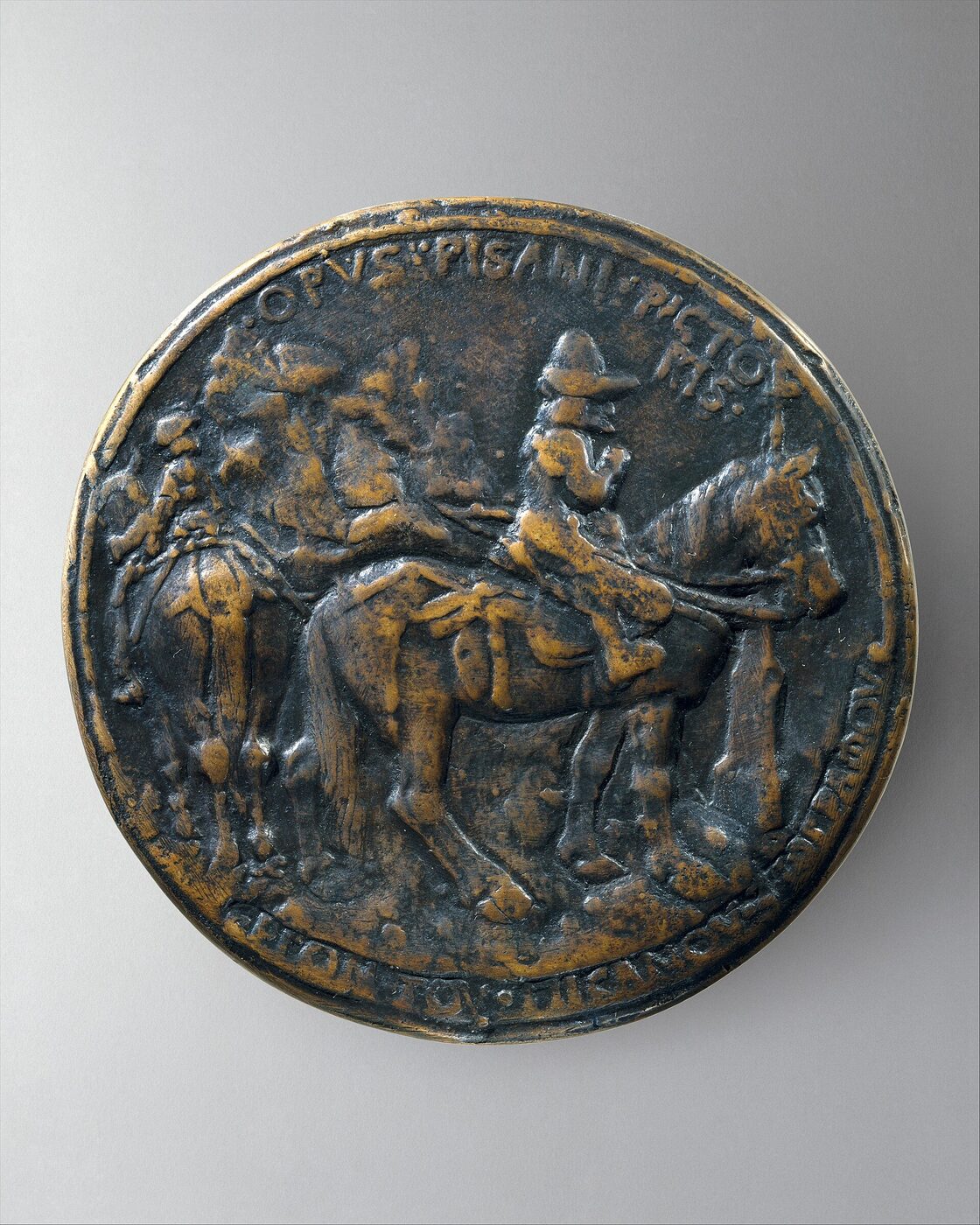
The word “medal” comes from the Italian medaglia. It was in Italy in the 15th century that the medal as we know it appeared: round, with a portrait on one side and a scene on the other.
One of the key examples is the medal by the artist Pisanello with a portrait of the Byzantine emperor John VIII (modelled in 1439). It commemorated the emperor’s visit to Ferrara in 1438.
According to the Metropolitan Museum of Art, this design “set the standard format for many future commemorative medals”.
Note: the medal’s very first role was not as a reward, but as a memento of an event. Exactly what amateurs say today: “It’s a reminder that you were there.”
Photo: The Metropolitan Museum of Art (New York)
The medal with a portrait of the Byzantine emperor John VIII Palaiologos, created by the Italian artist and medallist Pisanello (Antonio Pisano) in 1438–1439, is considered the birth of the Renaissance portrait medal
1896: the champions got silver, and third place got nothing
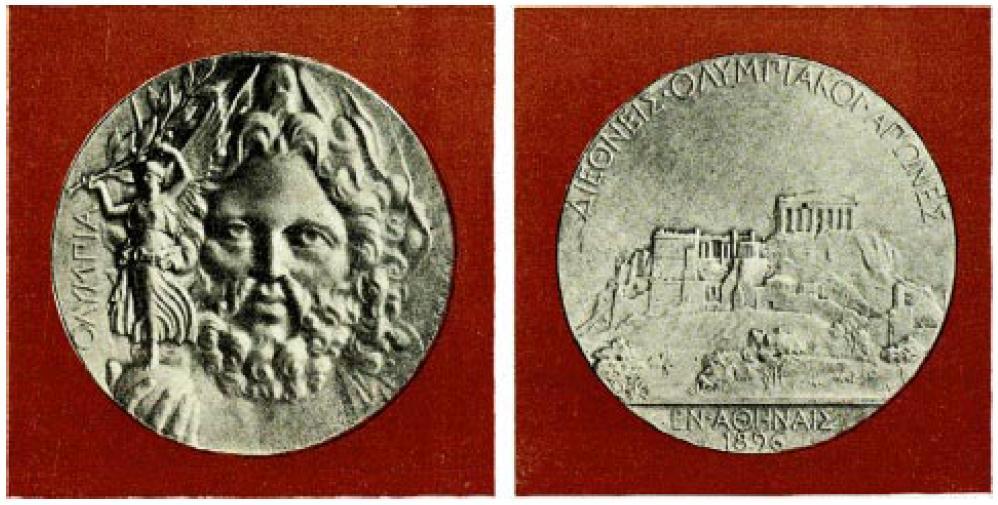
At the first modern Olympic Games in Athens there was no gold. The winner received a silver medal and an olive branch. Second place got a copper or bronze medal and a laurel branch. There was no medal for third place at all. The 48 mm medal was designed by the Frenchman Jules-Clément Chaplain and struck by the Paris Mint.
Yet in today’s official IOC table, the 1896 medallists are listed as gold, silver and bronze — they were reclassified retrospectively. Sports statistics can hand out awards very belatedly.
1900: the only rectangular ones
In Paris in 1900 the medals were rectangular — 42 by 60 mm, according to the Olympic reference guide. First place got gilded silver, second place silver, and third place bronze.
1904: the first official gold
Gold medals were first officially awarded in St Louis in 1904 — according to the archive of the US Olympic Committee and Britannica. At first the gold was real. Solid gold medals were last awarded in Stockholm in 1912, according to Britannica and Guinness World Records. That said, the IOC website’s reference guide lists the 1912 medal as gilded silver, so the sources disagree here. After that the tradition, let’s say, lost some weight (details in the figures below).
1921: a medal for everyone who made it to the finish
While the Olympians were sharing out the podium, a completely different idea was born in South Africa. At the Comrades ultramarathon (87.9 km in the first race), a silver medal was given to every finisher from the very beginning. In 1921, 16 of the 35 starters finished — and each of them got silver. That remained the case until 1931, when gold was introduced for the leaders. Today there’s a whole scale: there’s even a separate medal for those who finish between 11 and 12 hours. It’s named after the race’s founder, Vic Clapham.
In other races the idea didn’t catch on straight away. The Boston Marathon only began giving finisher medals in 1983 — and then only to the first 300 finishers. By 2022 the number had grown to around 30,000.
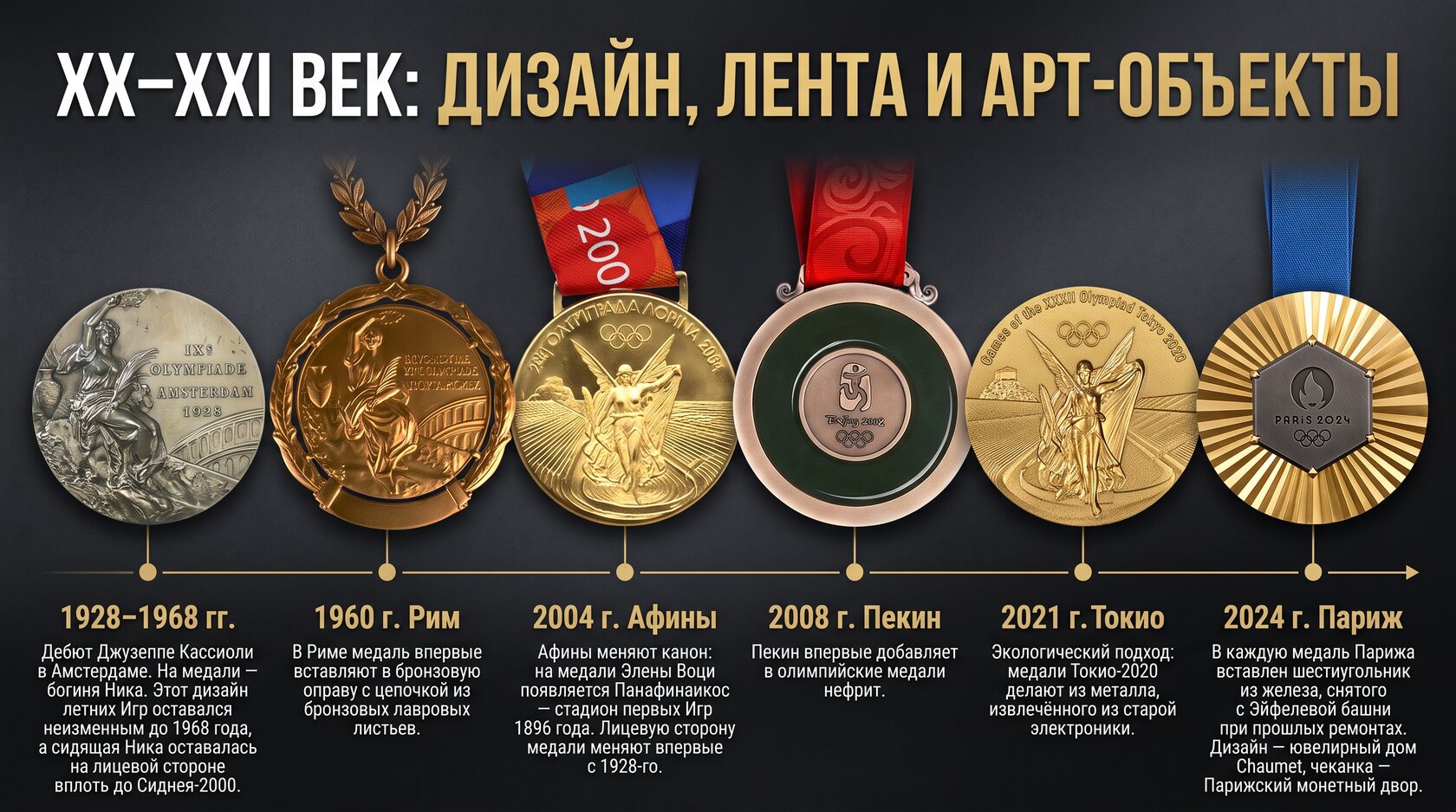
Mass amateur sport has since gone even further. The finisher’s medal has stopped being a token and has become a piece of design in its own right — with its own designer, story and collectors.
Facts and figures to impress people with in the changing room
A “gold” medal is actually silver. As Britannica notes, today’s Olympic gold is at least 92.5% silver, with about 6 grams of pure gold in the plating. So when a champion bites their medal for the cameras, strictly speaking they’re biting a thin layer of gilt. And the bronze medal is a copper-based alloy.
- What the metal itself is worth. The Tokyo 2020 gold medal contained 6 g of gold and 550 g of silver. By CNBC’s calculation, at July 2021 prices that metal was worth about $820. Modest for the most famous award on the planet. The value of a medal clearly isn’t in the metal.
- Medals made from old phones. From April 2017 to March 2019, people in Japan handed in their old gadgets. Around 79,000 tonnes of devices were collected, plus about 6.2 million phones gathered by the mobile operator NTT DOCOMO. From this mountain, about 32 kg of gold, 3.5 tonnes of silver and 2.2 tonnes of copper were extracted. That was enough for about 5,000 Olympic and Paralympic medals.
- A piece of the Eiffel Tower. The Paris Mint made 5,084 medals for the 2024 Games. Each one has an 18 g hexagon inset made of iron removed from the tower during past renovations. According to Reuters, this iron had been kept for years in a warehouse whose location is a secret. The medal itself weighs about half a kilo (455–529 g) — like wearing a bottle of water round your neck.
In other words, the old phone in your desk drawer is potential Olympic gold. In Japan the whole country collected devices: collection points were set up by local authorities and Games partners.
For those who think it’s “too late”
Oscar Swahn, a Swedish shooter, won silver at the Antwerp Games on 27 July 1920. He was 72 years and 281 days old. That is still the record among Olympic medal-winning athletes (according to Guinness World Records). In total he won six Olympic medals: three golds, a silver and two bronzes. He won his first gold in 1908 — at the age of 60.
There was also the Englishman John Copley. In 1948, at the age of 73, he won silver at the London Olympics — for his engraving “Polo Players”. Yes, from 1912 to 1948 medals were awarded for art at the Olympics. Today the IOC doesn’t count them, so the record stays with Swahn. But the moral is clear: silver at 73 isn’t science fiction.
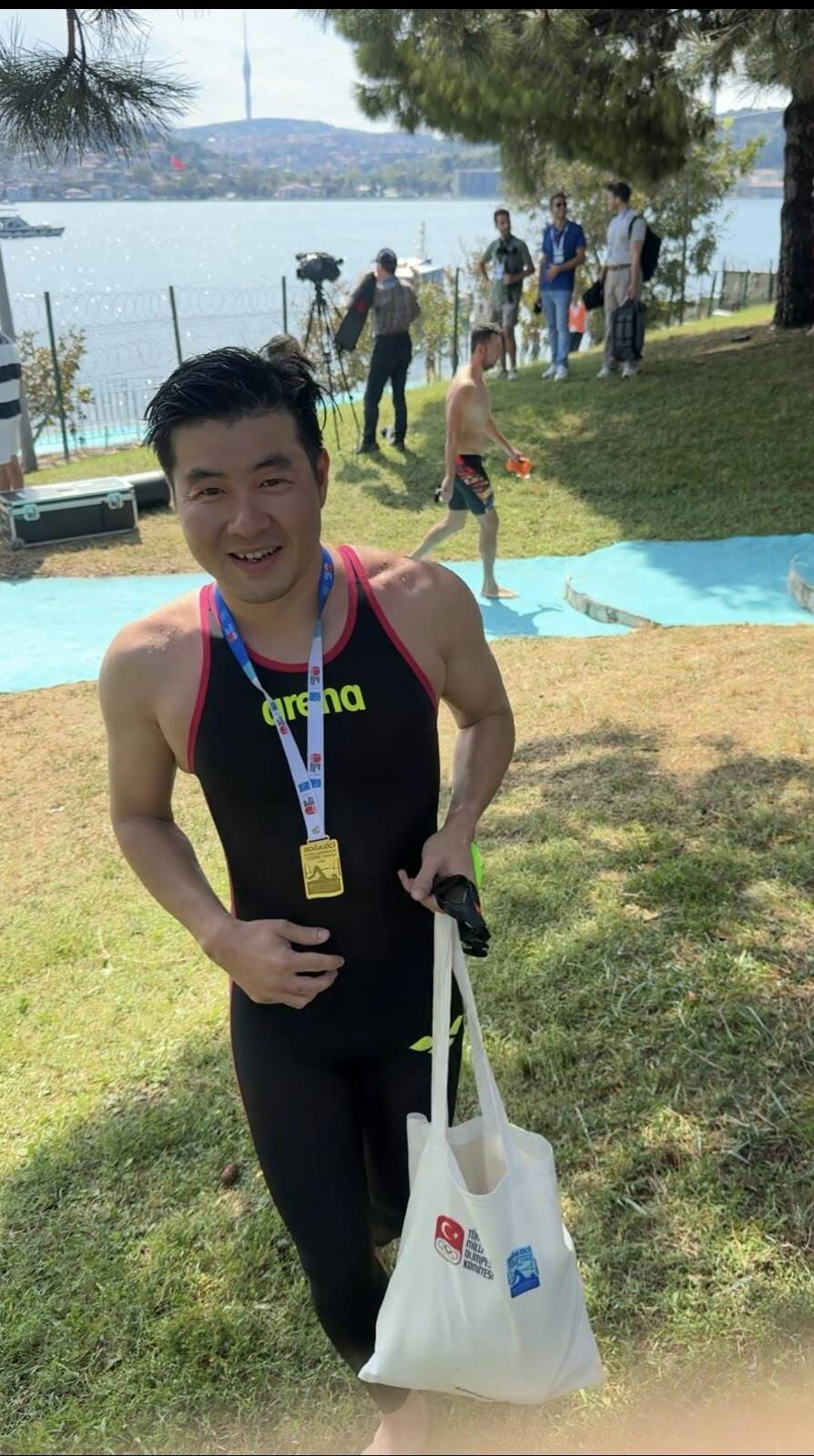
And one more fact for the collection. In 2018, Levent Aksüt, an 89-year-old retired architect, entered the intercontinental swim across the Bosphorus — together with his younger son and his grandson: three generations in the same water. He said it was his 29th swim, and that he had learned to swim at 17 (according to the Turkish agency DHA).
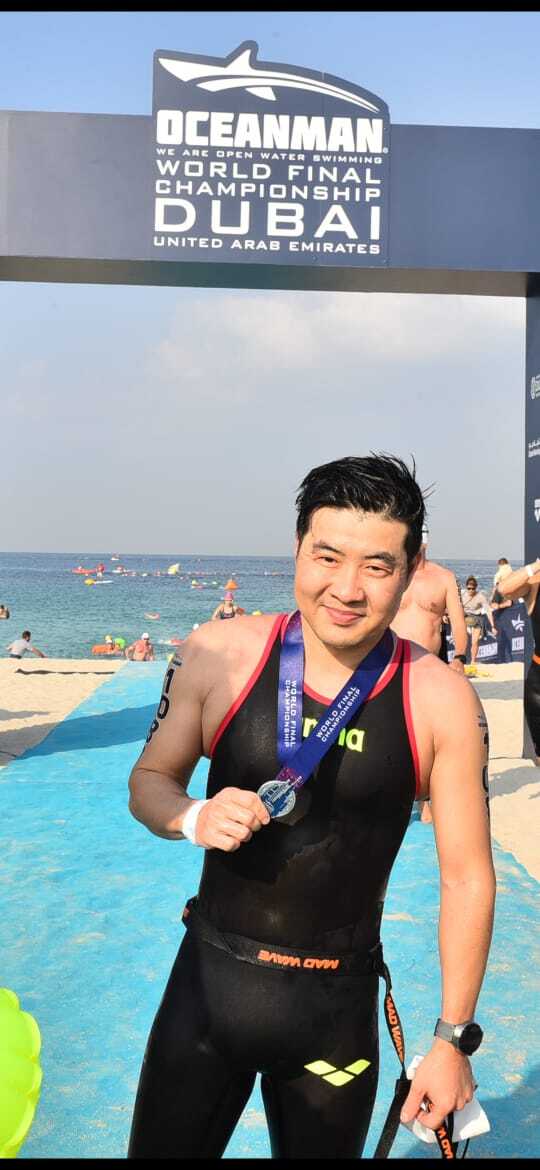
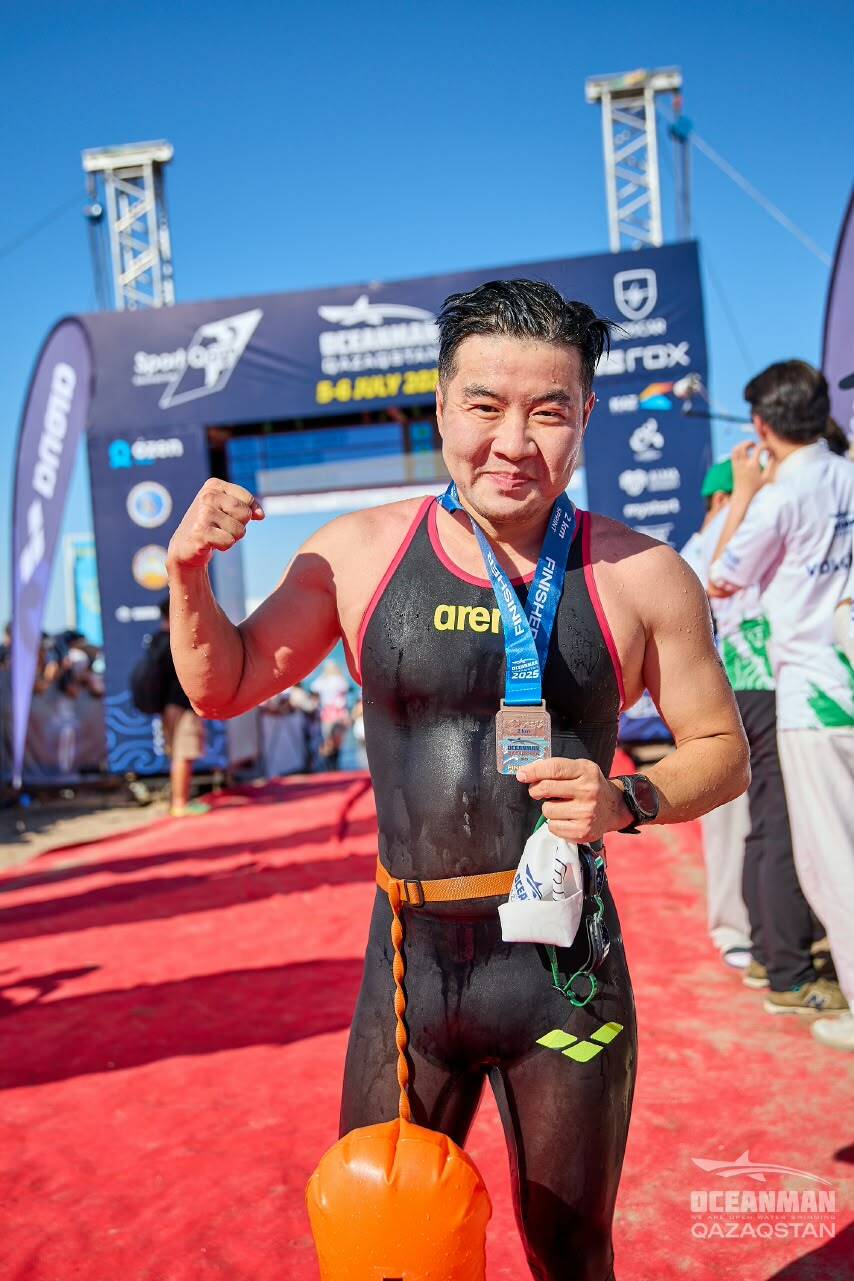
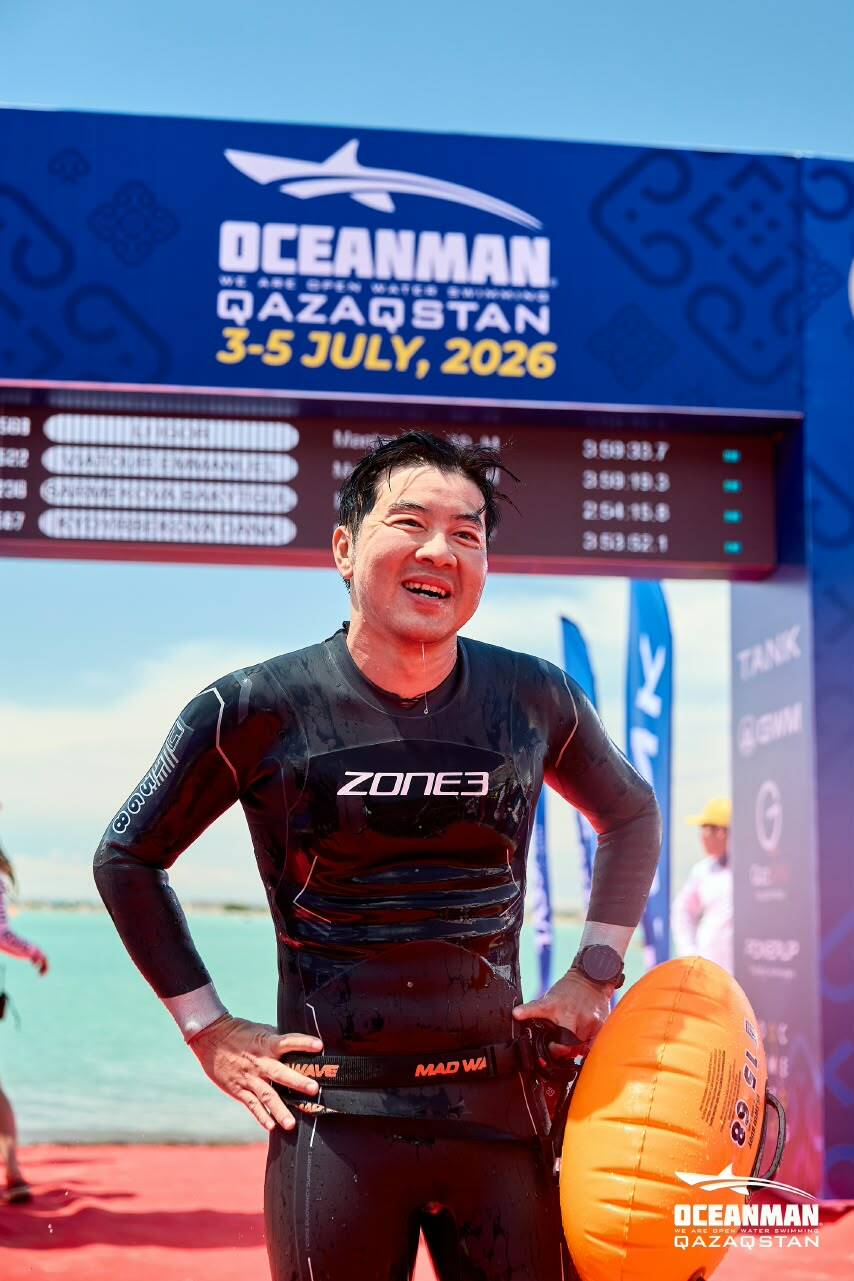
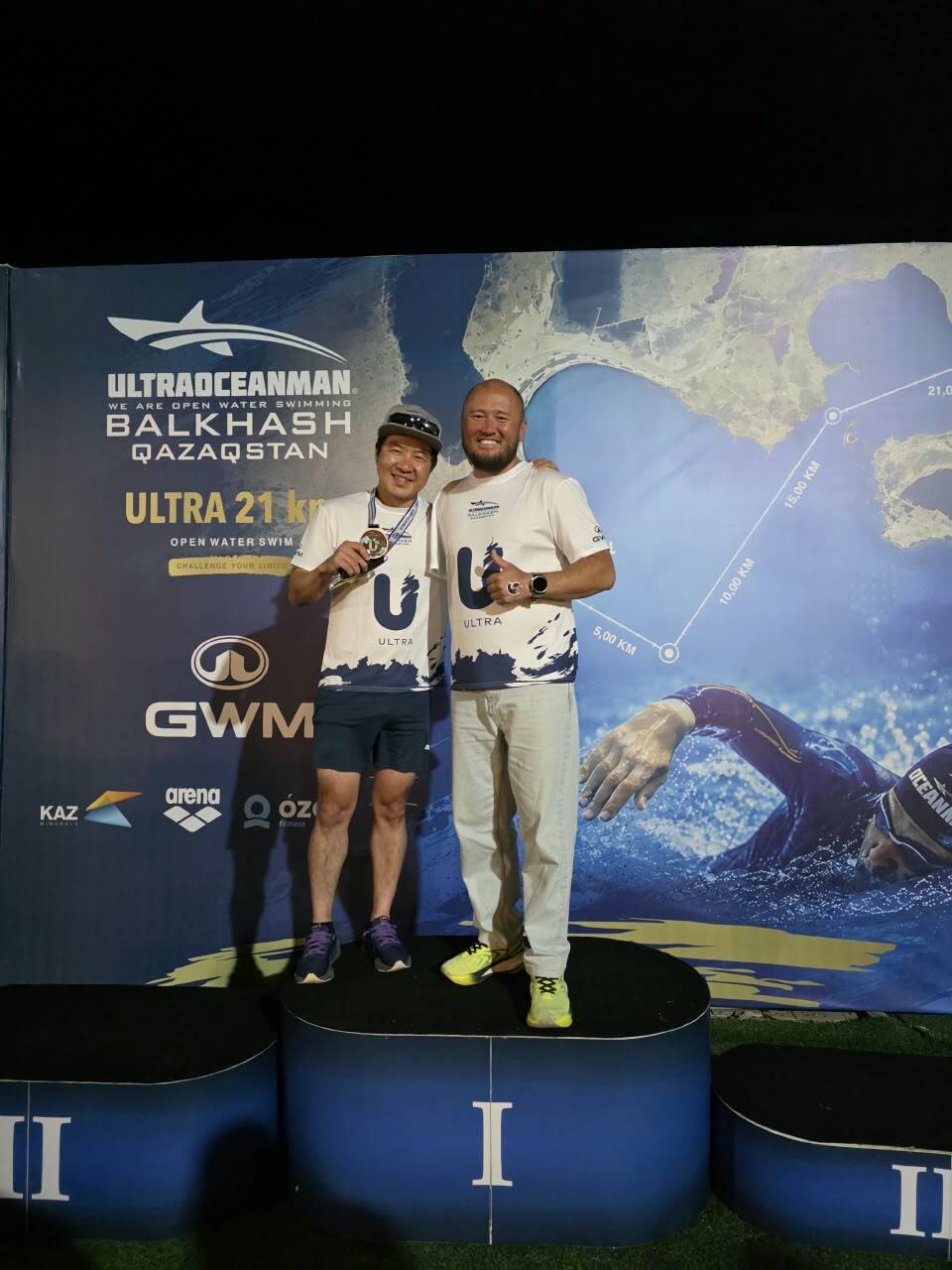
From Igor Li’s archive
Our heroes: why do athletes over 30 need medals?
Igor Li: “The proof that I’m an Oceanman is my medal”
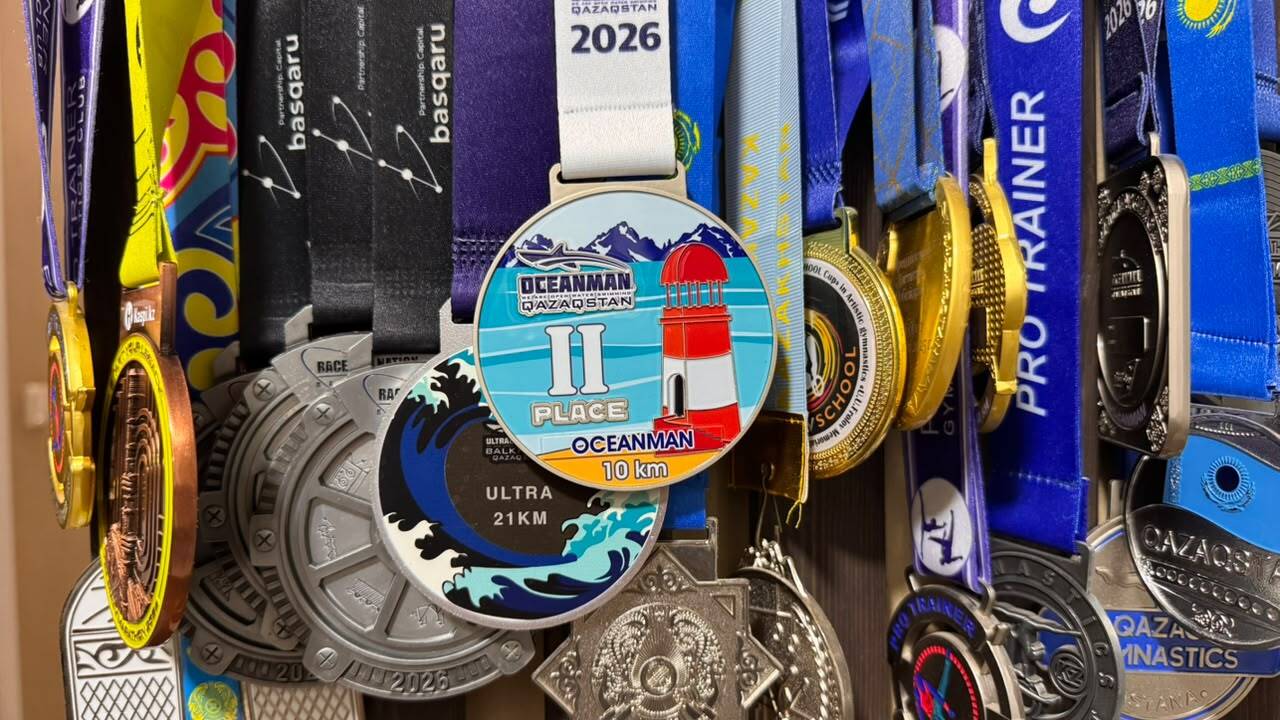
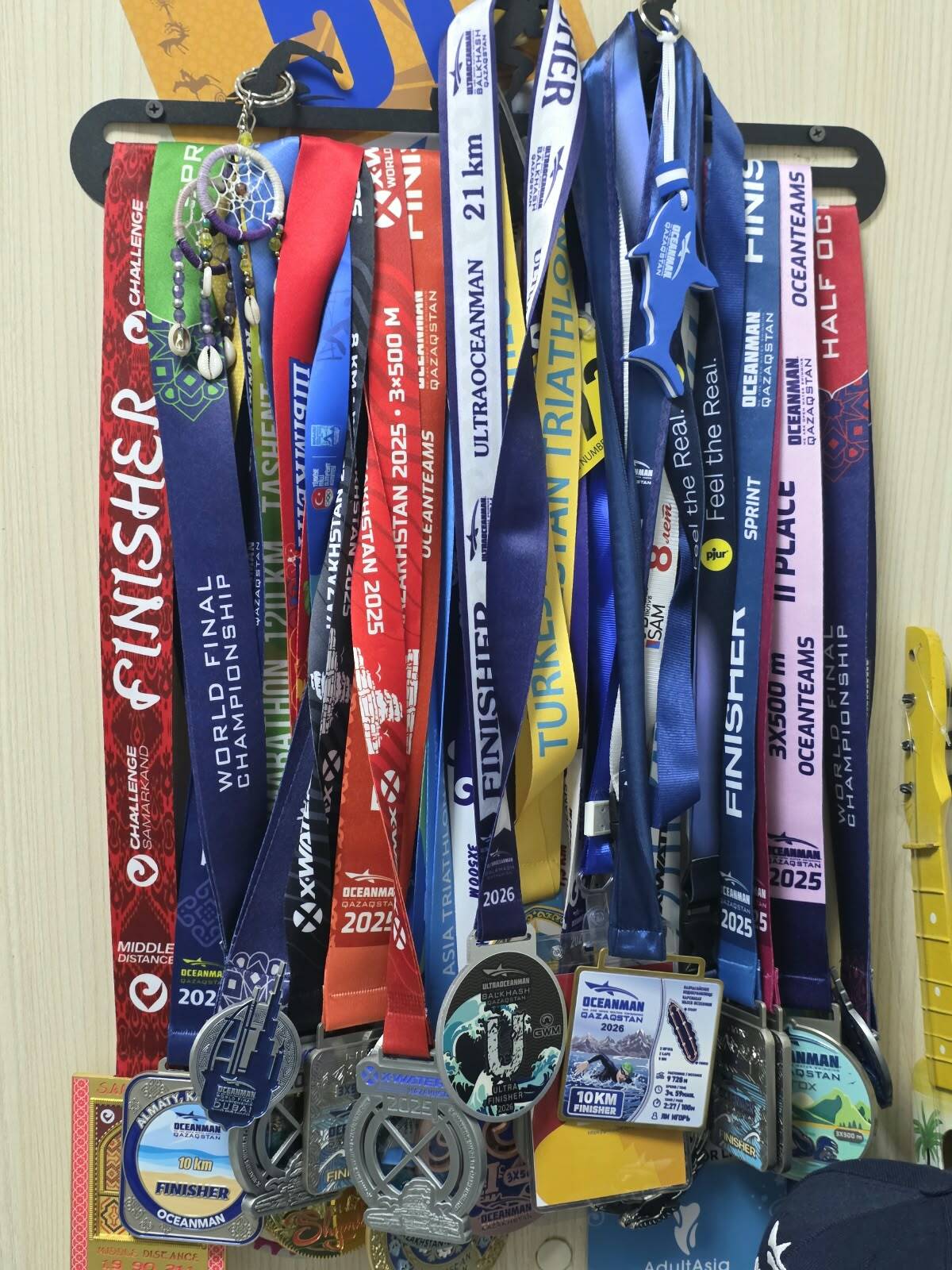
Igor’s collection reads like a diary of his progress. Each medal has its own meaning:
- The first, 2 km. “The most precious, because thanks to it you plunged into this kind of amateur sport.”
- 5 km. “When you were swimming two, five kilometres seemed simply impossible.”
- 10 km — Oceanman status. In the international OCEANMAN series, that’s exactly what the 10 km distance is called, while 5 km is the “half”, Half-Oceanman. “Once you’ve swum ten, you realise: yes, I’m an Oceanman. That’s cool, that’s a status.”
- The Bosphorus. Intercontinental swimmer status. The swim has been organised by the Turkish Olympic Committee since 1989: 6.5 km from Kanlıca on the Asian shore of Istanbul to Kuruçeşme on the European shore. Places for foreigners go within hours: in 2015, 900 places sold out in 10 hours. “Not many people in Kazakhstan have that status,” says Igor.
- X-Waters, 8 km. Straight away the longest distance. “Once you’ve done it, you’re no longer bothered how many more kilometres they’ve got.” Familiar to anyone who has ever said to themselves: “Hang on, so that was possible all along?”
Igor’s medal for 10 km at Kapchagay didn’t come at the finish, but a month later.
Yes, it’s cool, it’s great, but you still want to get your medal at the finish. In that moment you’ve swum ten kilometres, you’re a star, you’re an Oceanman, you’ve earned it. So there wasn’t really a wow moment — it’s there, and that’s fine.”
And what if he had known in advance that there would be no medals at all? “Most likely I wouldn’t have flown out or paid the money. Because the proof that I’m an Oceanman, that I did it, is my medal.”
And most importantly — about memory:
Time will pass, memories will fade, but the medal will still be hanging there. Someday I may stop training, but I’ll know: I’m an Oceanman, I swam ten kilometres, I did it.”
Extreme Athletics: a medal you can’t buy
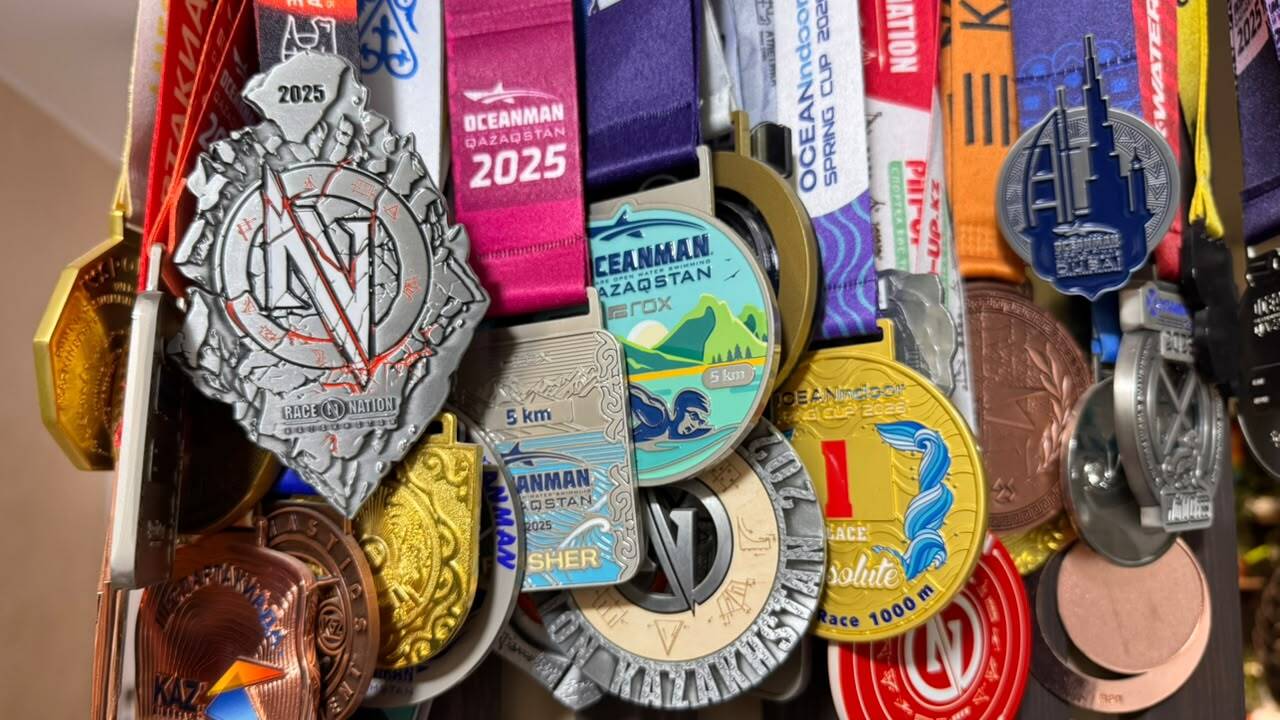
Igor speaks as a participant. But how do the people who make medals see them? The public association Extreme Athletics has held more than 300 events over 20 years. By the organisers’ own very rough estimate, around 200,000 medals have been handed out to participants, with hundreds of unique designs.
Their story mirrors the world’s in miniature:
- 2006. One of the earliest awards — a real bicycle sprocket with a ribbon attached by hand. Back then medals were given only to the top finishers.
- 2016. Tengri Ultra: the first finisher medal — a slice of wood with a burned design, a cord and feathers. After that, a race without a medal for every finisher stopped being seen as normal.
- 2017. Irbis Race: a multitool medal. That rare award you can actually use to fix your bike.
- 2020. Red Planet: a medal shaped like the optical module of the Curiosity rover.
- Today. Casting, enamel, electroplating. Each series has its own “DNA”: Tengri Ultra draws on tumar amulets, shaman drums and the Golden Man, Road Race on the stopwatch, Salomon Trail on the Tibetan bell.
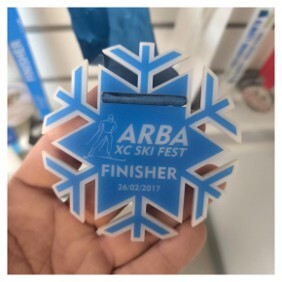
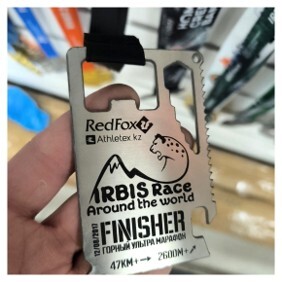
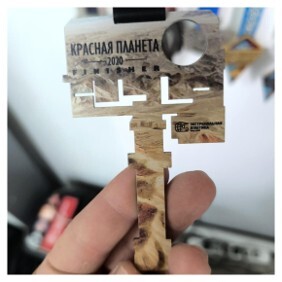
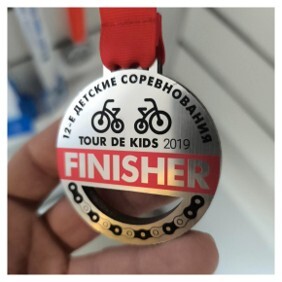
From the Extreme Athletics archive
For us, a finisher’s medal isn’t a souvenir. It’s what a person takes away with them after the event. That’s why we often put more of our heart into it than into anything else
A rule that sounds like an answer to Igor. Medals are ordered two to three months before the race. Registrations cannot exceed the number of medals ordered: someone who has honestly completed the distance must not be left empty-handed at the finish. In 20 years, the main batch has failed to arrive in time for the start once or twice. On those occasions a temporary copy was presented at the finish, and the original was handed over later. Precisely because that “hang it round your neck” moment can’t be postponed by a month.
Leftover medals are not sold or given away — not to staff, partners or friends. They are disposed of, and the metal is sent for recycling.
There’s only one way to get this medal — to finish
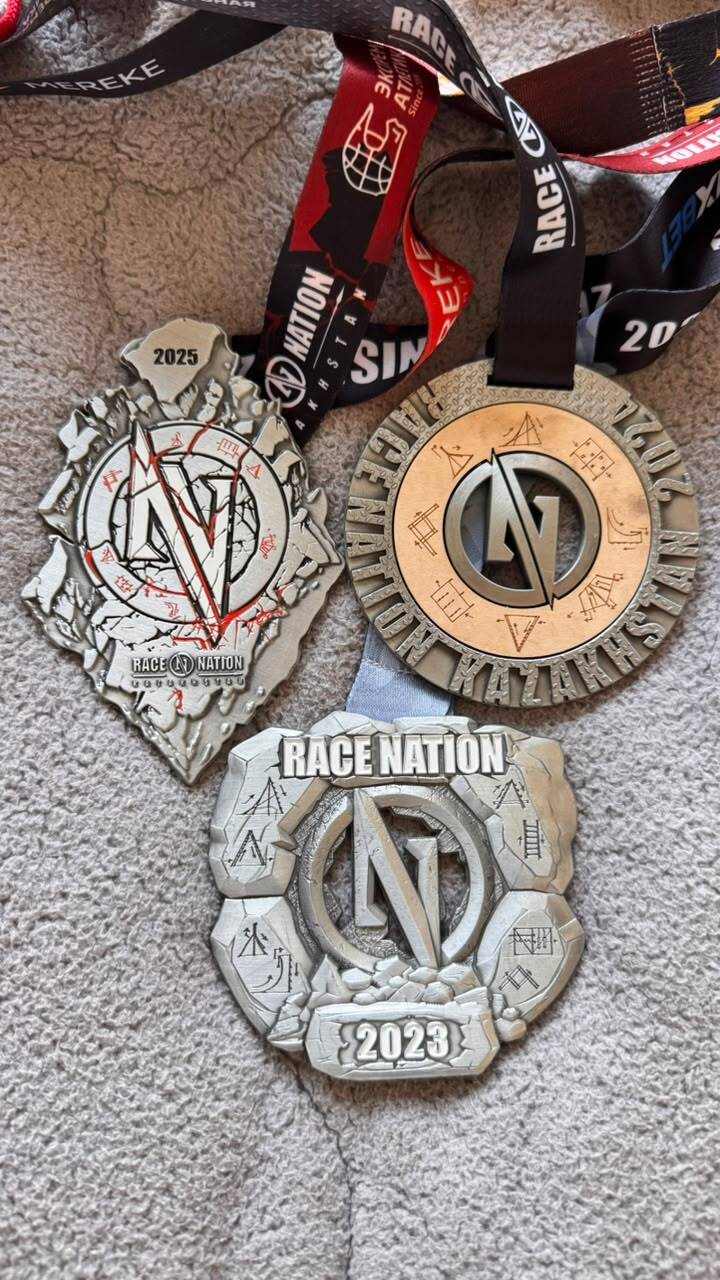
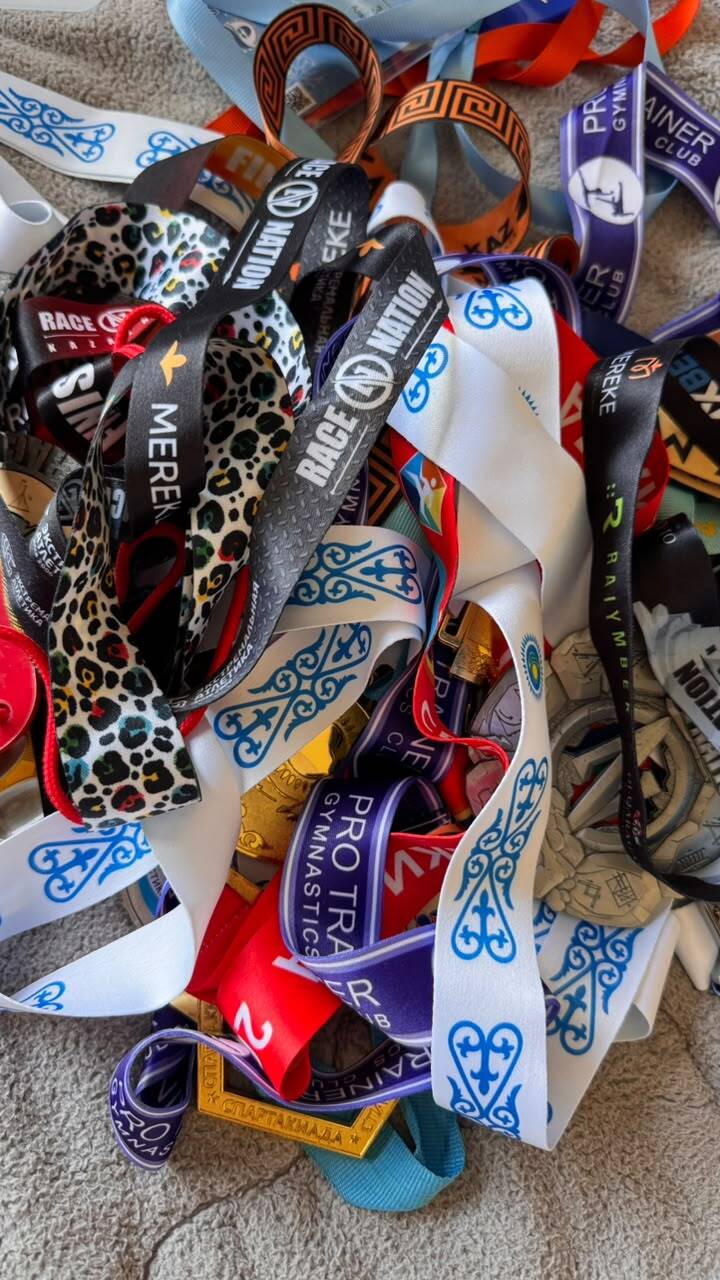
How seriously people take this is shown by Kochetkov’s own story. The organisation’s museum collection is still missing one of the Tengri medals. They’ve tried to buy it, swap for it, beg for it — not a single owner has agreed. The president of the organisation can’t get hold of a medal from his own race. You could hardly come up with better proof of its value.
There’s a flip side to such devotion. A controversial design instantly causes a storm. “At that moment everyone becomes a design expert,” Kochetkov laughs. And according to the organisers’ observations, a strong design noticeably boosts registrations: people choose not just a distance, but a story they want to earn.
Incidentally, the first designs were mostly created by Vasily Kochetkov himself. Gradually the work passed to the team’s designers, Anna Krotova and Pavel Boborenko. Today Kochetkov stresses that he deliberately tries not to interfere in their work unless he has to: “They don’t just continue what I started — in many ways they’ve already outdone me.”
For the team, it’s a matter of principle that a medal is an original work. The race director, art director, client or sponsor may adjust the idea, but each design still has a specific author. Within the team there are arguments, sometimes heated ones, but the ultimate goal is the same — to create an object that will be recognised as part of that particular race.
That’s why each series develops its own visual DNA without literal repetition. Over the years, Tengri Ultra has drawn on tumar amulets, shaman drums and the image of the Golden Man; Road Race reinvents the stopwatch again and again; Race Nation leans towards large, round, brutal shapes; Salomon Trail is recognisable by its Tibetan bell motif. The continuity remains, but the same medal is never issued twice.
Instead of a finish line
Over more than two thousand years, the award has gone from a wreath that withers to a medal with a piece of the Eiffel Tower in it. But the essence hasn’t changed: people need something that will outlast the moment of victory.
For a professional, a medal says: “I was the best.” For an adult amateur, it says: “I found the time, the energy and the money, and I made it.” And to be honest, the second is sometimes harder.
So next time someone asks you, “What, all that for a piece of metal?”, you can answer in Igor’s words: “Partly for that too.” Or you can simply remind them that Oscar Swahn won his first Olympic gold at 60. That’s what a second wind is like.