“I agreed to be a beginner where I thought I was strong”
“It was a blow to my pride.” Azat Maudarbekov was sure he was a good swimmer — until, at his first training session, he couldn’t properly swim even 25 metres. Three years later, he stood at the start of a 21-kilometre ultra-distance swim on Lake Balkhash.
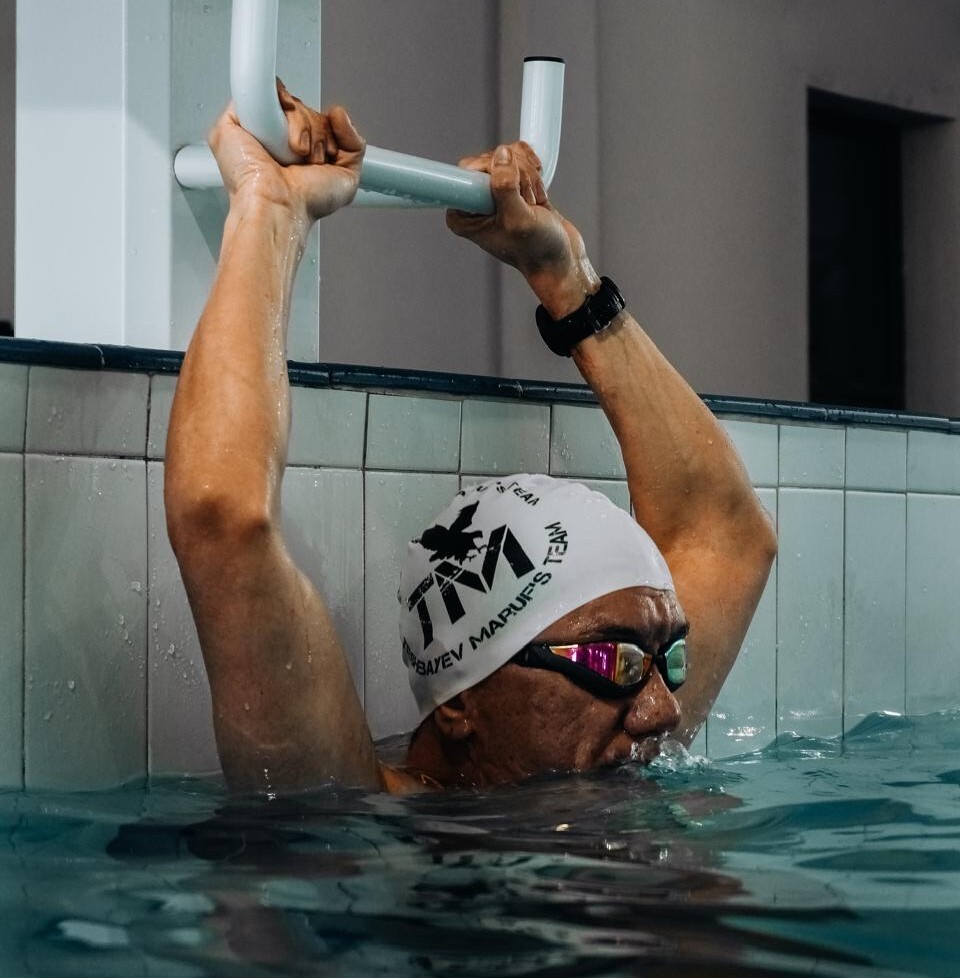
Azat Maudarbekov is 38. He is Managing Director for Learning at Samruk Business Academy, is raising three children and trains six times a week. He came to swimming through a corporate sports games event, and then came open water, his first podiums and an ultra-distance swim.
In his interview with Second Breath, Azat talks about why an adult would choose to become a beginner again, how to combine serious training with work and family, and why a single sporting goal sometimes changes far more than your result in the race results.
A beginner in the pool
01How did this story begin in the first place?
— In autumn 2023 I started preparing for the Samruk Spartakiad and decided I would compete in swimming there in 2024. I had always liked swimming, but regular training started precisely because of the Spartakiad. Suddenly there was a race date, a goal and a coach.
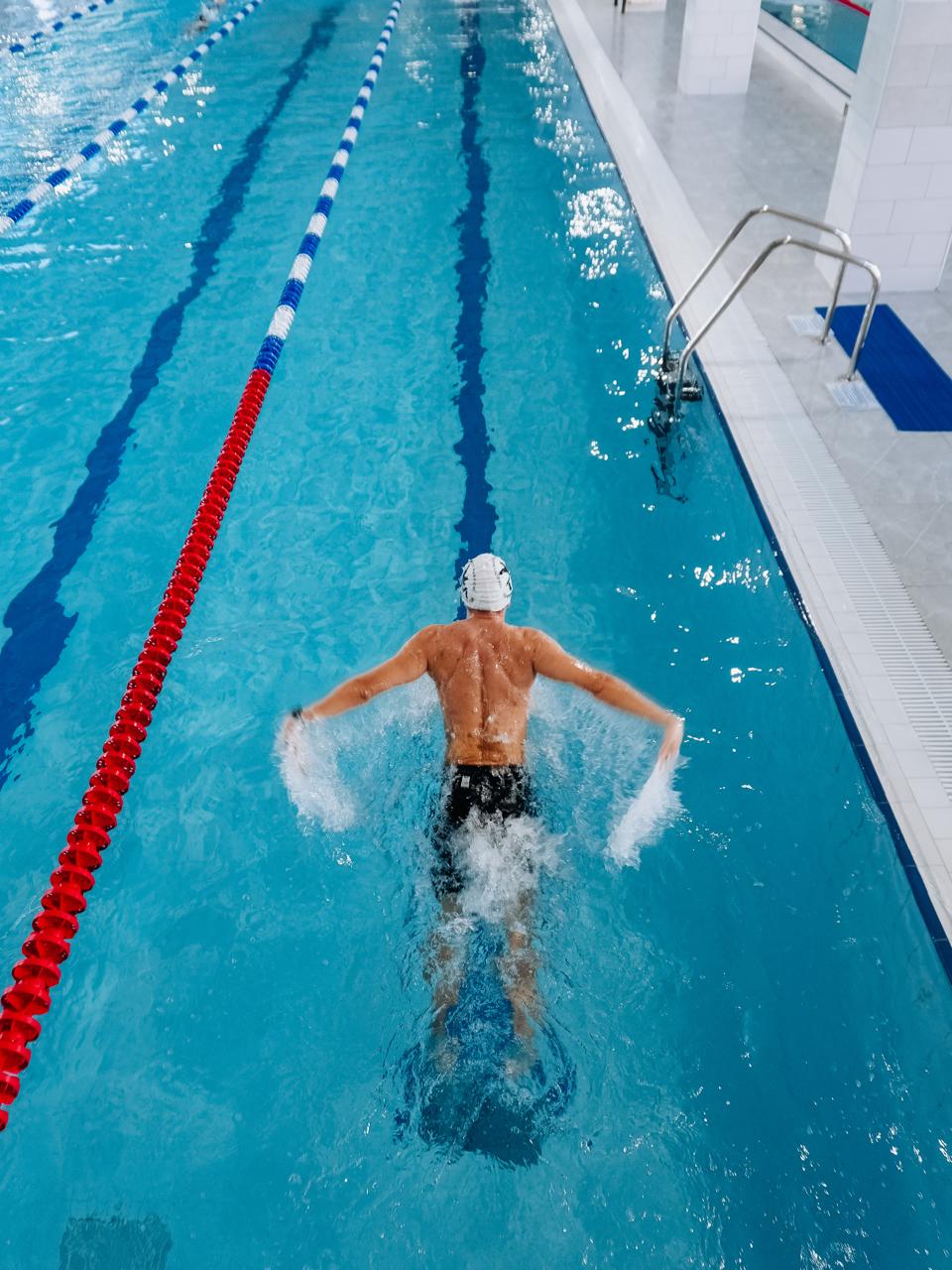
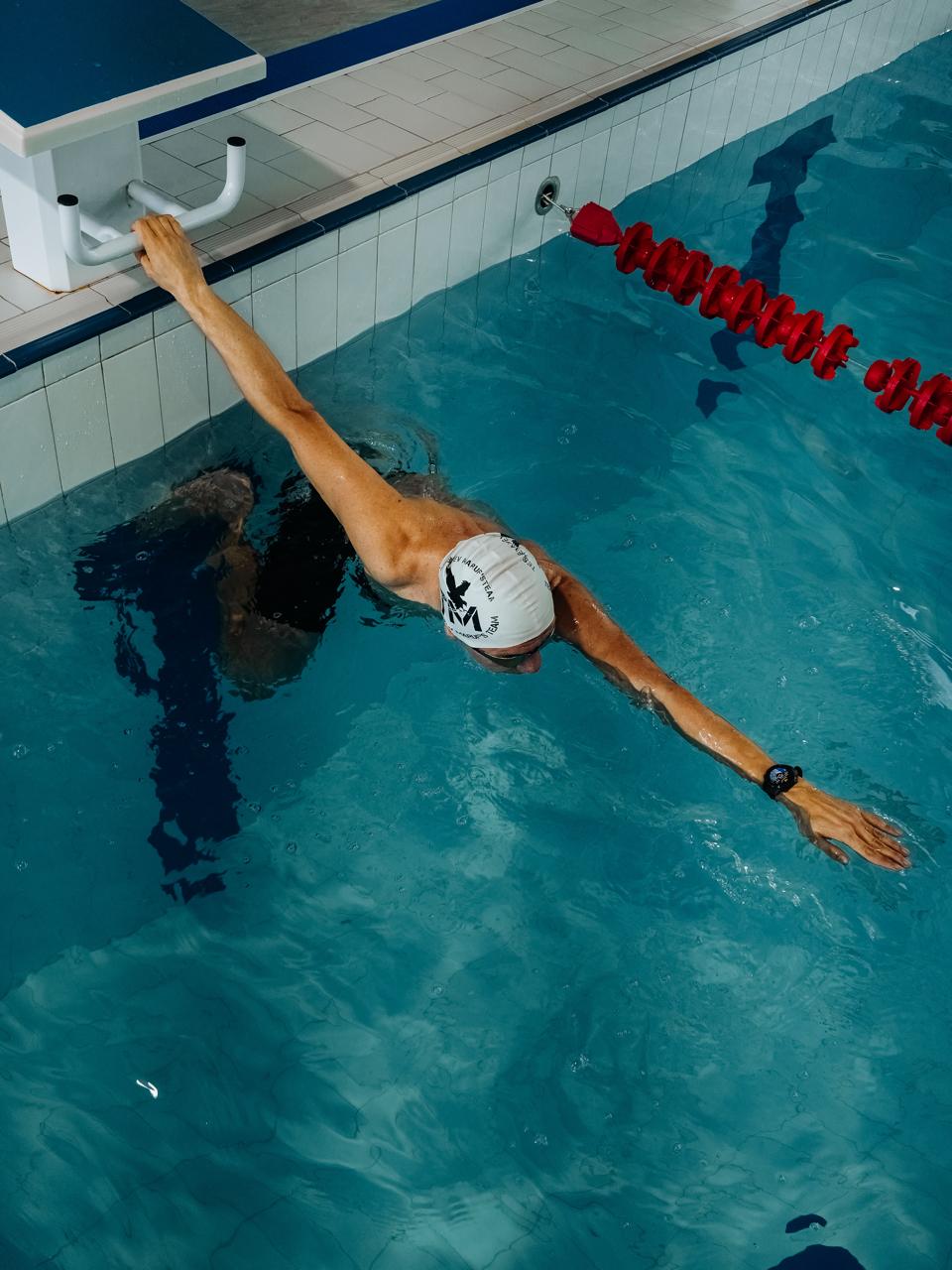
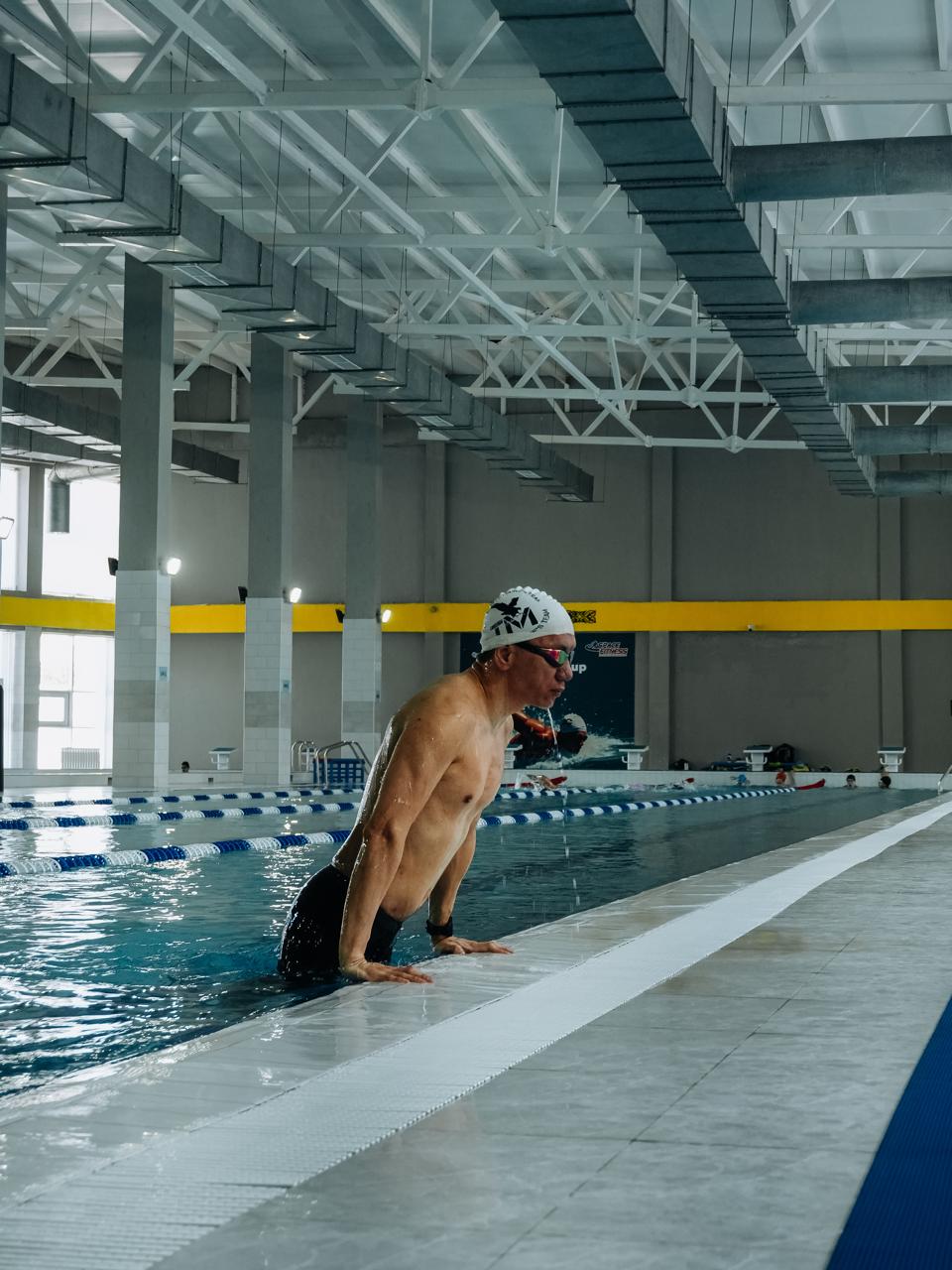
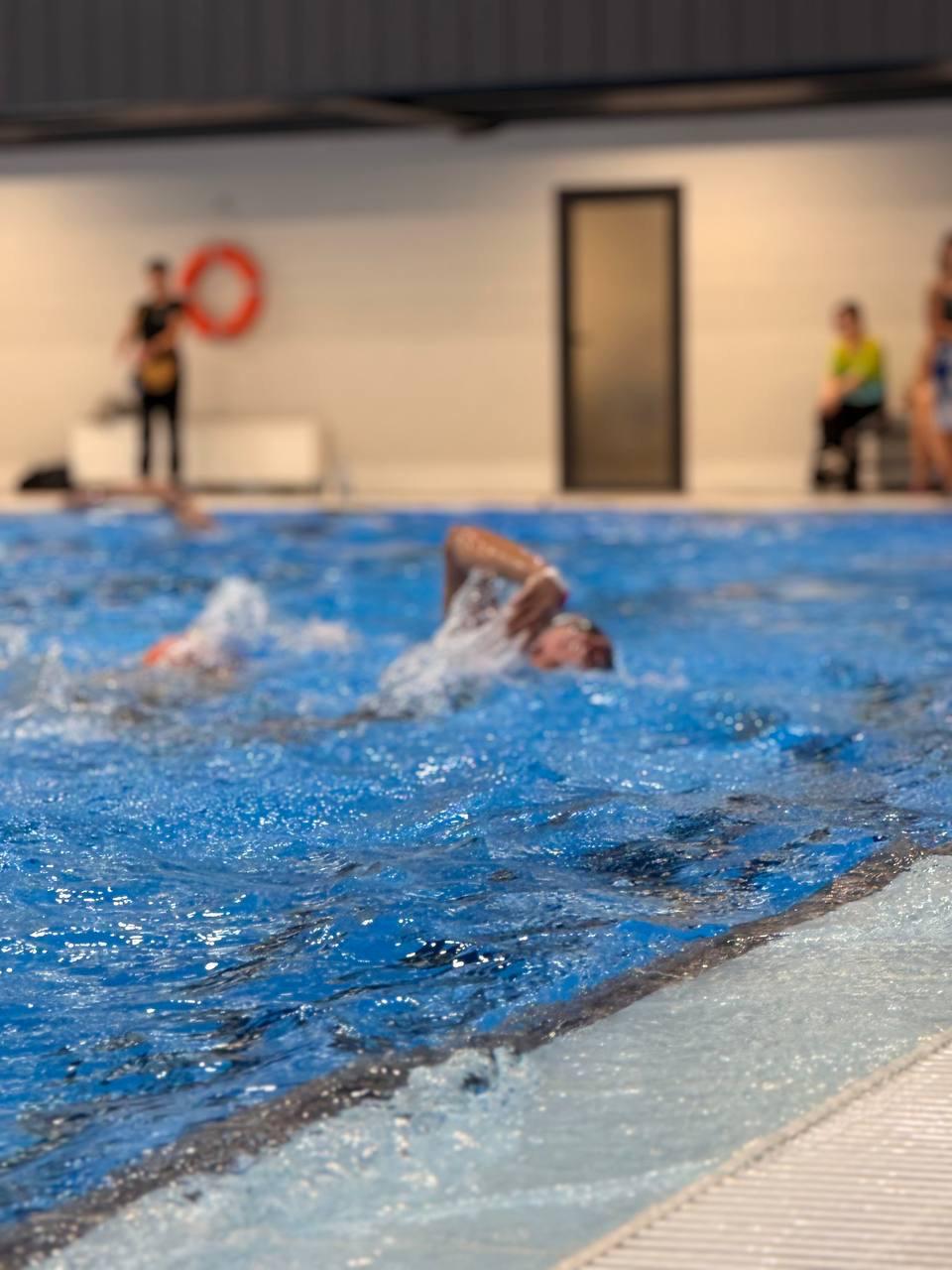
Back then I thought I was a very good swimmer. But in a 50-metre pool I barely managed the first 25 metres: I started choking, my arms and legs seized up, my lungs were burning. The coach simply handed me a kickboard, and we started swimming with it. We did 400–600 metres per session at most. It was a blow to my pride.
02And yet, even before the Spartakiad, you decided to try open water?
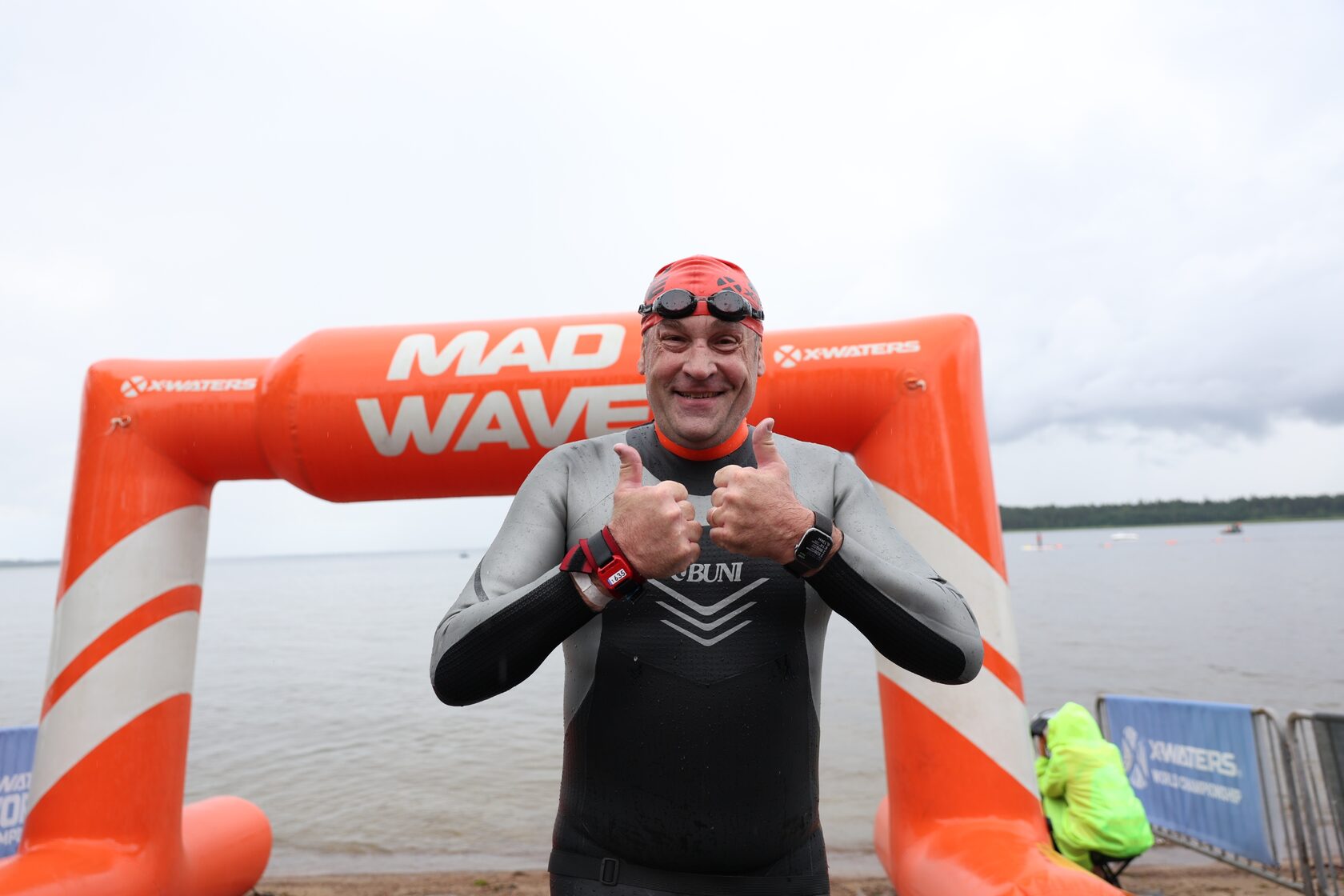
— While I was preparing, I saw Oceanman Qazaqstan in Kapchagay, over 1,500 metres. At the Spartakiad the distance was up to 800 metres, and I wanted to try a mass start beforehand. I suggested it to my coach, and he backed me. That was my baptism of fire.
During the swim my heart rate shot up to 188 — I think you can imagine what was going on with me in the water. I came twentieth in my age group. My coach was very unhappy; he thought I should have been in the top ten at least.
03And how did the Spartakiad itself go?
— The 2024 Samruk Spartakiad was my first corporate race. Swimming was included for the first time. There were 13 participants and only two age groups: 20–40 and 40+. I had to compete against 22–25-year-olds, among others. To be honest, the format itself was a bit of a disappointment.
In the end I came fifth; the ones ahead of me were young and active athletes. My time was around 13:15. But my coach was very pleased with the result. He said that for nine months from scratch, it was an excellent result.
04What happened next? When did it become clear that your results were really improving?
— There were more and more races. In summer 2025 there was the X-WATERS relay: I swam for the Shymkent team and we came second. I also swam 4 km there and I think I was 13th in my age group.
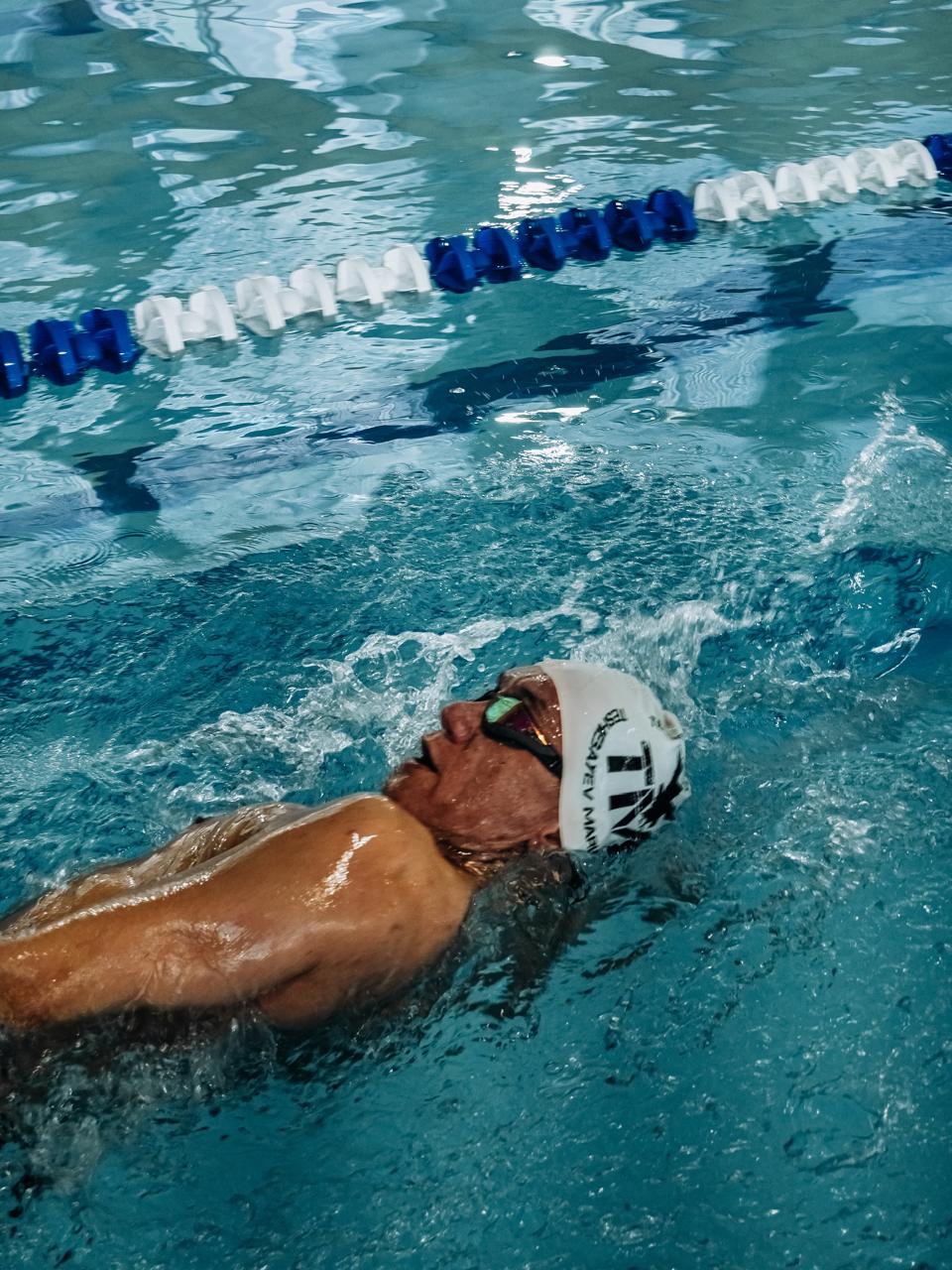
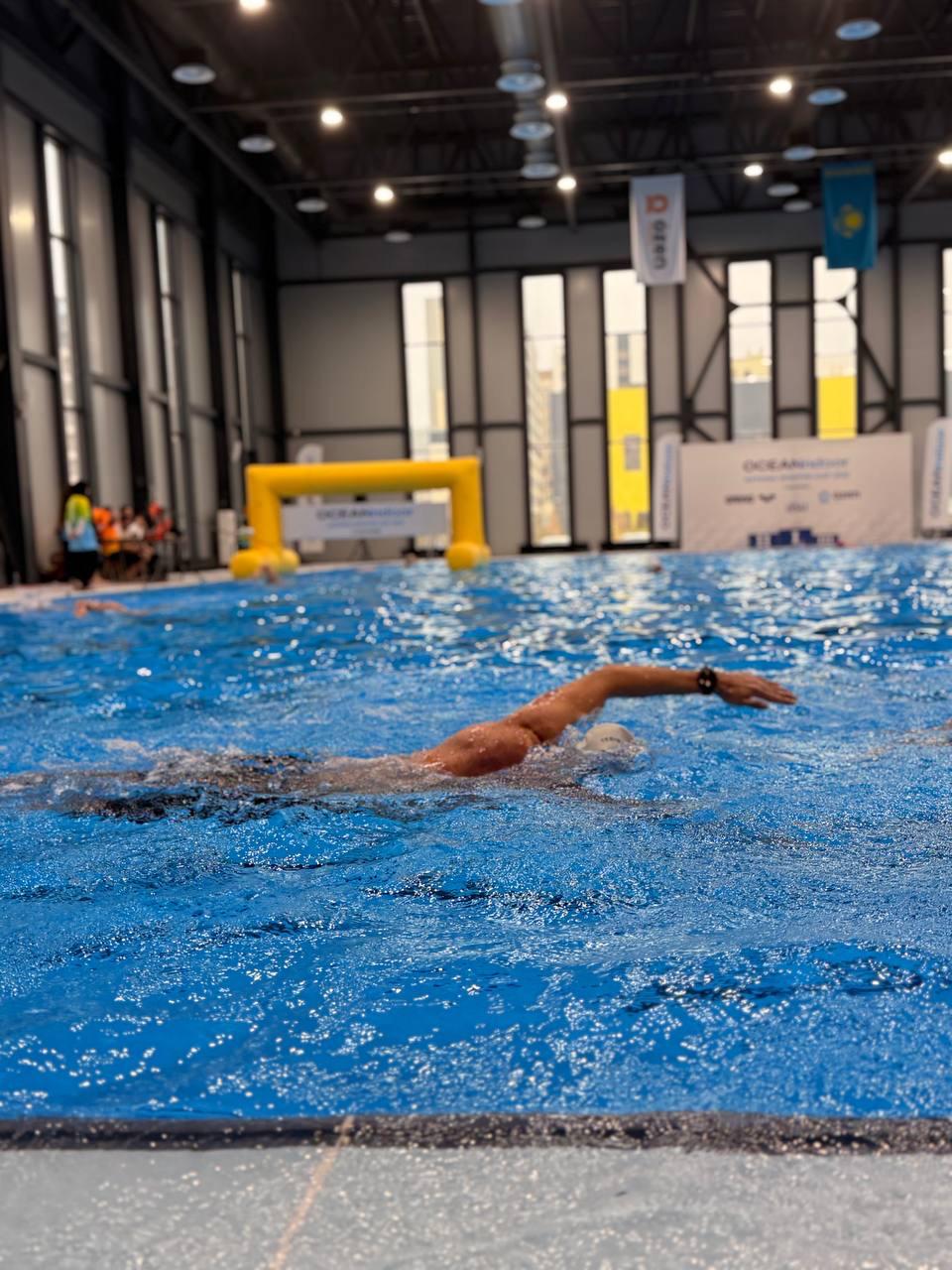
Between November 2025 and January 2026 I made the podium several times. In the 1,000 metres in the pool I was second overall. At the city championships I won the 400 metres in 5:23 — that’s the result I’m proudest of. In a 30-minute night swim I also came first, covering about 1,800 metres. In the 50 metres I was second. That’s when I saw that the progress was real.
05Who coached you all this time?
— When I came to work in Shymkent in 2023, I didn’t know anyone there. I found my coach on Instagram — Maruf Teshebaev. He supports my ideas and at the same time assesses my results honestly, without making allowances.
After the Spartakiad we started working online. In 2025 I moved to Astana for work, and fortunately Maruf moved there too. But we still train online: we live in the same city but work together remotely.
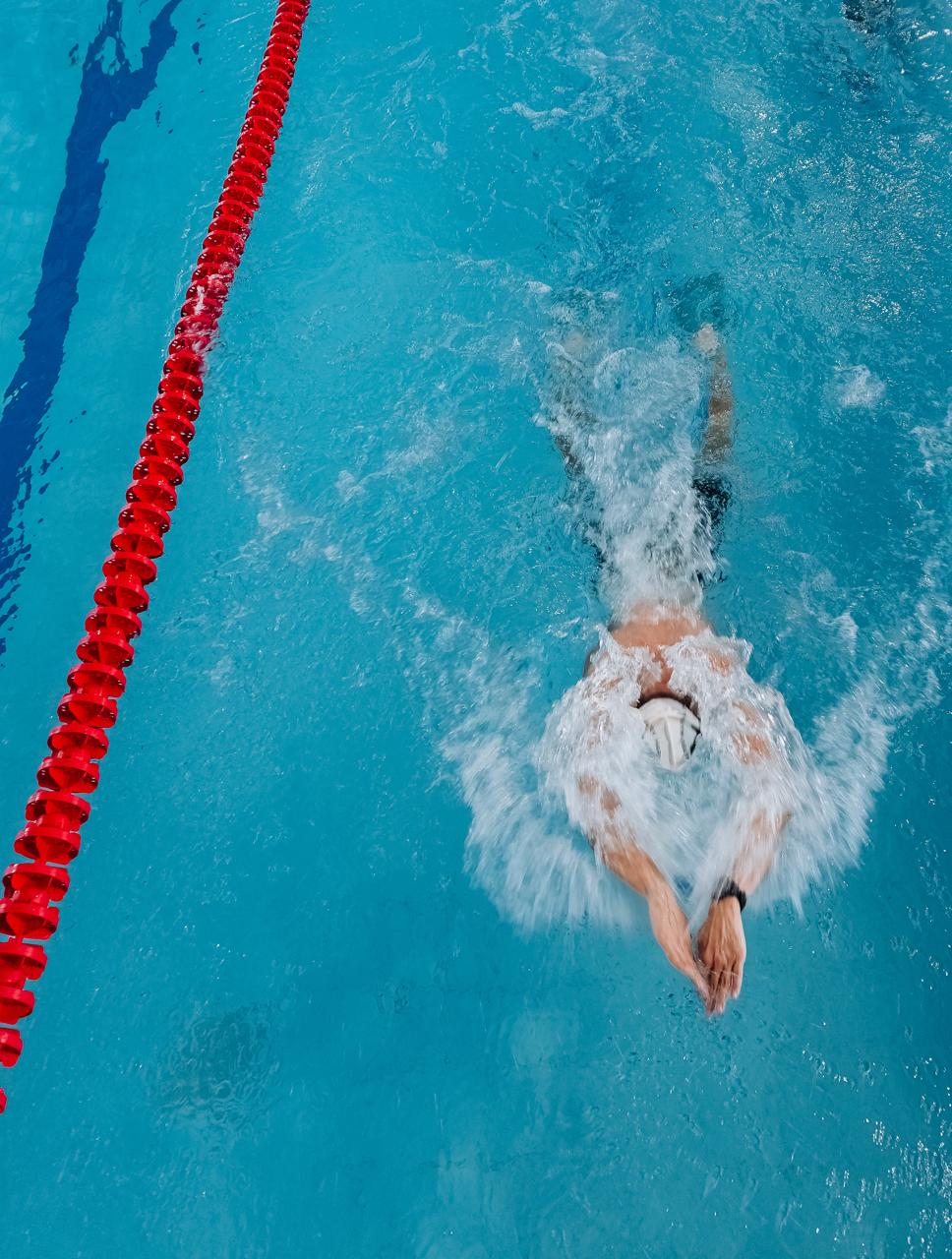
Right now I have six sessions a week, mostly in a 50-metre pool, and open water about once a week. The main thing we’re working on now is stroke efficiency. Maruf wants me to swim 50 metres in 30–32 strokes.
21 kilometres on Lake Balkhash
06So after distances of a few kilometres, how did the idea of going straight for 21 come about?
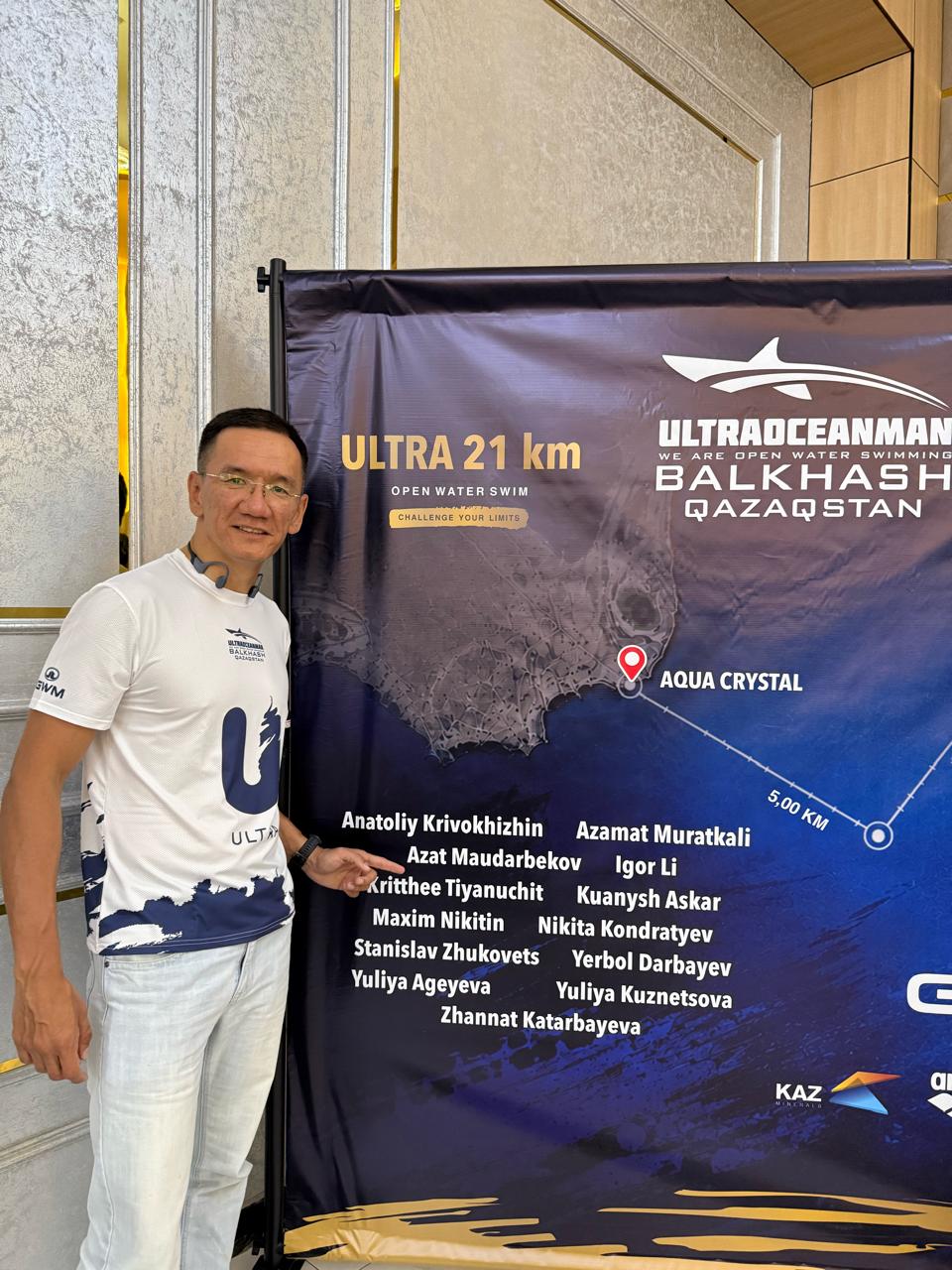
— In winter, riding the wave of those podiums, I was on a high. I saw an announcement that a 21-kilometre swim was being held on Lake Balkhash for the first time in Kazakhstan, with only ten slots. I decided I absolutely had to get one of them.
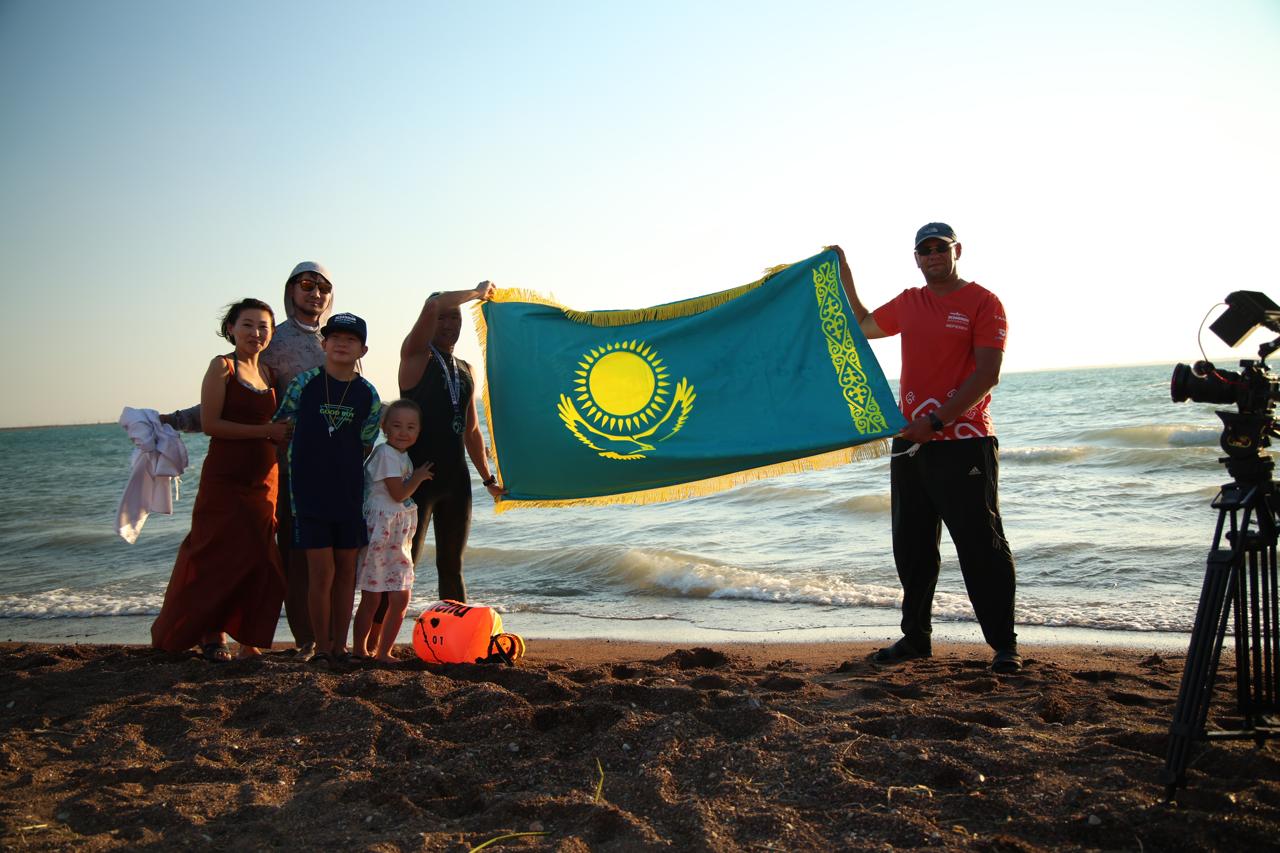
I was the first to register. The race numbers were later drawn like a lottery, and I happened to get number 01 as well. At the time the goal didn’t seem real at all. I had never swum more than four kilometres in a race, and this distance was more than five times longer.
07What happened on Lake Balkhash itself?
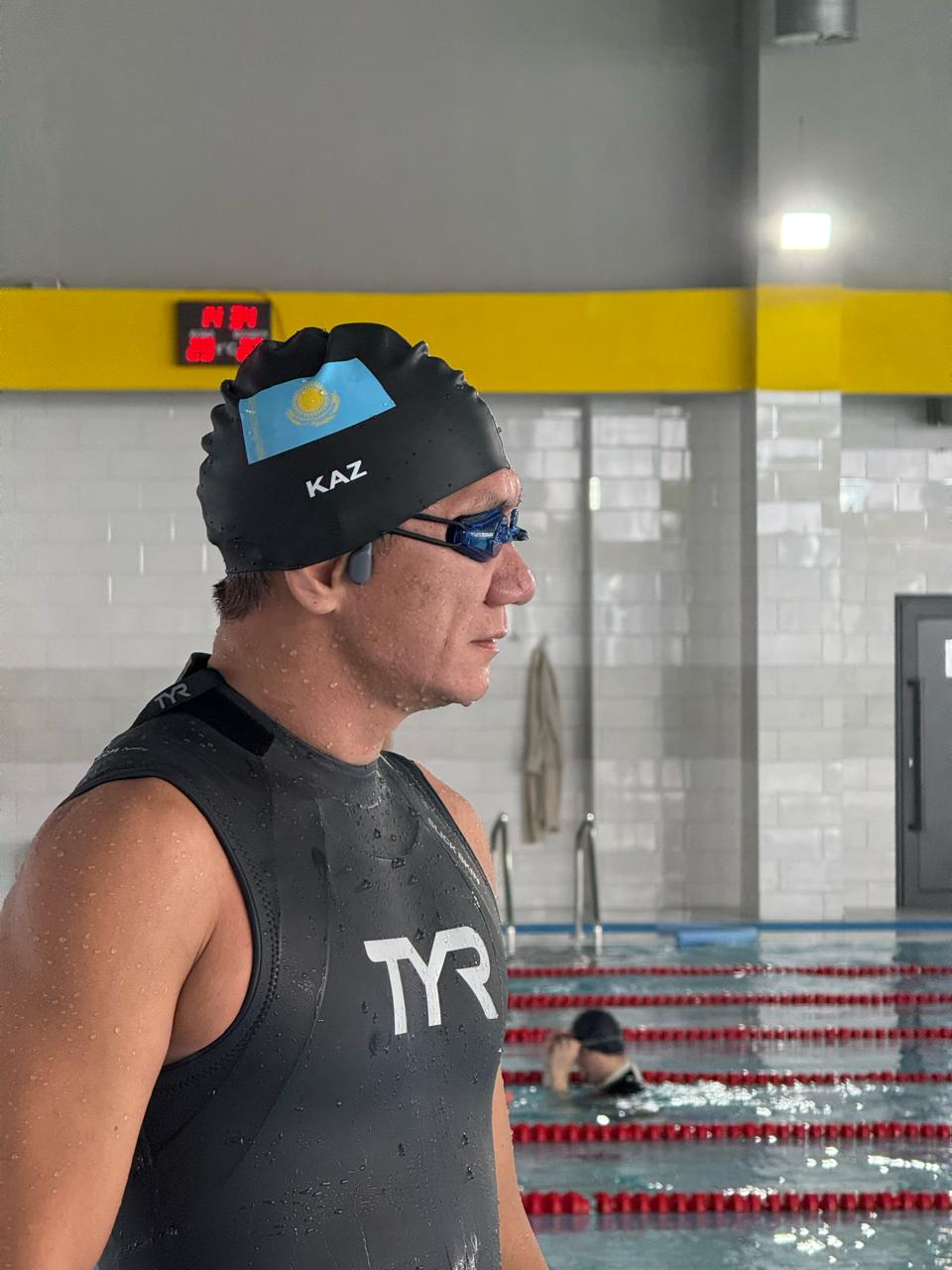
— Everything went well until the 13th kilometre. I was swimming in a group of four, I even overtook the fourth swimmer and held my position for about 300 metres. And then I hit the wall. I didn’t want to eat, I started getting cold, my breathing went, my pace went too, and I couldn’t get it back. From then on I just swam. I only negotiated one thing with myself: keep going.
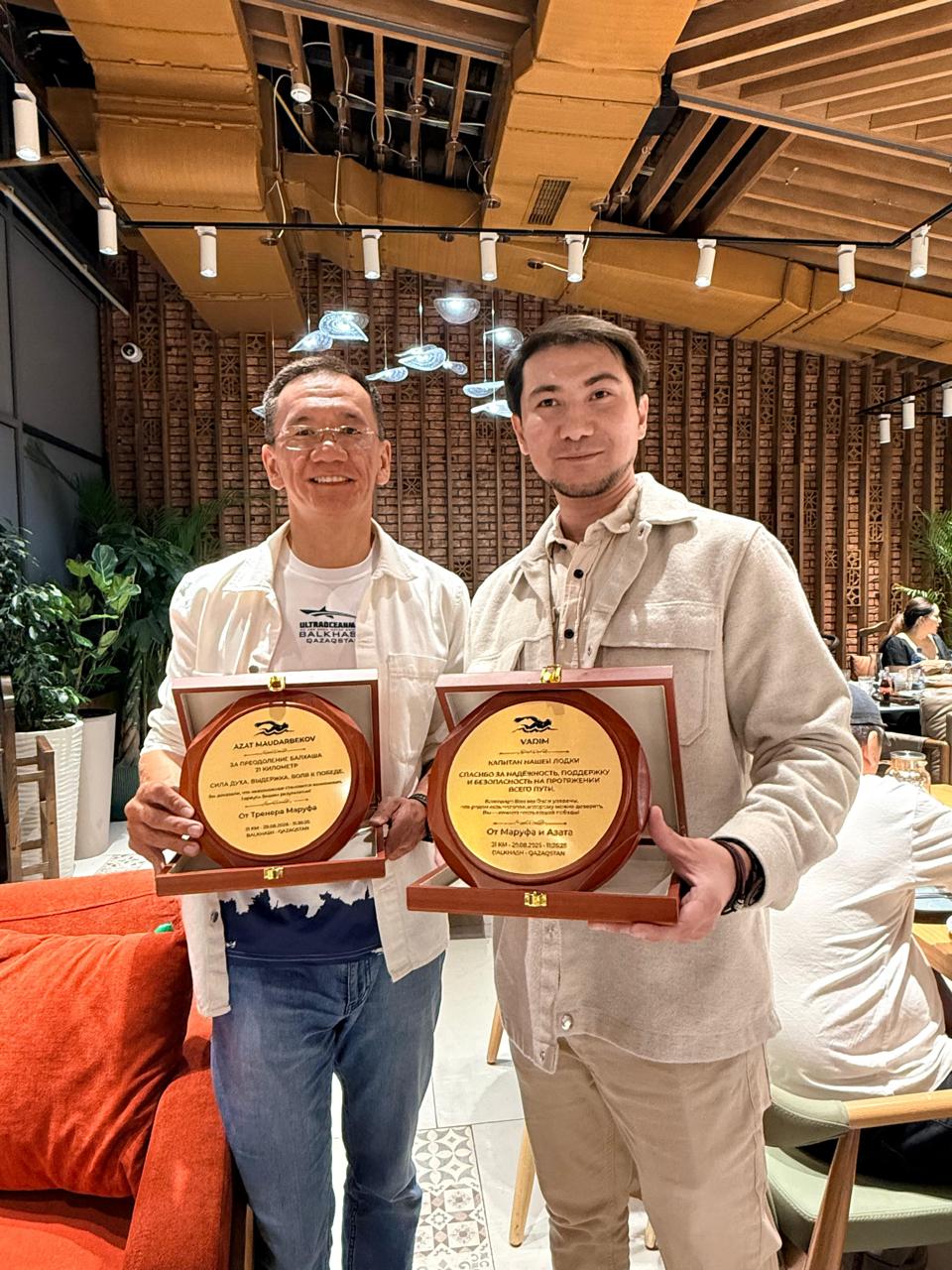
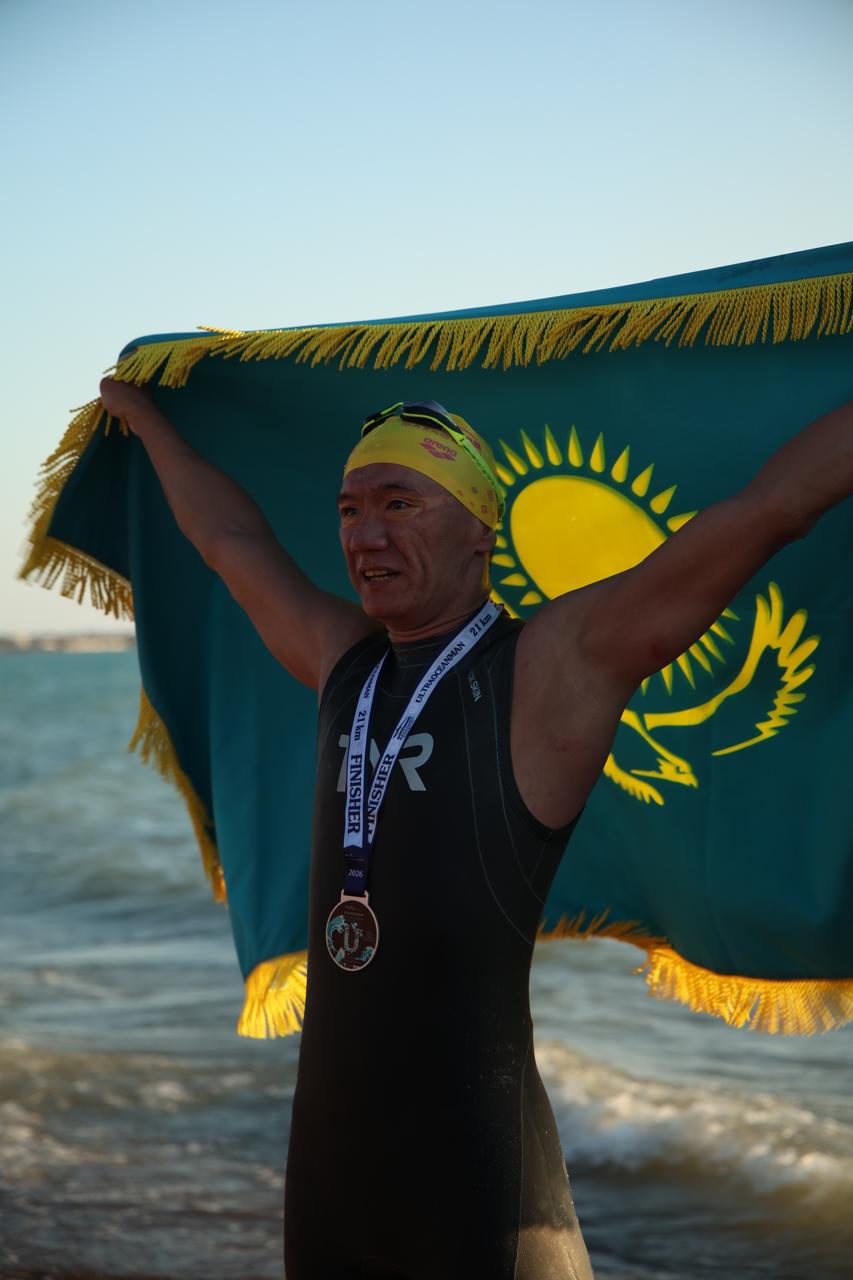
The official course distance was 21 kilometres, but because of the waves and navigation I ended up swimming about 22.5 kilometres. I finished in 11 hours 36 minutes, with a 12-hour cut-off.
08And during the swim you also ended up without your coach in the boat.
— Yes. The plan was for my coach to be next to me in the boat. He knows my physiology: if I start stroking faster and my speed drops, it means it’s time to eat. If necessary, he gives me an isotonic drink. But at about the 12th kilometre Maruf became ill with seasickness, started losing consciousness and was evacuated by an emergency services boat.
From then on I swam without his support. My nutrition plan fell apart completely; I never used half of it. I no longer understood myself what I needed: a gel or an isotonic drink, a banana or a cola.
I had to explain to the boat captain using hand signals, right from the water, what a mass gainer, a gel and an isotonic drink were. I shout to him: “Give me the isotonic!” He: “Which bottle?” Me: “Open it — does it smell of chocolate?” He: “It does.” Me: “No, not that one.” And so on.
09Did the thought of quitting ever cross your mind?
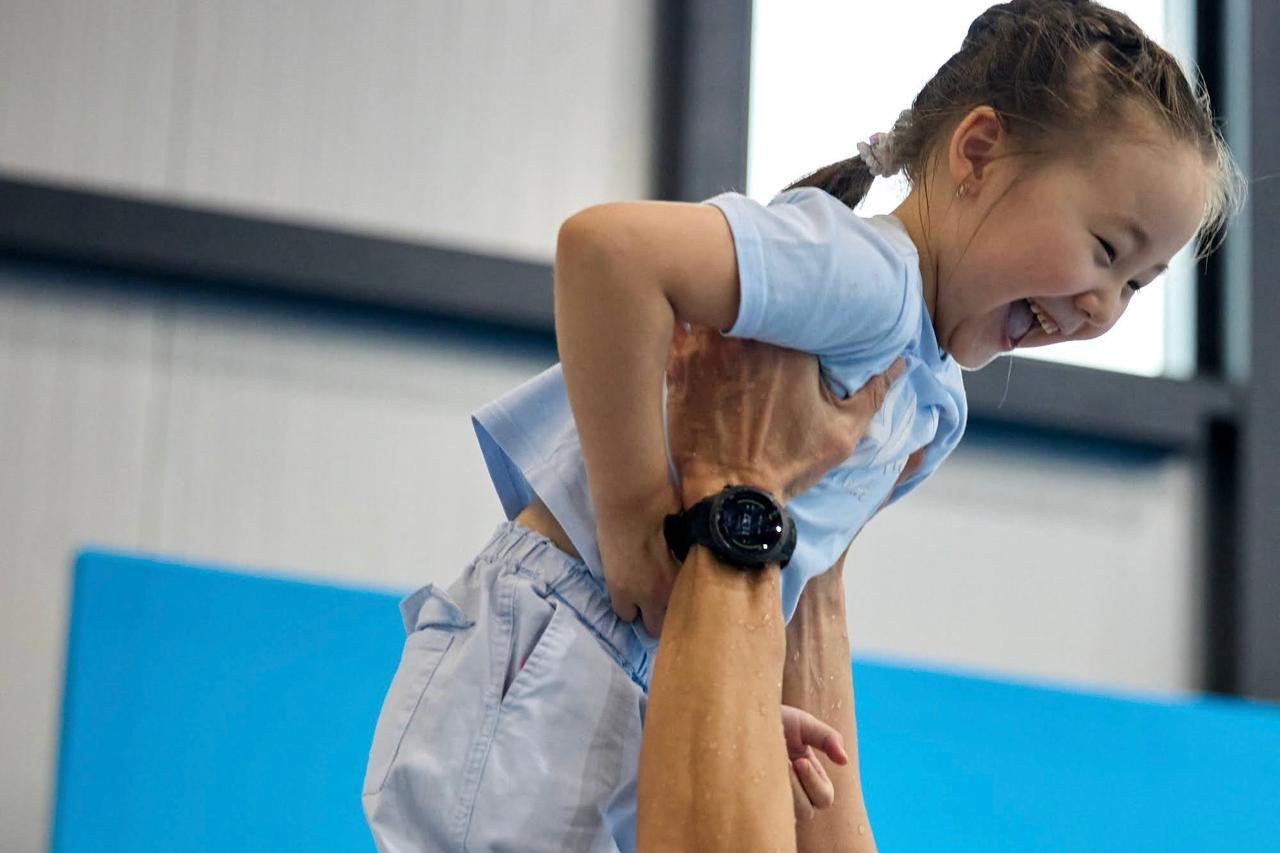
— No. Not at all. My daughter always says her dad is a superhero. And I simply had no right to quit.
10And what happened in the last few metres?
— With about 200–100 metres to go, before I knew it I burst into tears right there in the water. I’m one of those people who never cry. I still can’t explain exactly what it was. I suppose everything built up at once: the fatigue, the tension, the realisation that I had actually made it.
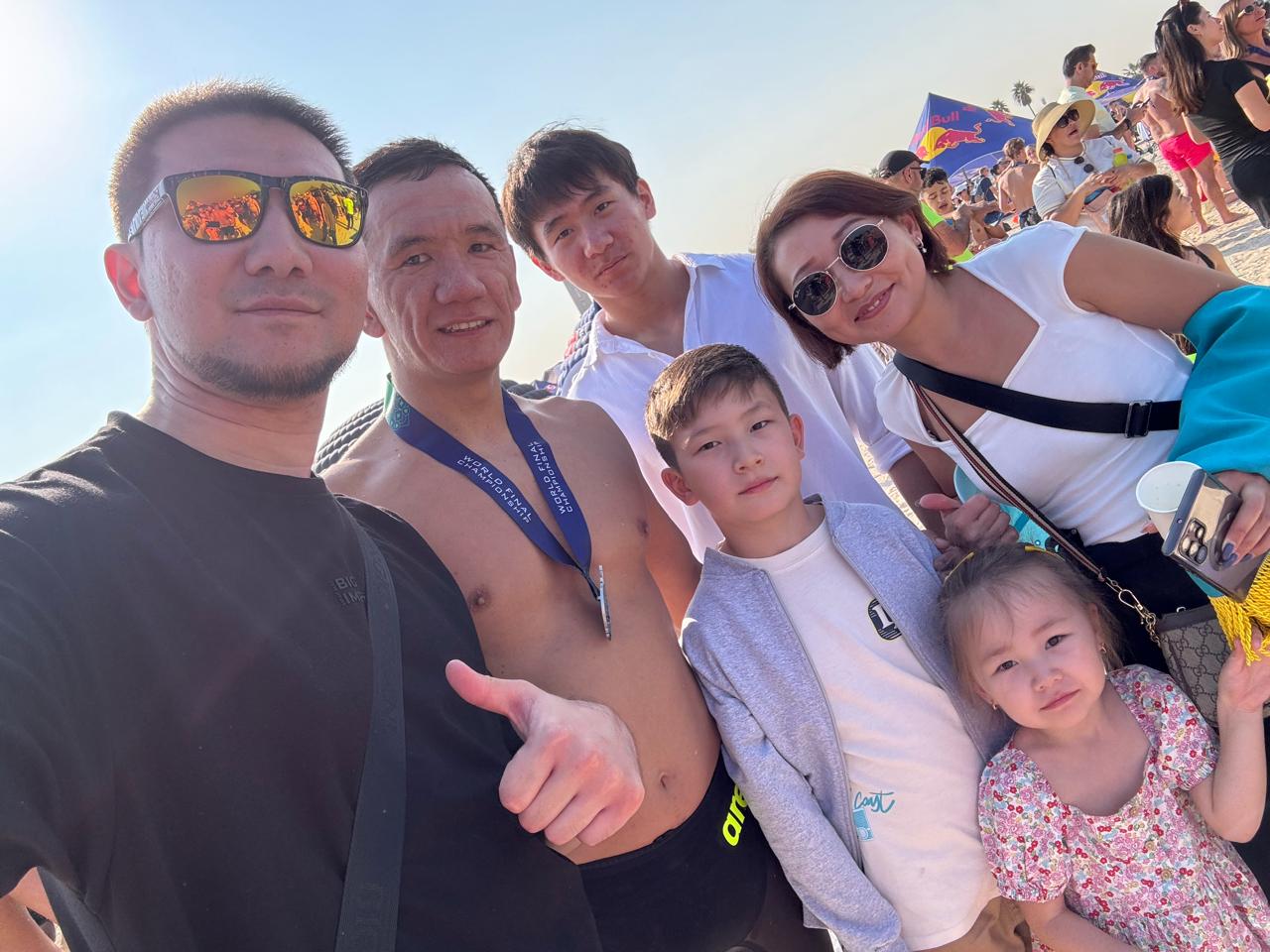
On the shore my wife, my family and my coach were waiting for me — the coach with his stopwatch already running. I was just happy I had completed the distance. And I have absolutely no regrets about where I could have pushed harder to come third, tenth or anything else. The very fact that I did it matters more to me.
After the finish
11How realistic is this kind of training and racing without your family’s support?
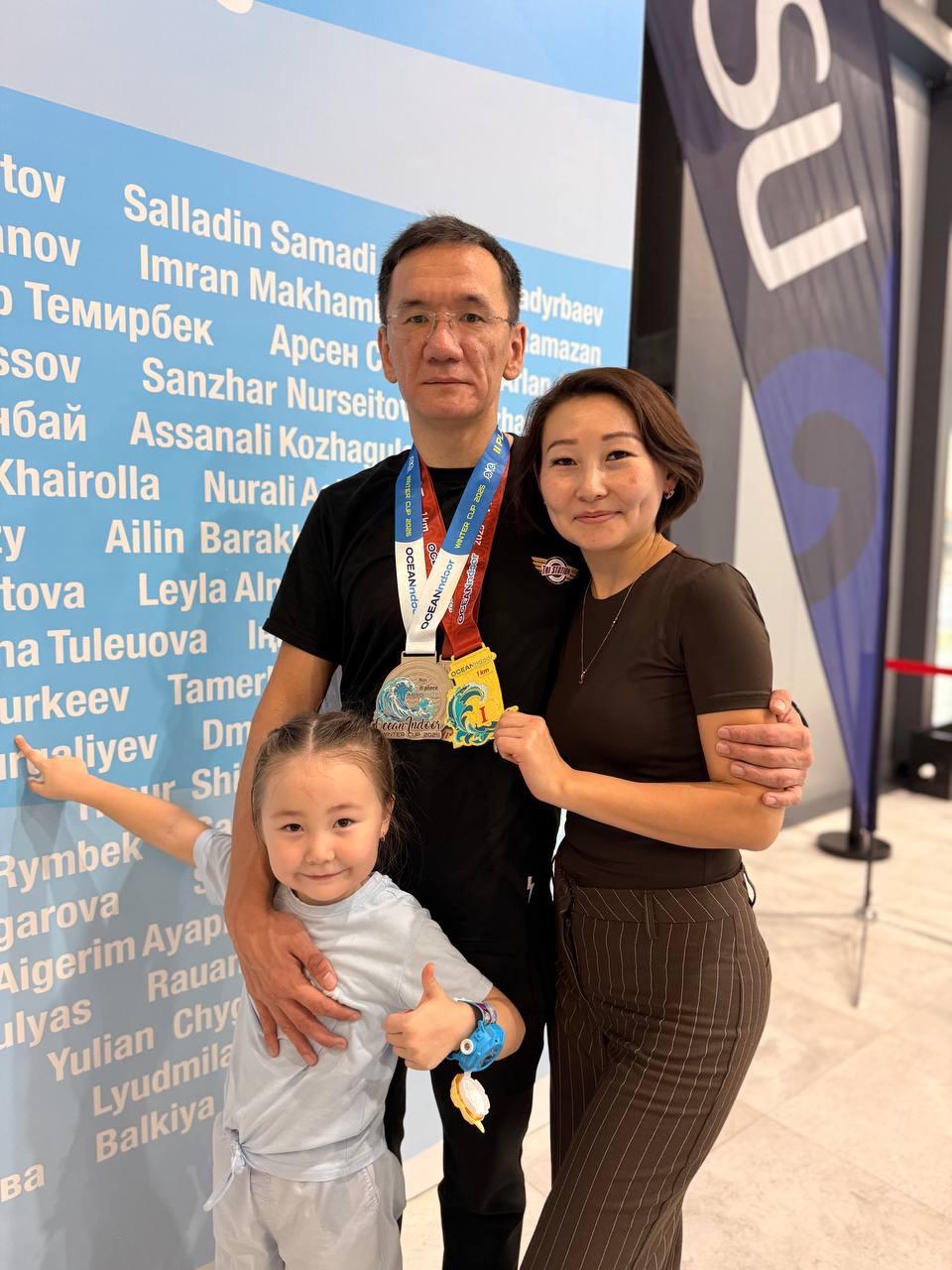
— My whole family supports me: my wife, my parents, my brother Alibi, my little sister. My brother has been at almost all my races as a supporter. During the 21 km my sister was very worried and was rooting for me. My wife was also waiting for me on the shore after the ultra.
Without that support it would have been much harder for me both to train and to travel to races. And as for the children, I’ll put it this way: my daughter’s opinion means more to me than any place in the results.
12You have a management job, a family, three children and six training sessions a week. What do you have to give up for sport?
— Most of all, free time. In everyday life it’s a constant compromise. But sport gives you very honest feedback. The stopwatch doesn’t listen to excuses. I’m responsible for learning and development, and I’ve tested on myself what we talk about in our programmes.
It’s hard for an adult to be a beginner, and results depend on consistency.
There’s one more lesson, this time for a manager: a big goal is made up of ordinary days. Setbacks are inevitable, so after a setback you simply have to get back on plan.
13What happened after the 21 kilometres? Did you immediately want to set your next goal?
— No, at first there was complete emptiness; I didn’t want anything. I saw it as the state you’re in after an enormous physical and emotional effort, when the body hasn’t had time to recover yet. But the next goal has already appeared: I want to swim 50 metres in 24–25 seconds. I’ve decided to focus on sprint distances for now.
14What does a “second wind” mean to you personally?
— It’s when you decide to start again, even though everything in your life seems to have fallen into place: you have a position, a family, habits. My new chapter began when I agreed to be a beginner where I thought I was strong.
And the main thing I’ve understood about myself: you don’t need talent for this. You need to set a goal that scares you and not give up on it.