“A second wind? It’s far more interesting to find a third, a fourth…”
An IT expert with 30 years in the industry went from struggling through every hundred metres to nine podium finishes in a single season in just three years — and is now preparing for a swim in the Arctic.
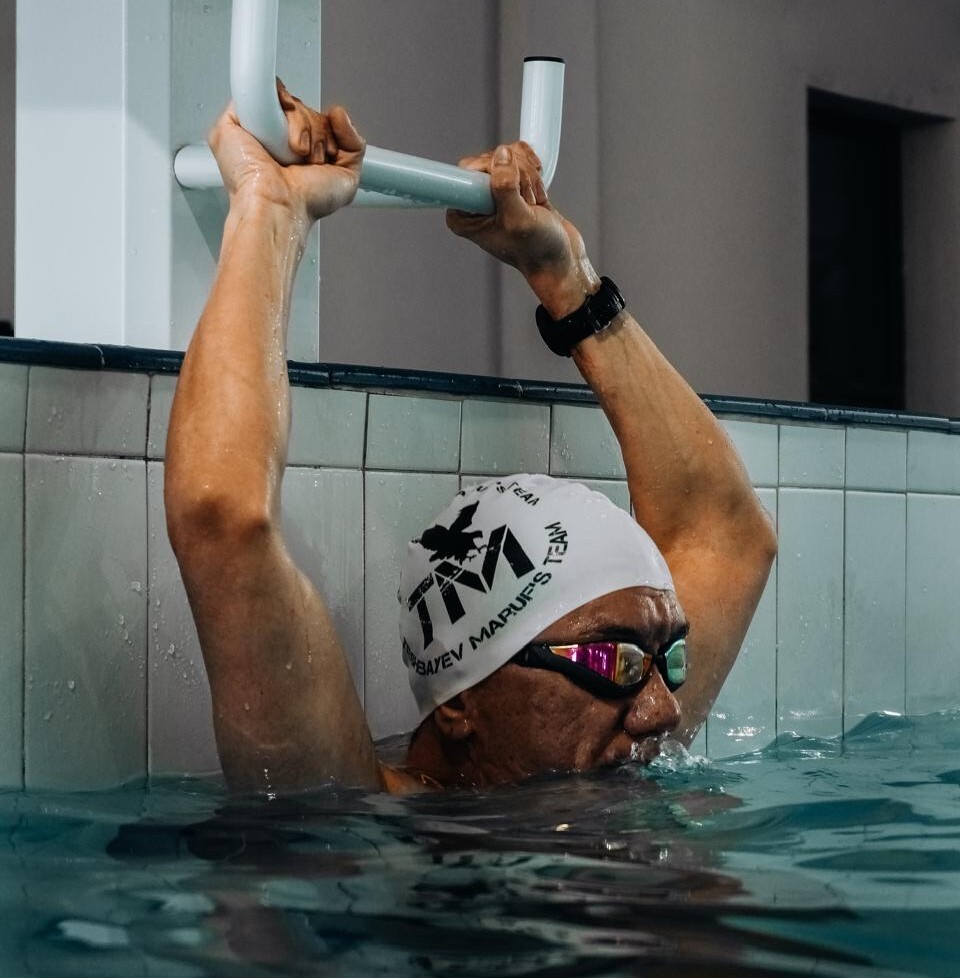
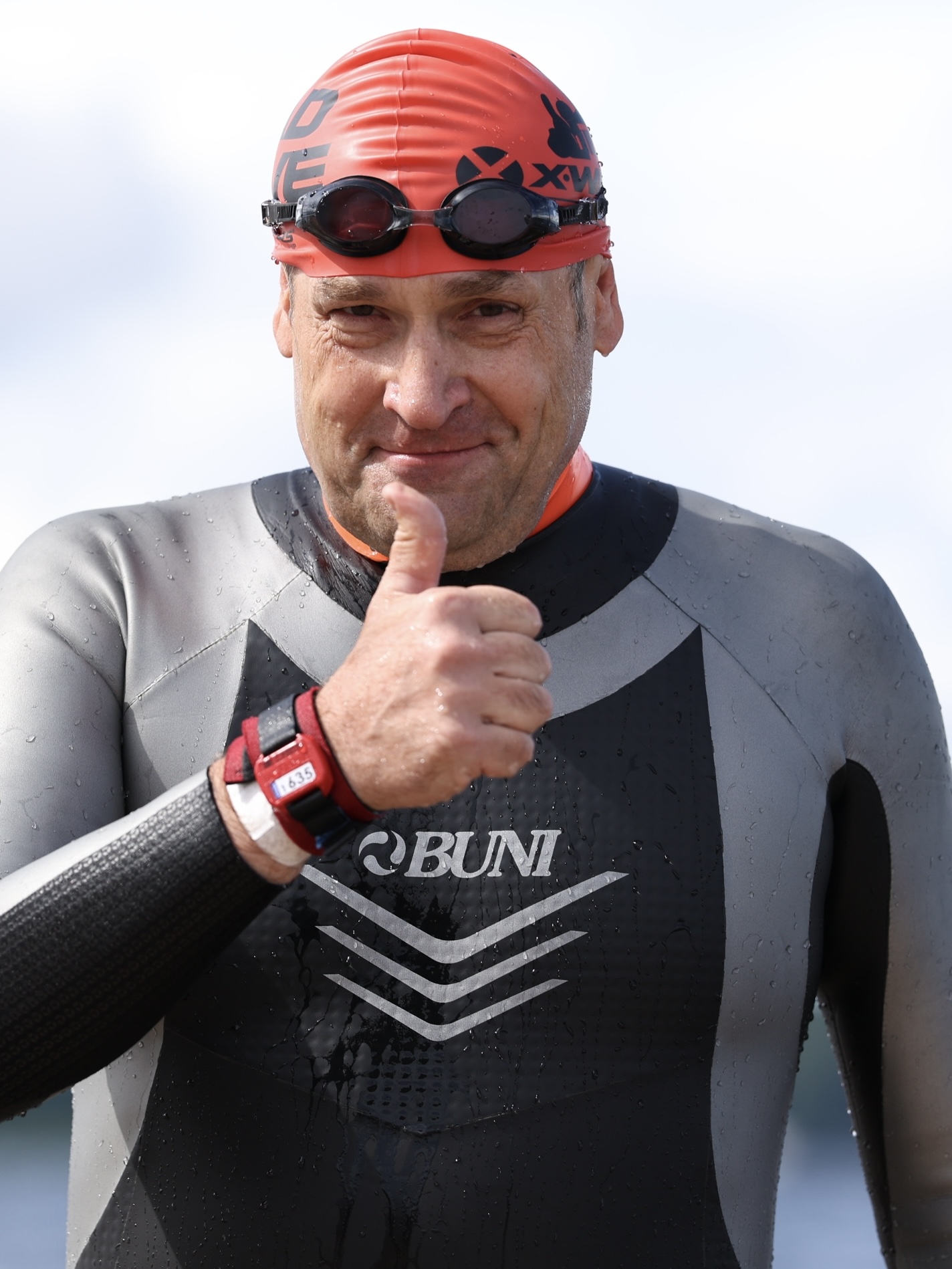
Once upon a time, coaches decided that Mikhail Loginov had little future in swimming. There was something they didn’t like about his breaststroke. Mikhail was seven, and after a few months of lessons the pool disappeared from his life for decades. That looks especially funny now: breaststroke is exactly what wins him most of his gold and silver medals at amateur competitions.
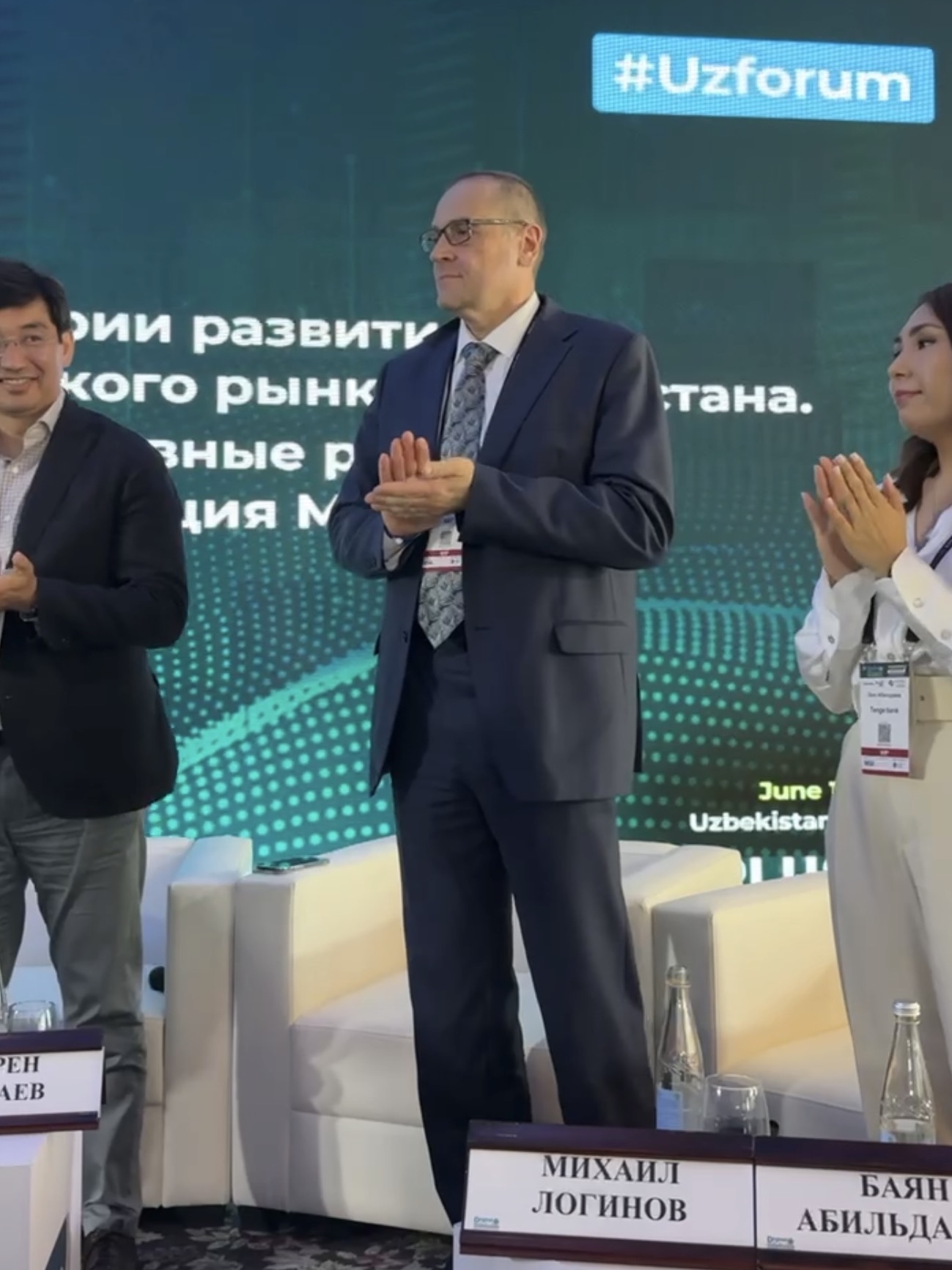
Mikhail works at SAP, where he is responsible for expertise in banking, insurance and retail. He is an IT professional with 30 years’ experience, a husband and a father of three grown-up children. He is also someone whose ordinary week includes six training sessions, whose summer is mapped out between open-water races, and whose plans for 2027 now include the Arctic. And that story, too, started as a joke.
We talked to Mikhail about how a man who got tired after 100 metres and, by his own admission, “fought the water” became a swimmer with nine podiums in a single season. About the seven-degree water of Issyk-Kul, his wish to swim across the Bosphorus at 80, and why sometimes it’s better not to wait for a second wind.
A breaststroke with no future
01Mikhail, what does your typical day or week look like today? How much time do work, training and everything else take up?
— I usually get up at 6:05. I’m actually a night owl, but in the warmer months the early Almaty sunshine makes it fairly easy to wake up. All my training is either early in the morning or in the evening after work.
At seven in the morning I’m in the pool for a session with the Swim Formula swimming school. Evenings are for “dry land” — gym workouts. At weekends I head out for an open-water session at Kapshagay or do a long session in the pool. That adds up to six workouts a week. This schedule makes it easy to manage my working day: in the morning I can switch into work mode quickly, and in the evening I get properly tired so I sleep better.
02Has sport been with you all your life, or did it come in adulthood? What were you into as a child and as a young man?
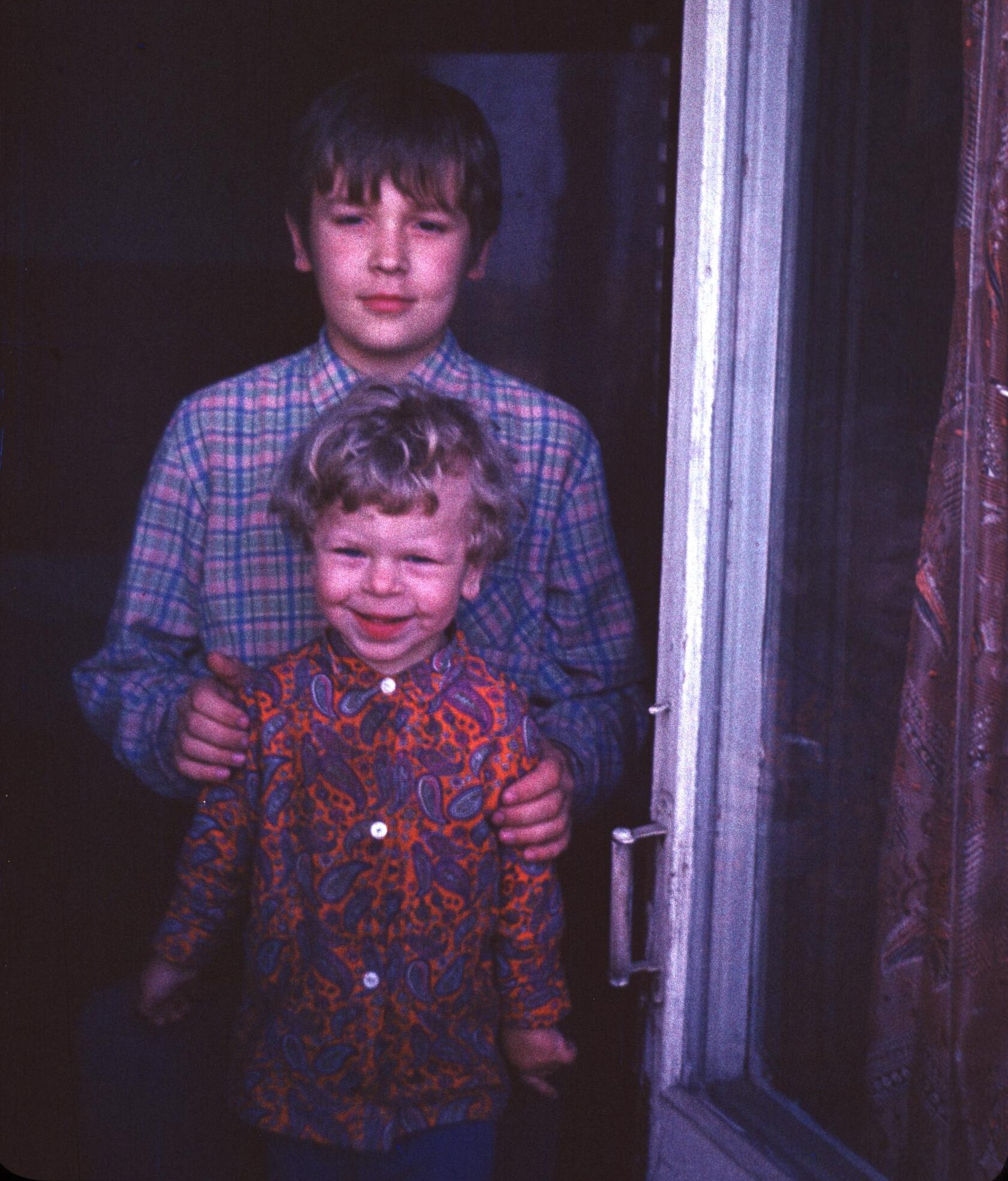
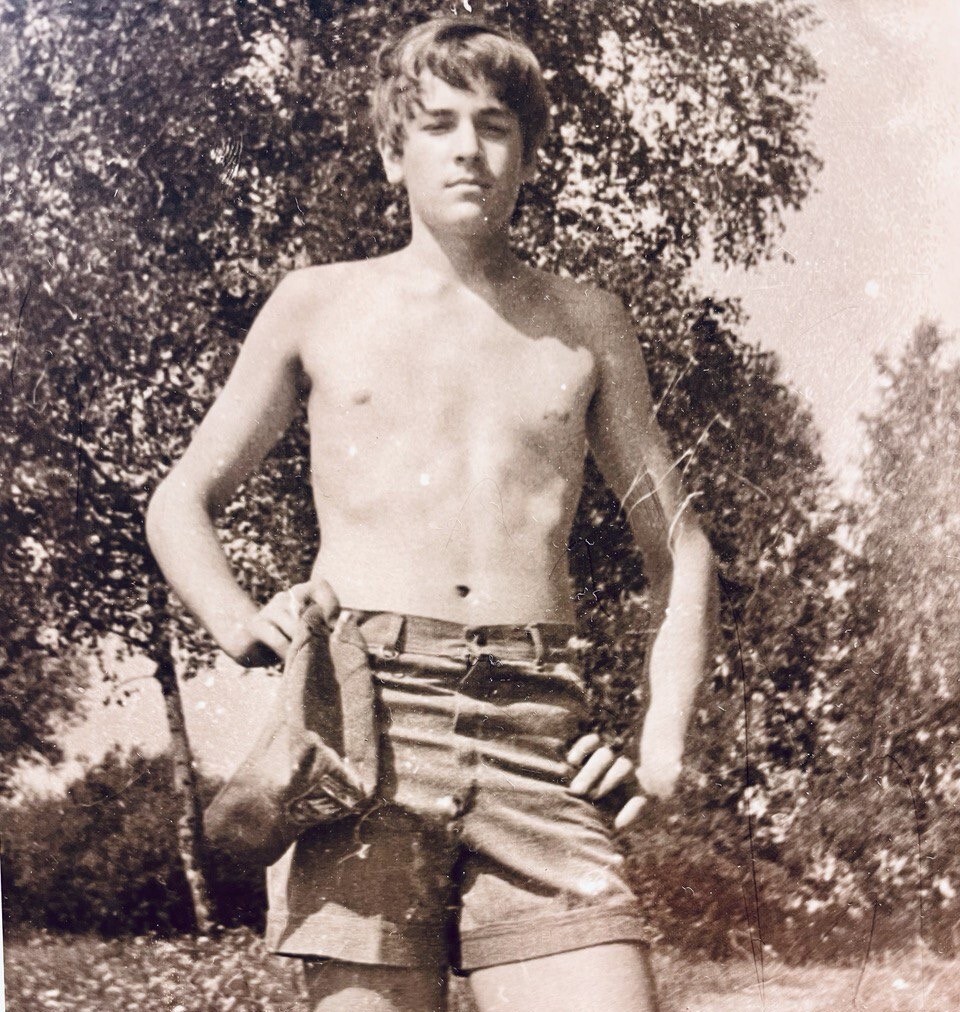
— Soviet schools had a certain practice. In the middle of a lesson, the deputy head, the PE teacher and someone from a sports school might turn up. “Boys, stand up,” the deputy head would command. From the first year of school I was a head taller than my classmates, so I was quite often invited to join sports clubs.
Swimming, handball, rugby, basketball. I remember that I really didn’t like handball, but I played rugby for about two years and enjoyed it. My sport was on and off, and at 14 it stopped altogether — my studies started taking up almost all my time.
03Why swimming in particular? When did it stop being just training and become an important part of your life?
— My swimming “career” began at the age of seven. And ended almost immediately. I could swim front crawl and backstroke quite confidently. But after four months of lessons the coaches concluded that I had no future in the sport. There was something they didn’t like about my breaststroke. So from my first year at school I forgot the way to the pool for decades.
It’s a paradox, but now breaststroke is the stroke I’m best at. Most of my gold and silver medals in the swimmasters age groups are for breaststroke.
As an adult I went back to the pool. While my wife did aqua aerobics, I swam in the next lane. Now I realise you could hardly call it swimming. I was fighting the water, got very tired after just 100 metres and, honestly, didn’t enjoy the process at all.
At some point I got fed up with it and found myself an online swimming coach. Online sessions with Elizaveta Lebedeva turned my ideas about how to swim upside down. After three months I could swim a kilometre without stopping.
Gradually I came to understand how I should move. But it was hard to assess myself from the outside. In my own mind I was swimming almost like world champion Michael Phelps, but on video I saw strange, clumsy movements. I needed a “coach on the pool deck” — someone who would explain and show me how to correct ingrained mistakes. That person turned out to be Danil Kazmin, a talented coach, motivator and head of the Swim Formula swimming school.
A season of podiums
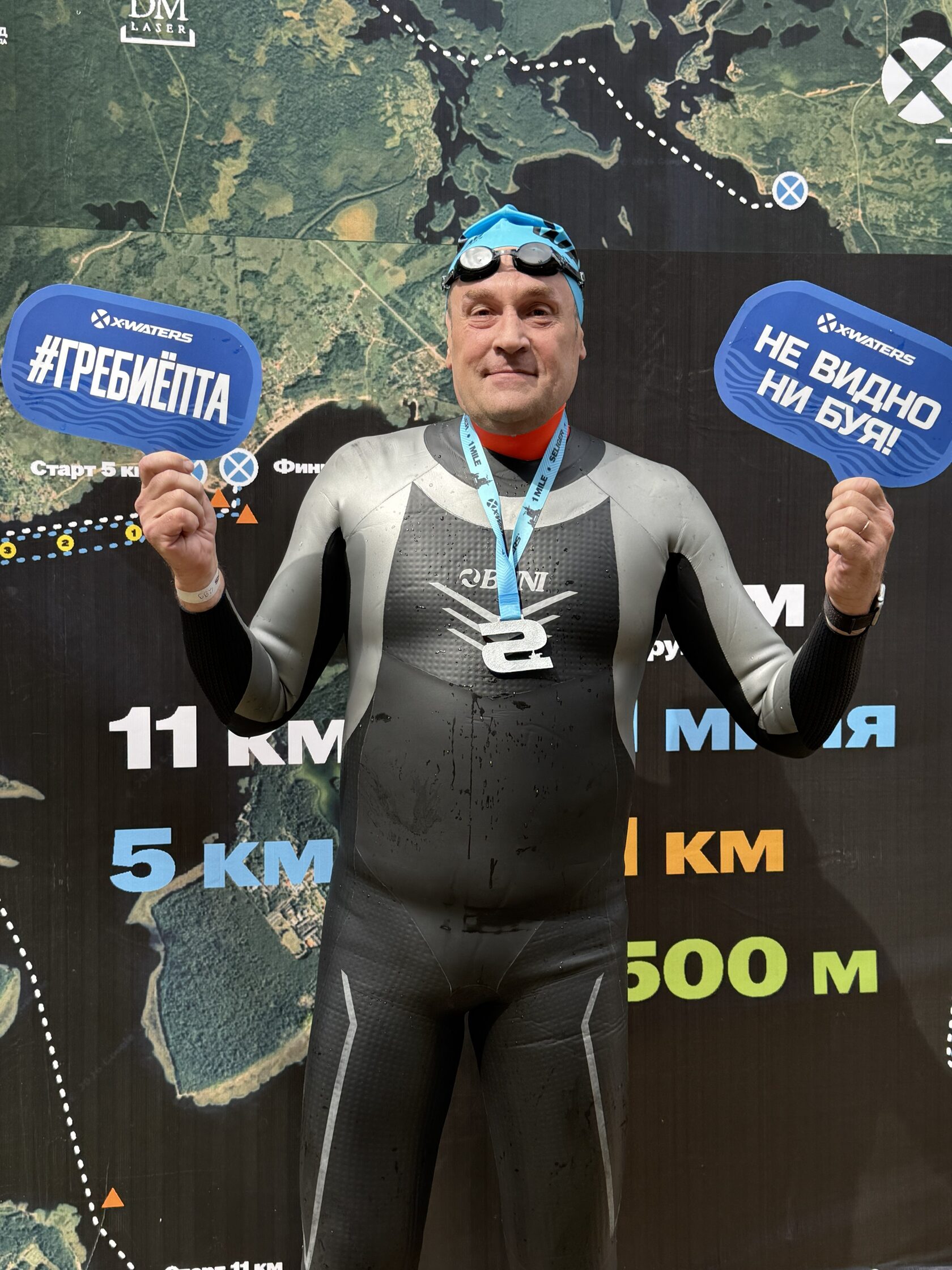
04In the summer you made the podium at X-WATERS Volga. What emotions did that race leave you with? What does that result mean to you?
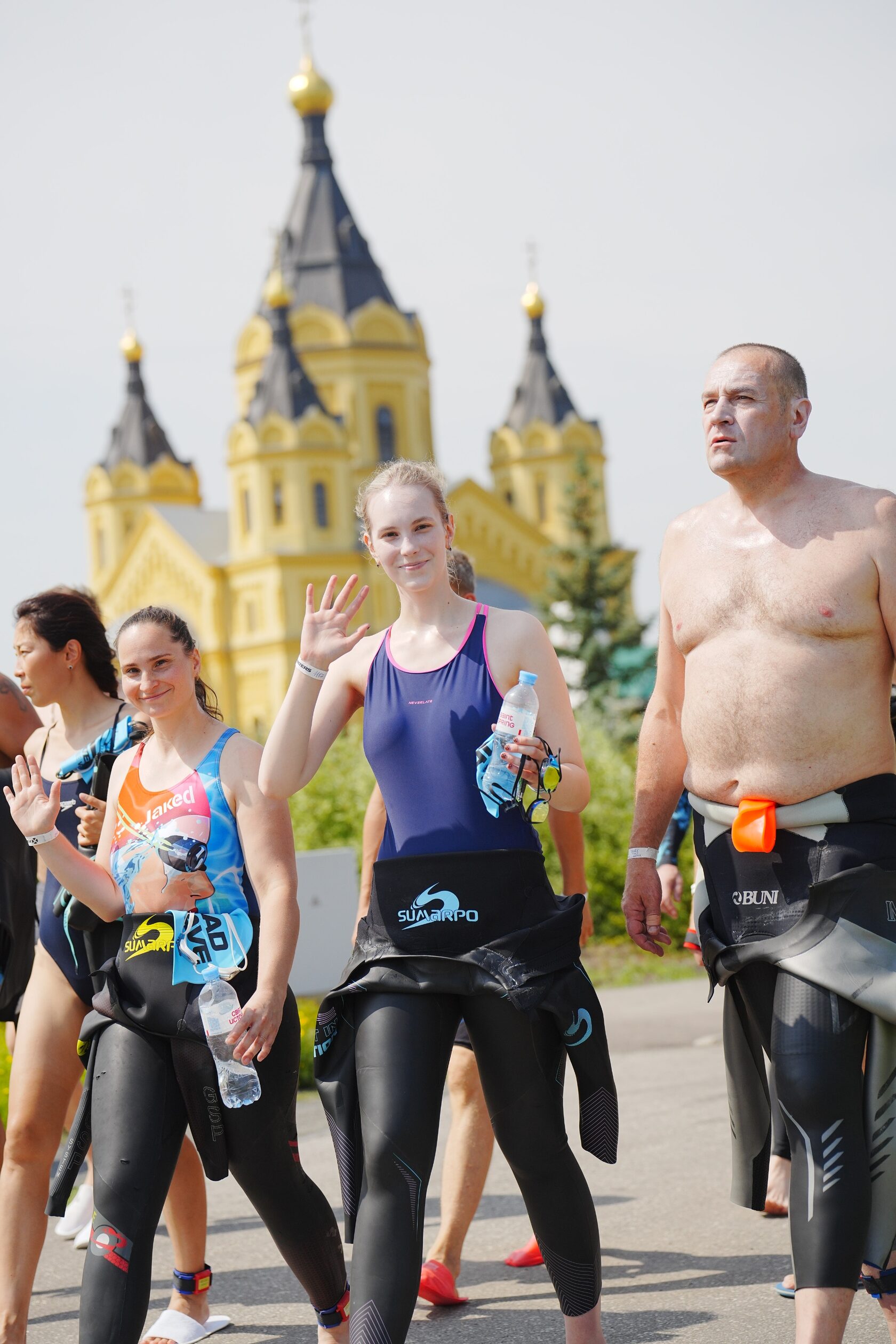
— X-WATERS Volga is almost the “Olympic Games” of amateur swimming. It’s the biggest swim with the largest number of participants — around 3,000 people. For three days, Nizhny Novgorod lives and breathes this festival.
The taxi driver at the station asked: “Here for the swim? Good for you!” Hotels greet arriving swimmers with a welcome banner and put out isotonic drinks at breakfast! Performances on the stage in the race village go on non-stop. Where else can you find a swim where a rock band plays live to cheer the participants on at the start?
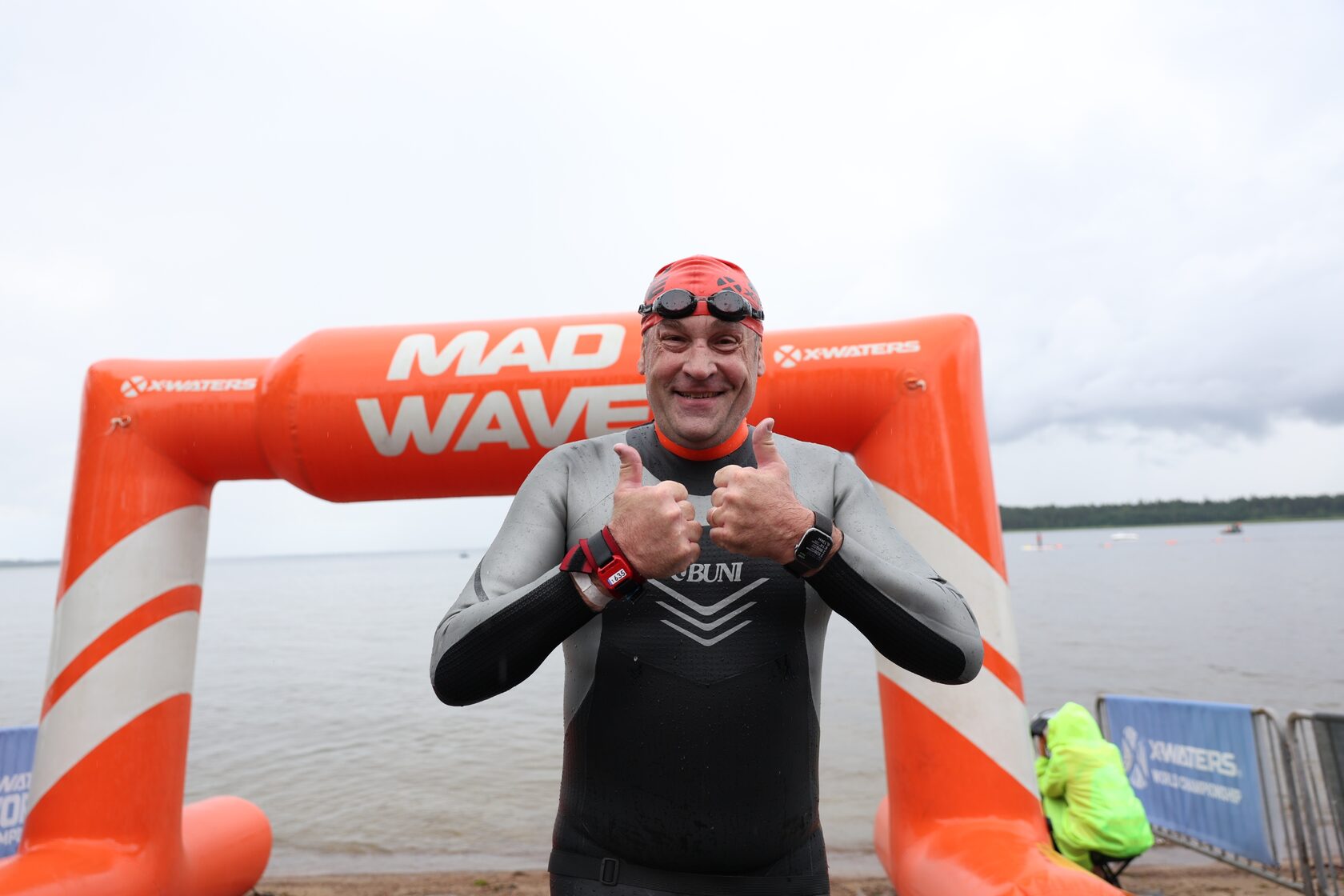
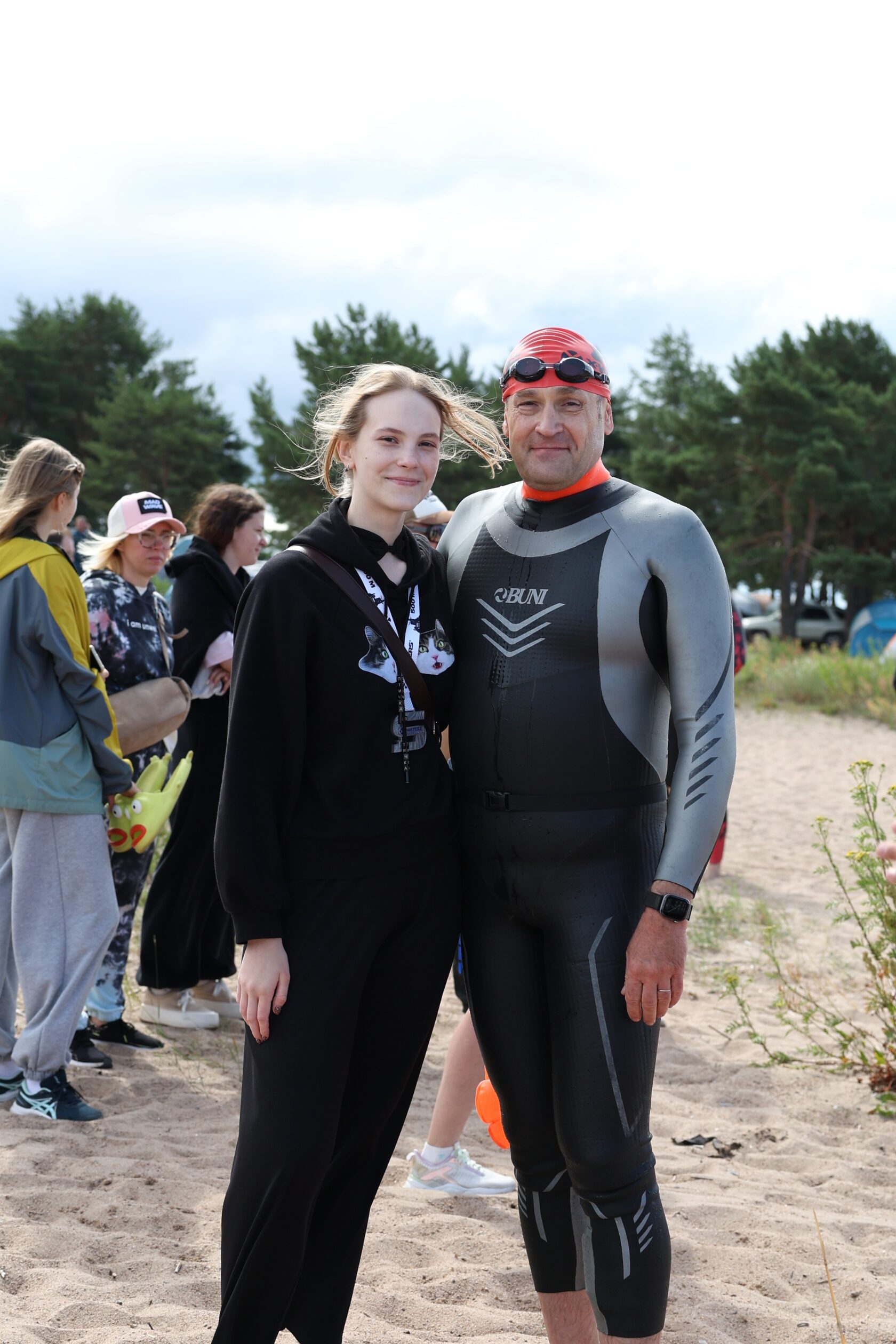
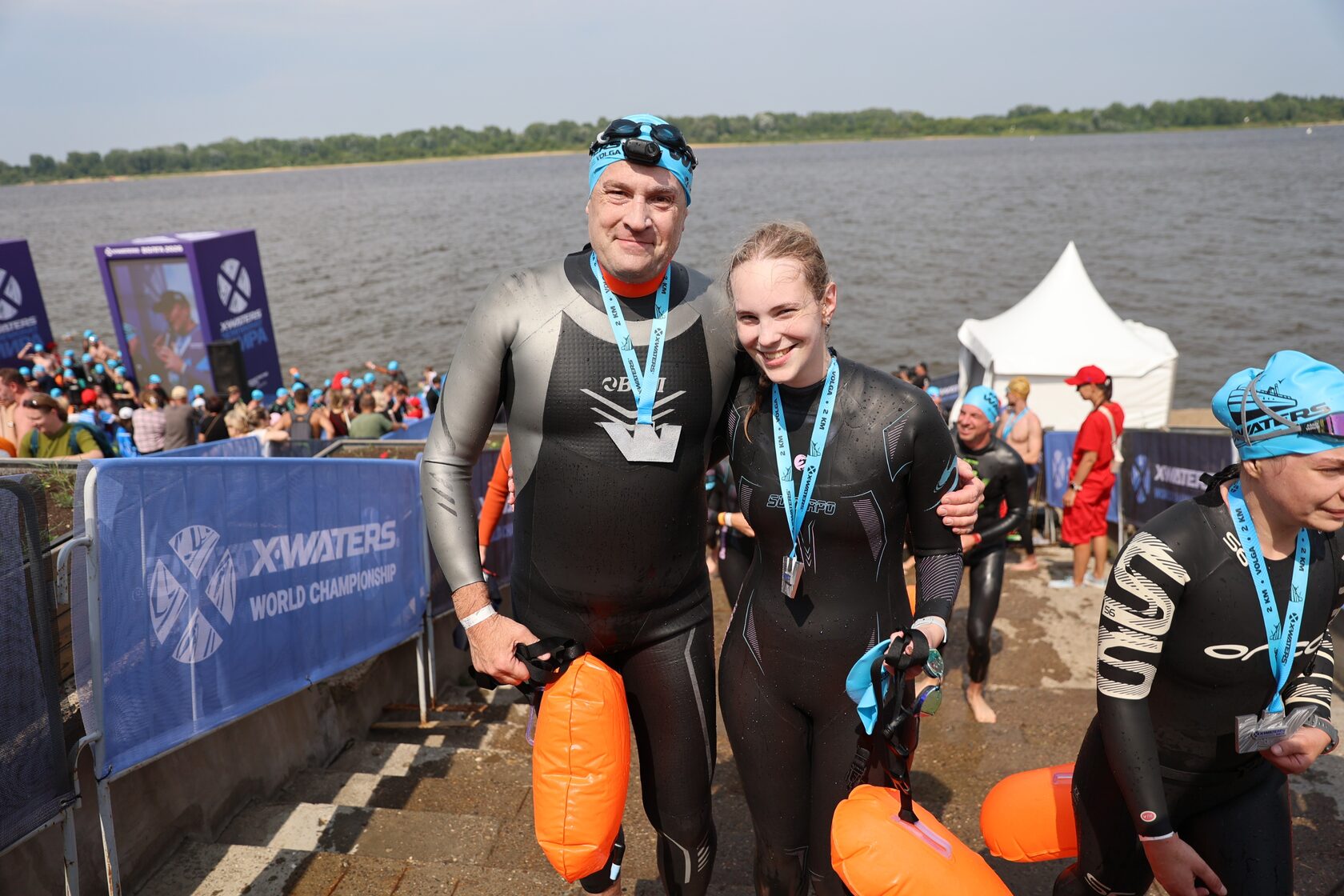
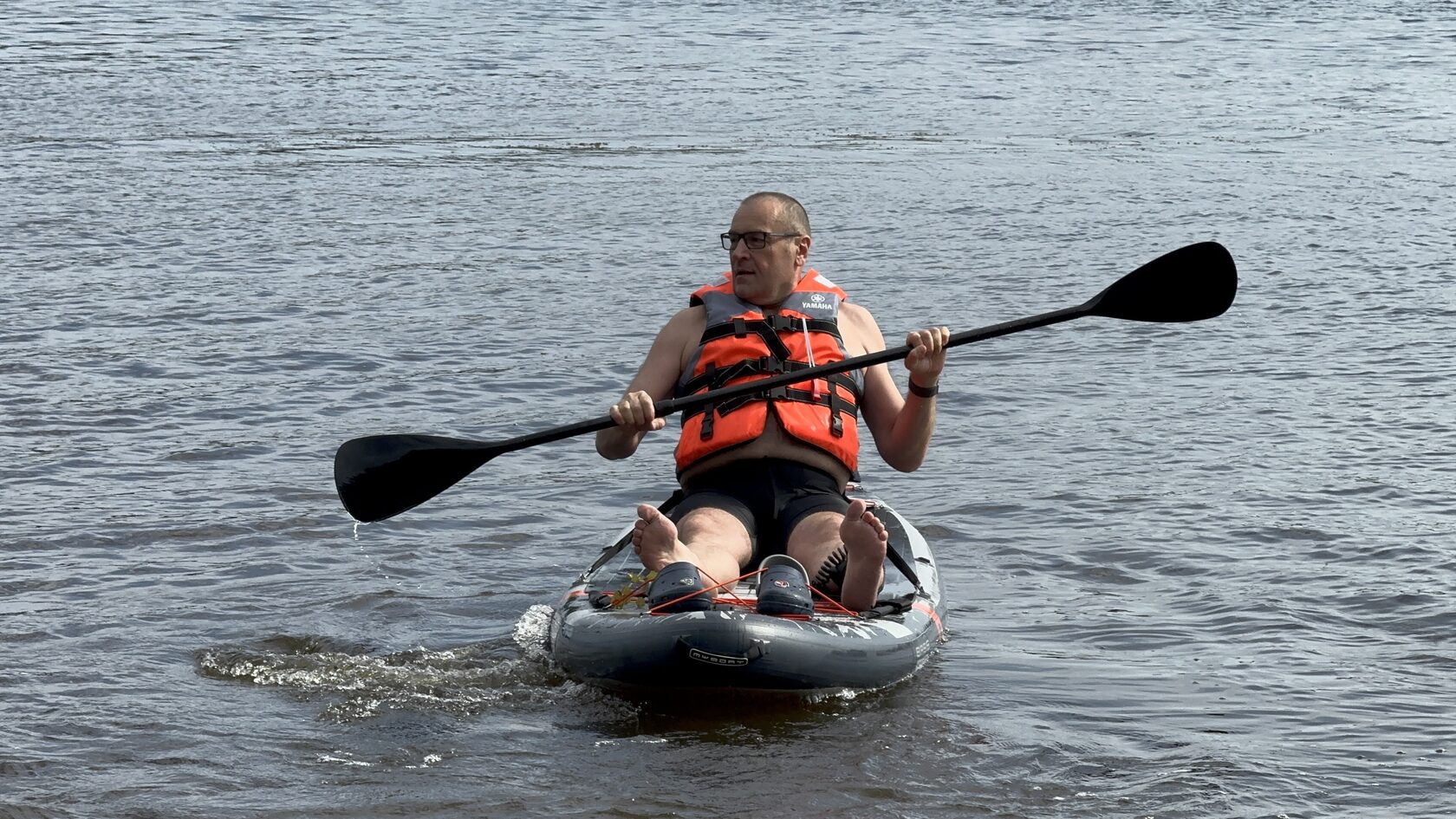
This year I swam three distances in Nizhny. The night swim — for the thrill. I swam two kilometres with my daughter, keeping an eye on her and giving moral support — she had never swum such long distances before. And one kilometre — a tough test of a distance. Of the three hundred swimmers in that race, 32 failed to finish this year because they couldn’t cope with the current.
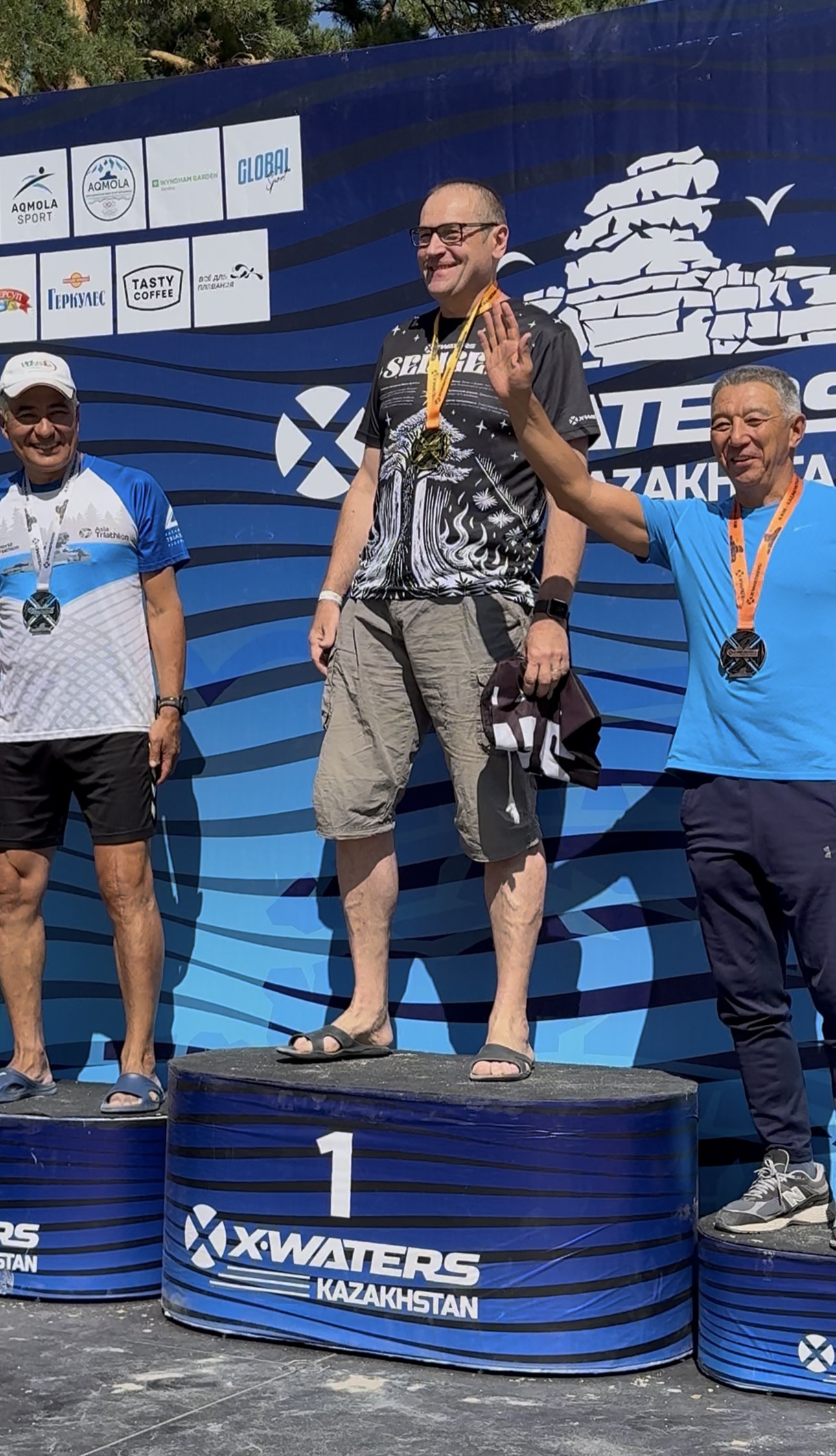
Because of the sheer number of athletes, the competition on the Volga is the fiercest. Teams from many swimming schools come here. That made it all the more unexpected and pleasant to make the podium twice this year — third place in my age group in the night swim and second in the one kilometre.
05Which other races have been especially memorable for you? And why those in particular?
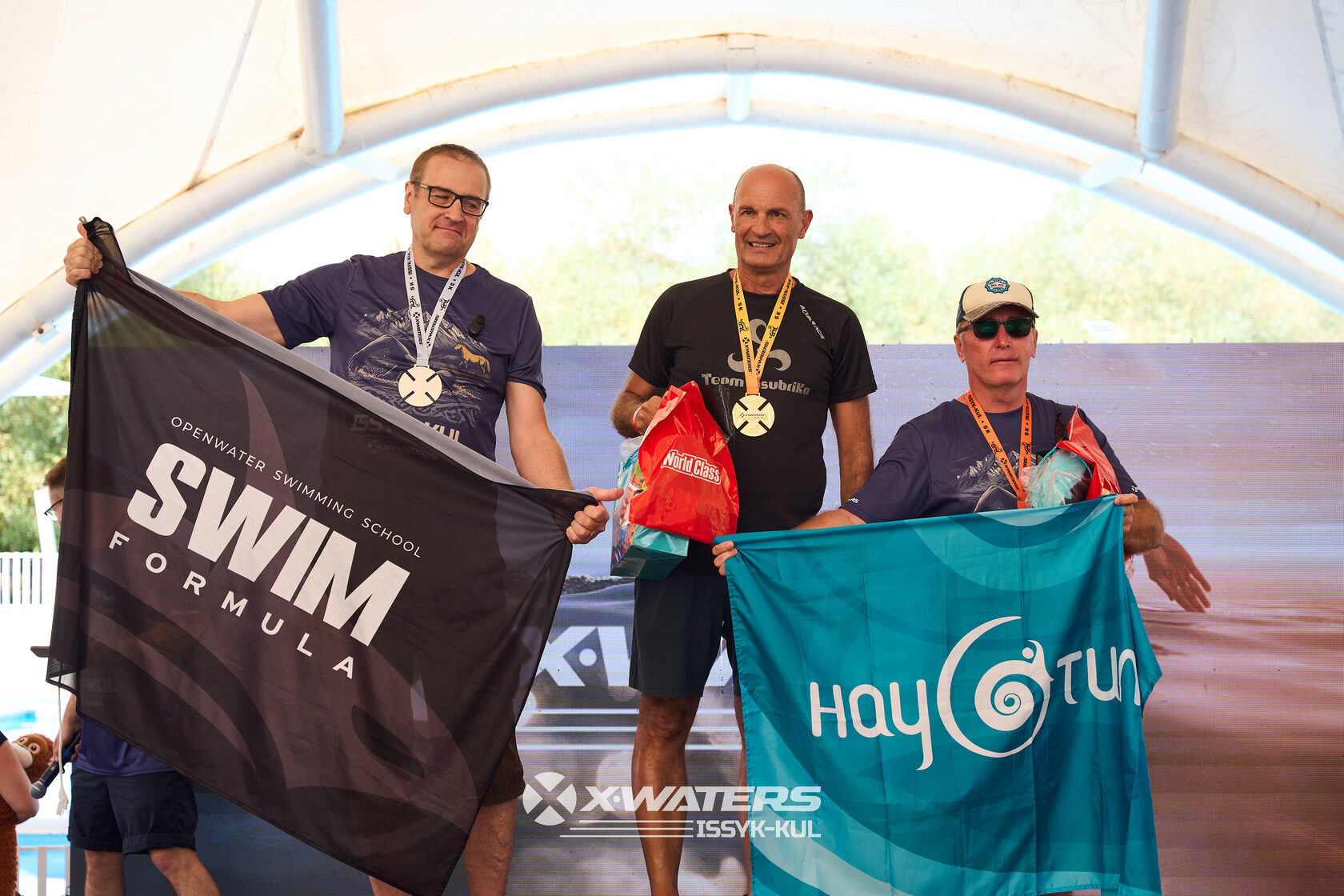
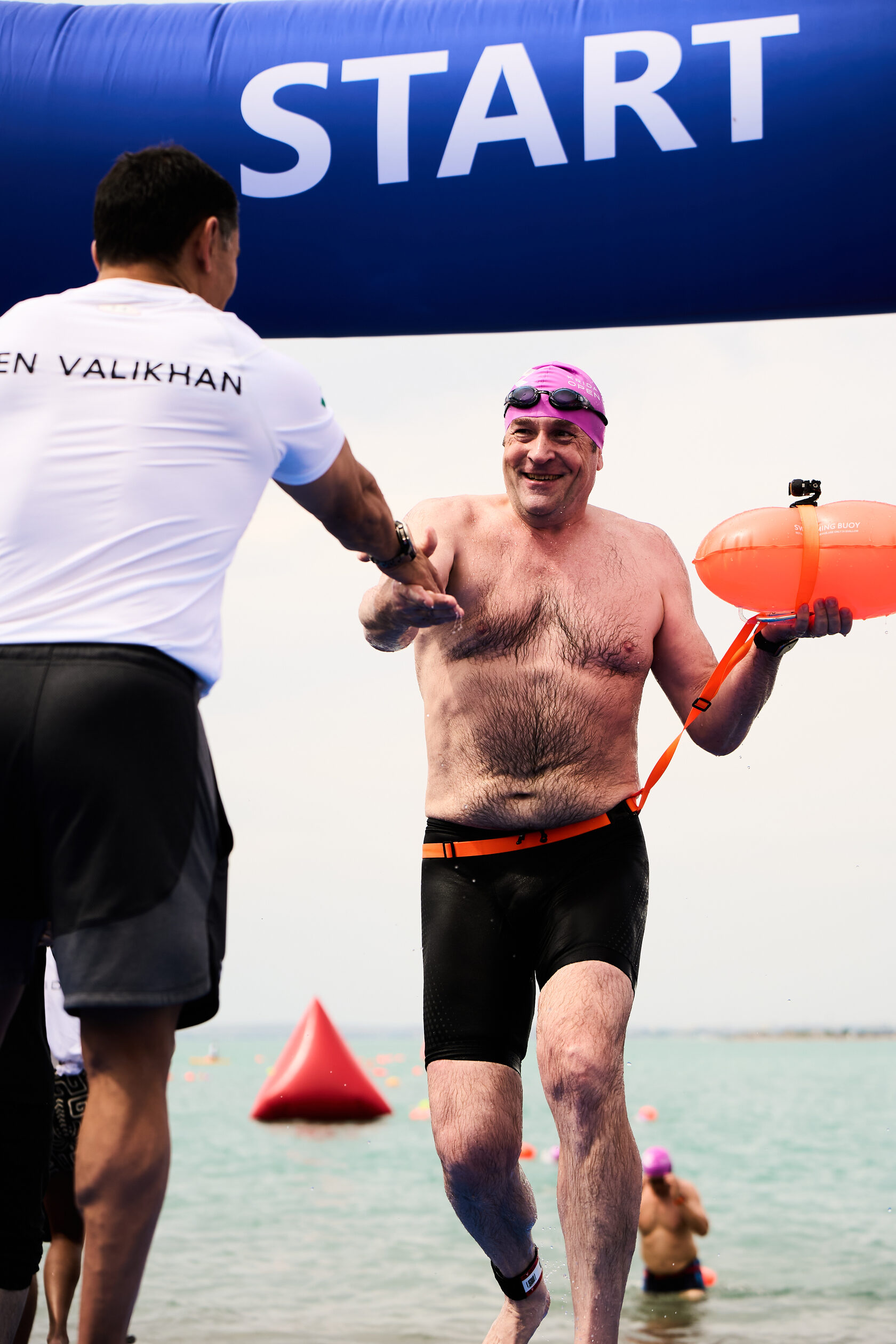
— This year turned out to be quite a “bumper harvest” for me. Seven sporting events — that’s seven different places and 11 races. My favourite local competition is KRIDA in my “home” Kapshagay Reservoir. Only amateurs take part. It was pleasant and unexpected to be the fastest of the 14 participants in the 50-plus category.
The race in Karelia, in the Ruskeala Canyon, means cold water and majestic marble cliffs rising up and plunging down. The most beautiful race is, of course, Issyk-Kul. Incredible, mesmerising mountains reflected in the boundless water. Imagine the scale: the lake lies at an altitude of 1,600 metres, and it is 700 metres deep. That means its bottom is at the same level as Almaty.
Icebreaker
06You are now preparing for an Arctic swim. Why did you choose this particular goal?
— It all started as a joke. I found it funny that there are people who find joy in swimming in icy water. I asked in our swimming school’s chat whether anyone wanted to “try their hand at being an icebreaker” in an Arctic swim in 2027. Quite unexpectedly, the idea sparked unprecedented enthusiasm in our team — above all in Danil Kazmin, the founder and coach of Swim Formula.
Swimmers started signing up for the swim en masse. I had no choice but to join the “frostbitten crew” too. I think the organisers are rather surprised by the number of registrations from Almaty.
The Arctic race is unusual. Before the main swim there is an acclimatisation swim: you have to go into the water three times and swim a short distance. At this stage the organisers watch closely to see whether a swimmer can handle the cold water. If your breath catches, or you don’t have the strength to keep your face in the water, they ask you to withdraw from the race.
There are two distances: the “Arctic mile” in the waters of the Arctic Ocean for the best prepared, and the “Arctic verst” in a bay of the Barents Sea. For my first time I’ve decided to swim the “verst” — we’ll see how it goes.
07Most swimmers dream of warm water. You, on the contrary, are drawn to cold swims. What do you like about cold water? What does someone feel when they voluntarily step into water that most people want to stay away from?
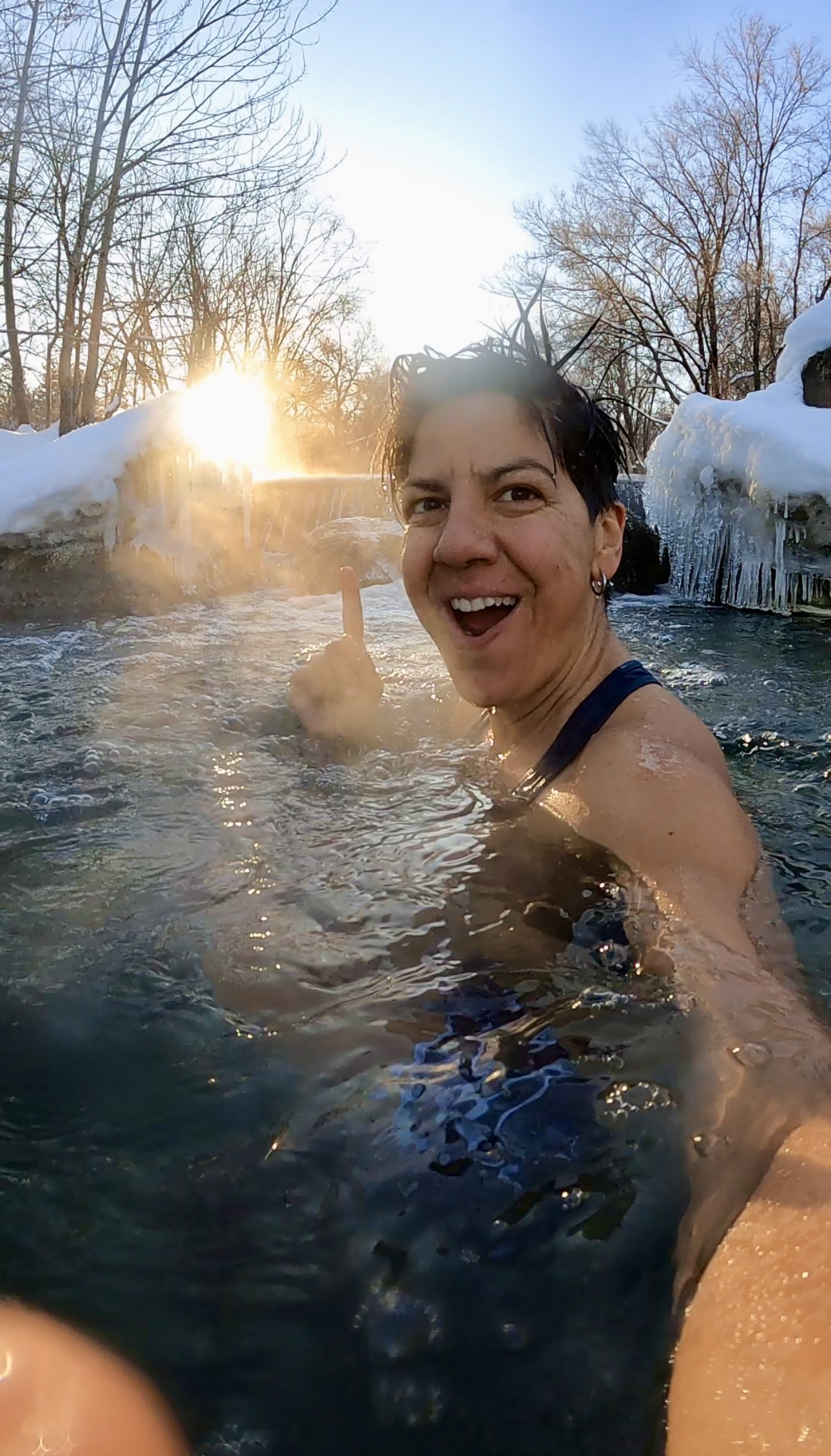
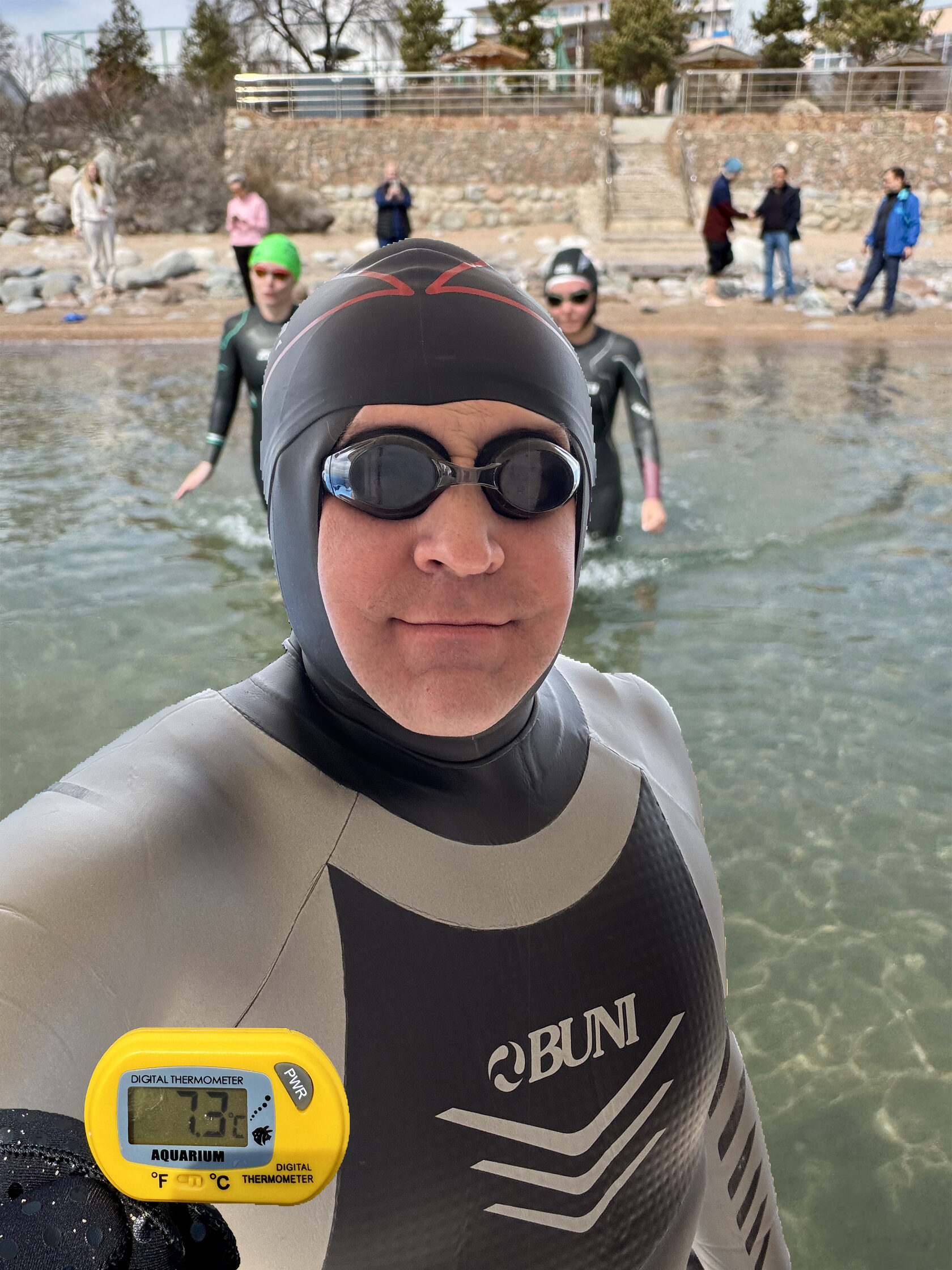
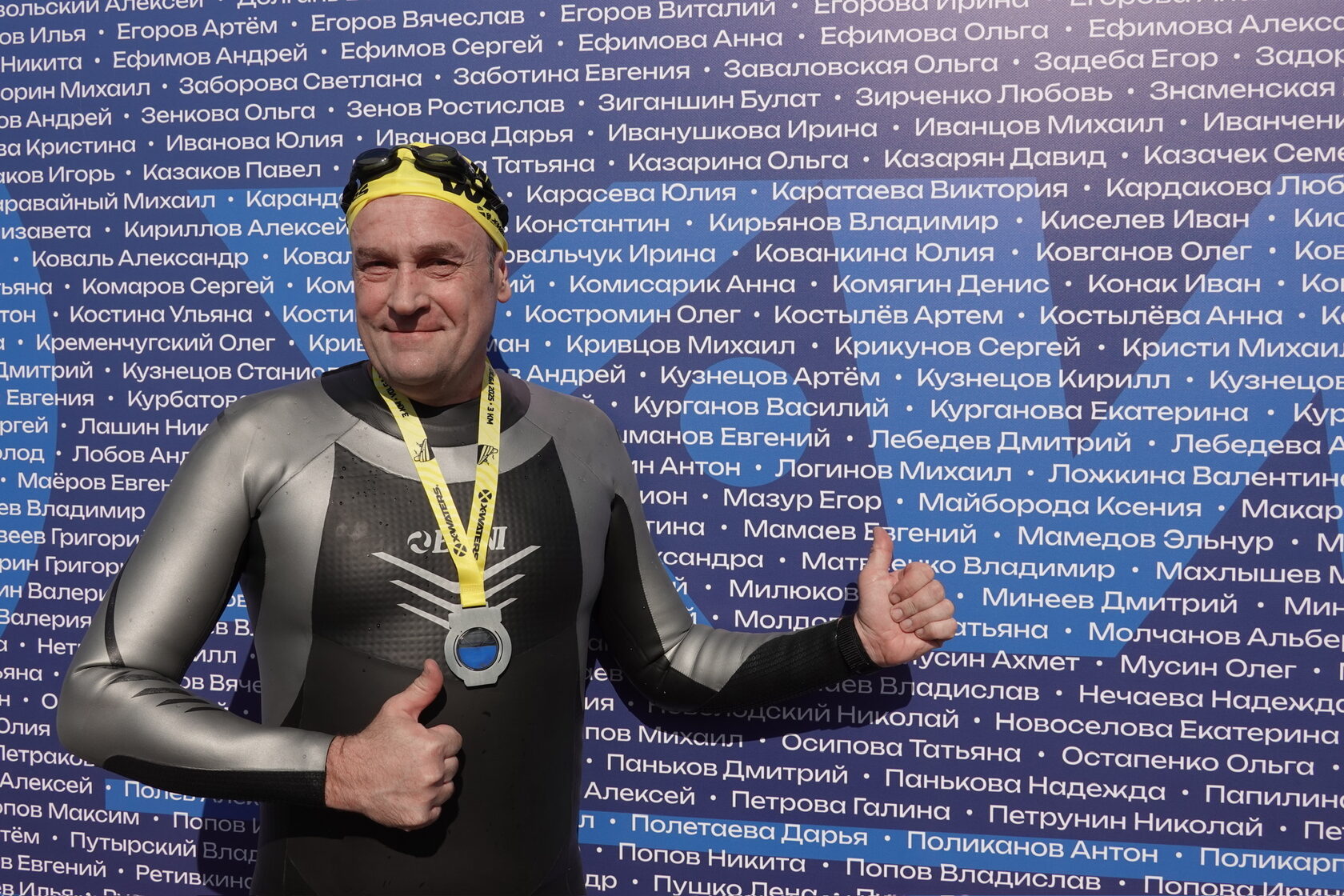
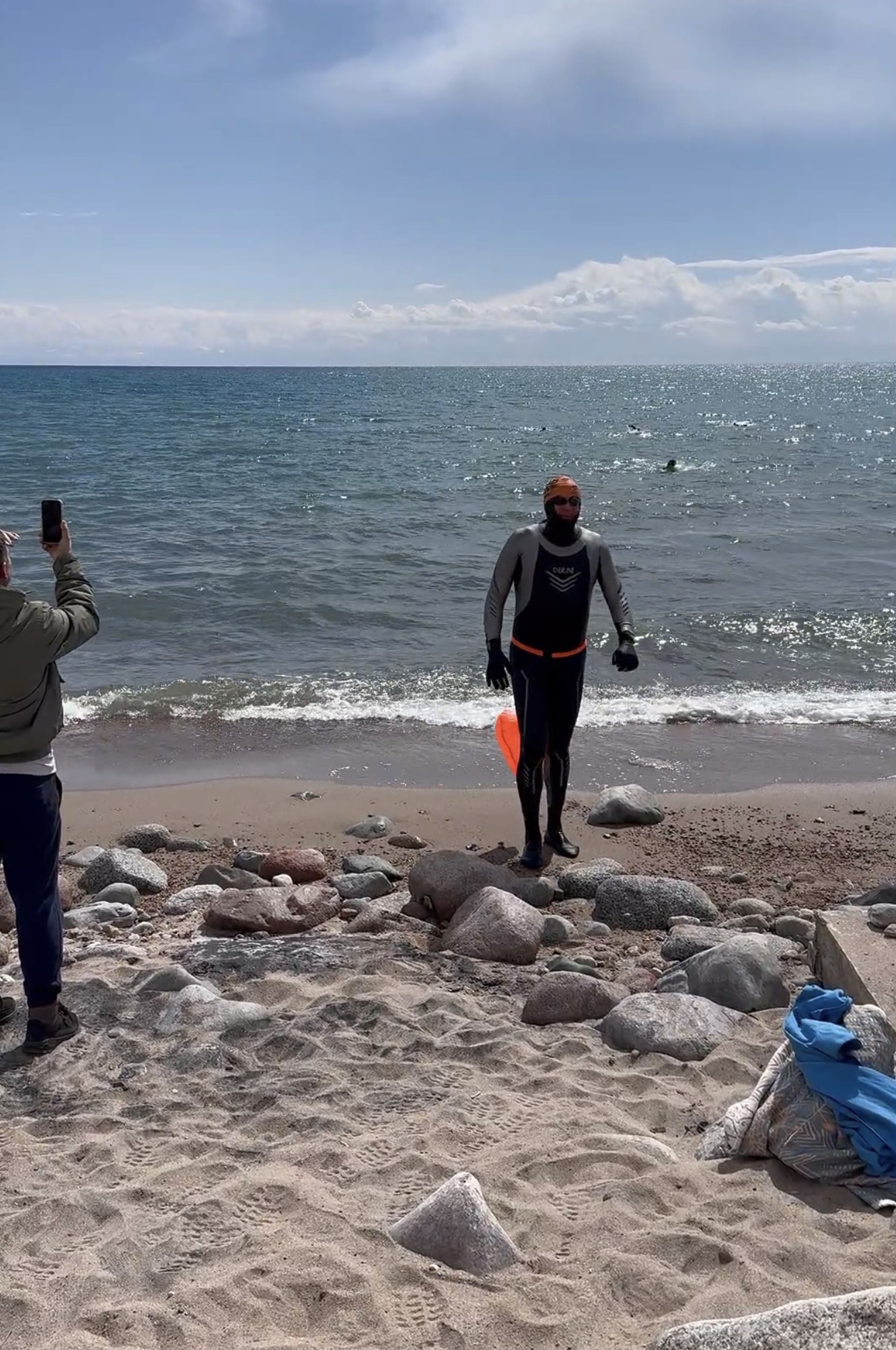
— I tried swimming in really cold water for the first time only this year. It was March, at Issyk-Kul, and the thermometer showed seven degrees. I’ll be honest: the first time, I lasted 30 seconds. The water gets into your wetsuit, and even neoprene gloves and socks don’t help much. Your face feels like it does after a strong anaesthetic at the dentist’s.
I came out of the water thinking: “The Arctic has to be cancelled, it’s not for ordinary people.” On the second day I managed to swim for a couple of minutes. And by the fifth day I could swim about a mile — 1,800 metres. I had adapted.
And, unexpectedly, I suddenly realised that every time I come out of the icy water, I feel completely renewed. It’s as if my body has completely “rebooted”. All my worries and anxieties disappear somewhere, and my mind works clearly and calmly. I feel fantastic after cold water.
Getting younger in three years
08Many people believe that as you get older you should gradually reduce the load and live a quieter life. You, on the contrary, keep setting yourself new sporting goals. Why?
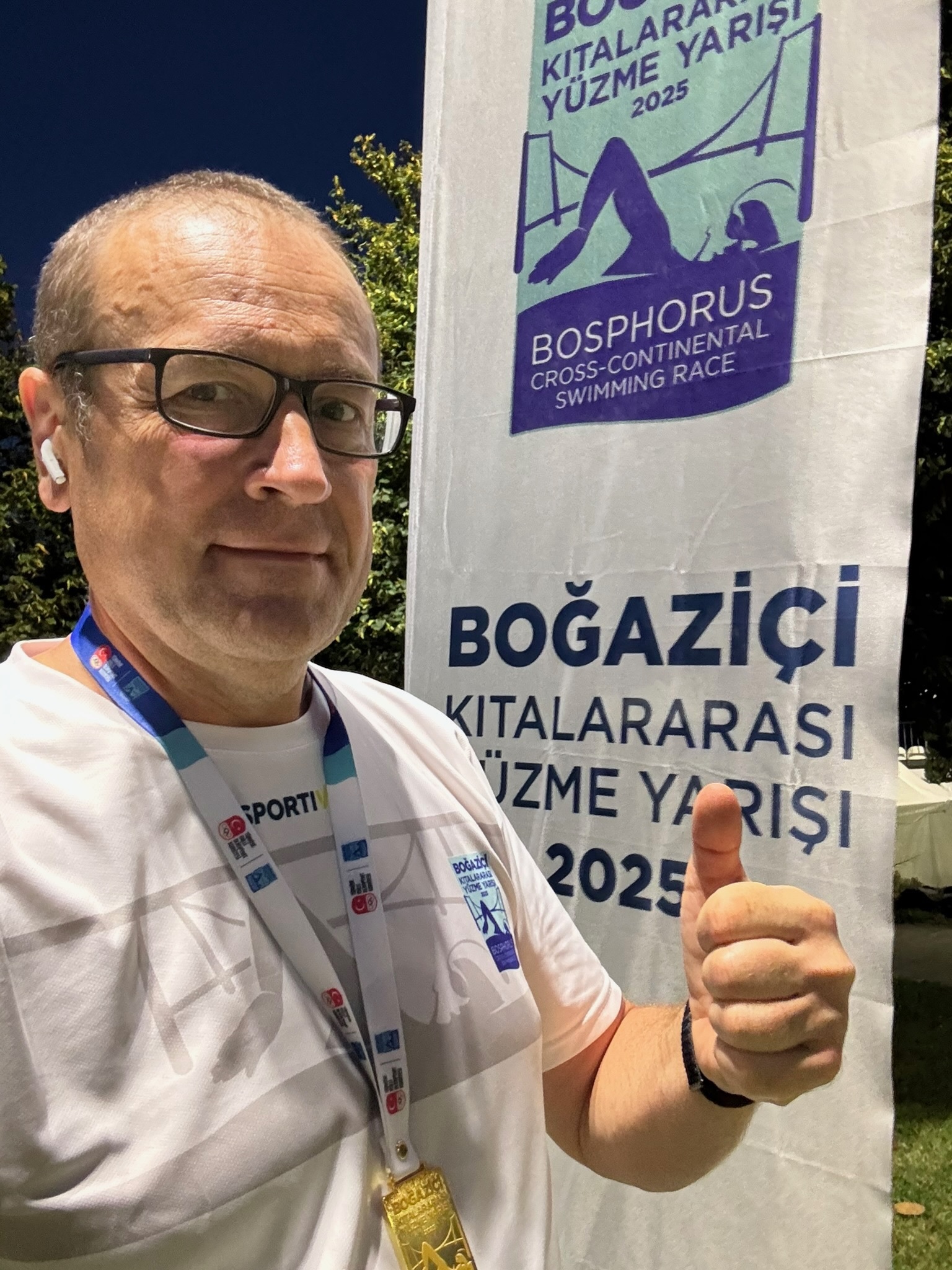
— At the swim across the Bosphorus, I started next to a man whose cap number was 002. The principle there is: the lower the number, the older the participant. Afterwards I checked the results — he was born in 1946, can you imagine? And then I realised: that’s what I want — to swim across the Bosphorus at 80. That is, for my life to turn out in such a way that at that age I still have the energy and the desire to do it.
In my third year of swimming I finally understood why I find it so interesting. Every competition brings new emotions. Emotions from beautiful new places, from overcoming — above all, overcoming yourself — from the support of your family, coaches and team. And, of course, the emotions of winning: it feels great to step up onto the podium for a medal.
2026 began very inspiringly — it was a bit unexpected to be the fastest of 14 participants aged 50-plus at the KRIDA swim. Of the 11 races I did this year, nine ended on the podium: five gold, two silver and two bronze medals. Of course, that’s a great incentive.
09What can your body do better today than ten or twenty years ago? And where does age still make itself felt?
— Just three years ago I was completely unprepared for physical exertion. Being overweight was a big problem. My attempts to go to the gym failed — absolutely everything hurt: my knees, my lower back, my back. Some old ailments flared up. Doctors kept prescribing more and more pills, but it felt like a road to nowhere.
Fortunately, I met a knowledgeable sports doctor, Natalya Labzova. And we started from scratch: I had tests done and went through physical fitness assessments, and she wrote me an initial exercise programme to do at home. She completely changed my diet. After three months of “home” training, Natalya recommended a fitness coach — that’s how I came to Dmitry Zagarinsky’s gym.
Gradually the weight started coming off, my breathlessness went away and my endurance started to grow. I began to understand better how my muscles work in swimming. I found a “coach on the pool deck” — Danil Kazmin corrected the technical mistakes that simply couldn’t be fixed in online sessions. Today I look and feel completely different from three or ten years ago. I’ve lost 15 kilograms and gained muscle.
I have only one regret — that I didn’t take up swimming earlier.

10How do you manage to combine work, everyday life and serious preparation for competitions? What helps you stay disciplined?
— Work and sport happen at different times: pool sessions are early in the morning, and gym sessions are in the evening. All competitions take place at weekends. So there’s no conflict there. What keeps me going is how I feel — I really have “got younger” over these three years. Even my “smart” bioimpedance scales noticed: they’ve knocked several years off my “biological age”.
11What else stays behind the scenes? What other hobbies or interests help you switch off and enjoy yourself?
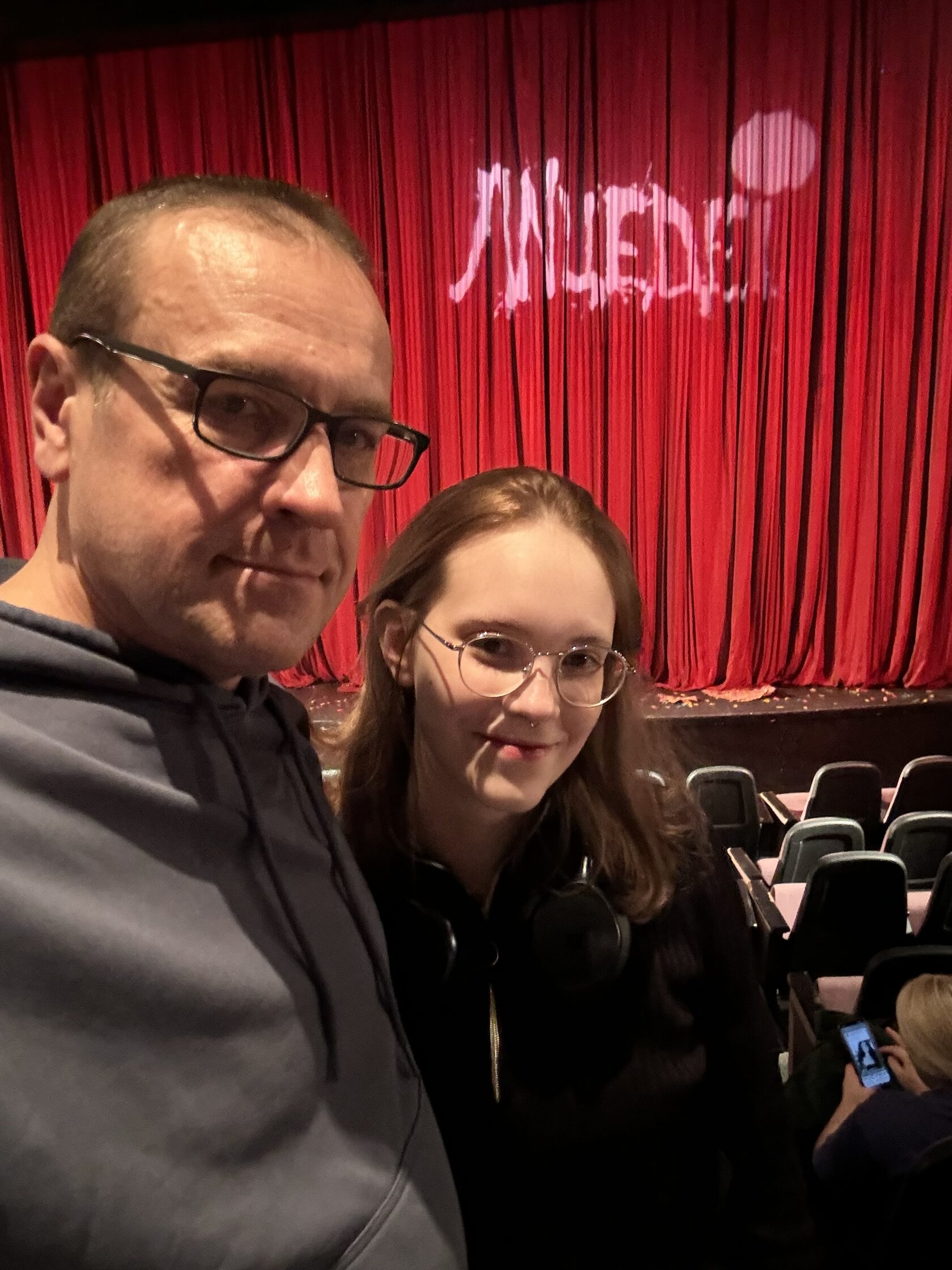
— The three summer months are taken up with swimming, preparing for races and competing. But summer flies by, and then I can go back to my old hobbies — photography and video editing. Autumn in Almaty is extraordinarily beautiful, so I’ll get my camera case out again and go for walks around the city. I love the theatre; I’ve seen the entire repertoire of the Lermontov Theatre — they are true professionals there.
A third, a fourth…
12How important is your family’s support to you? How do your loved ones feel about your passion for swimming and competing?
— My family supports me and is happy about my victories. Of course, my loved ones worry, so safety in open-water swims comes first. I have to undergo regular sports medical check-ups to make sure my body is ready for the load.
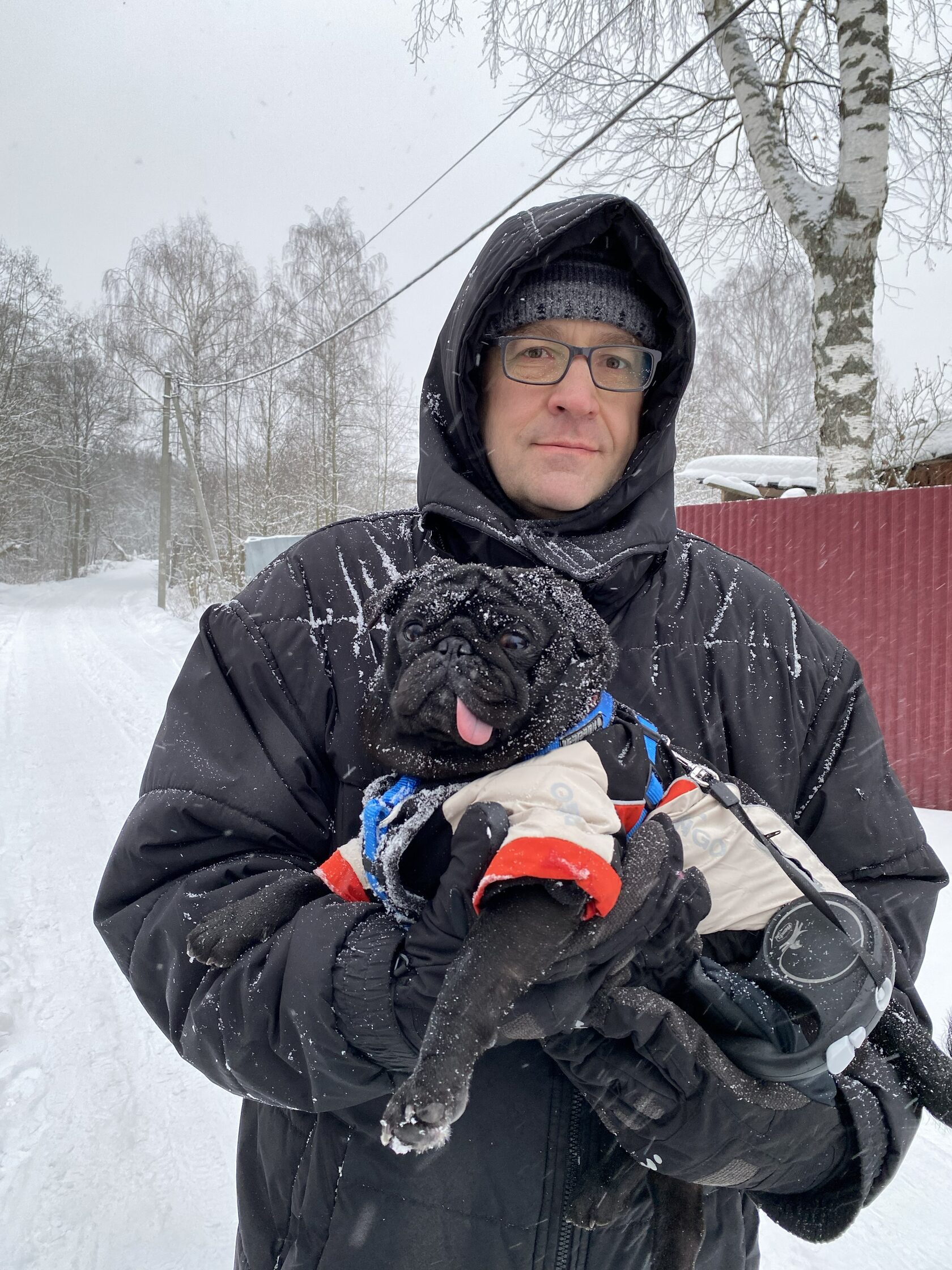
Swimming has become a reason to travel together. Every trip to a new swim venue is a family event. After a few of these trips, my youngest daughter decided to start racing this year too. So far it’s short distances, but it’s nice to know I’ve become a role model.
13What has swimming changed in you as a person? Are there any life principles it has taught you?
— It’s more the other way round: swimming has the same principles as life. You have to behave responsibly in open water. For example, contact is inevitable at a mass start, but you mustn’t climb over other people’s heads. You need to keep safety in mind and sometimes look at the swimmers around you — are they all right, do they need help? Respect your rivals after the finish too: congratulate the winners and support your teammates. “Sporting behaviour” applies to more than just sport.
14Imagine someone your age who has long dreamed of taking up sport but keeps putting it off “until Monday”, or thinks it’s already too late. What would you say to them?
— Since I was completely unsporty for most of my life, I know that the words “you need to take up sport” sound scary. You can just picture it: you go to the pool or the gym, and slim, toned “real athletes” look down on you… Brr 😀
There is only one way to overcome that psychological barrier — find the right people, people you are on the same wavelength with. I was lucky in that respect.
Our swimming school’s sessions are never boring. And most importantly, nobody is trying to turn an amateur into an Olympic champion. I really like that. So I wouldn’t suggest “taking up sport” — I’d suggest simply going for a swim, watching how the sessions in the neighbouring lanes go, trying some exercises — there’s plenty of information online. And then finding the coach who’s right for you.
15And the project’s traditional question. What does the expression “second wind” mean to you personally?
— I think if you wait for a second wind, it may never come. It would be especially disappointing to “work” for a result and not get that second wind. I’m more interested in getting unexpected, pleasant bonuses. My weight has gone down and I feel better — great! I overtook people my age or younger rivals during a race — fine, I’ve still got strength, then. Swimming in icy water — wow, it turns out I can do that too!
A second wind exists, but it’s far more interesting to find a third, a fourth… and to be surprised and delighted by it every time.