From a broken hip to all six World Marathon Majors
At 48, she got on a bike for the first time and learned to swim front crawl. A few years later, she faced the prospect of never returning to proper training again: a broken hip, surgery, months of rehabilitation and the fear of being left with a limp. But it was after the injury that she found her goal — to run the world’s six biggest marathons and earn the coveted six-star medal.
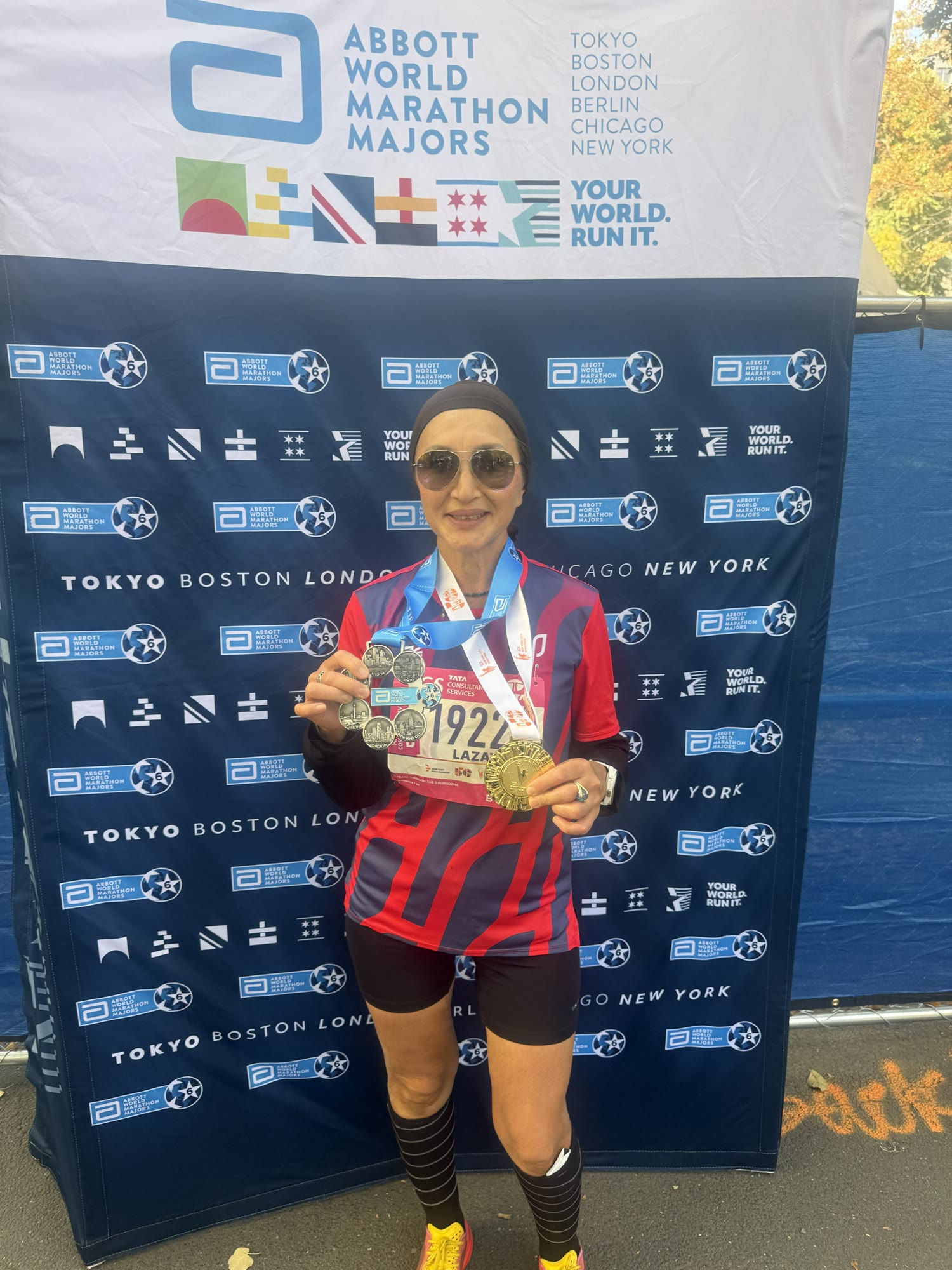
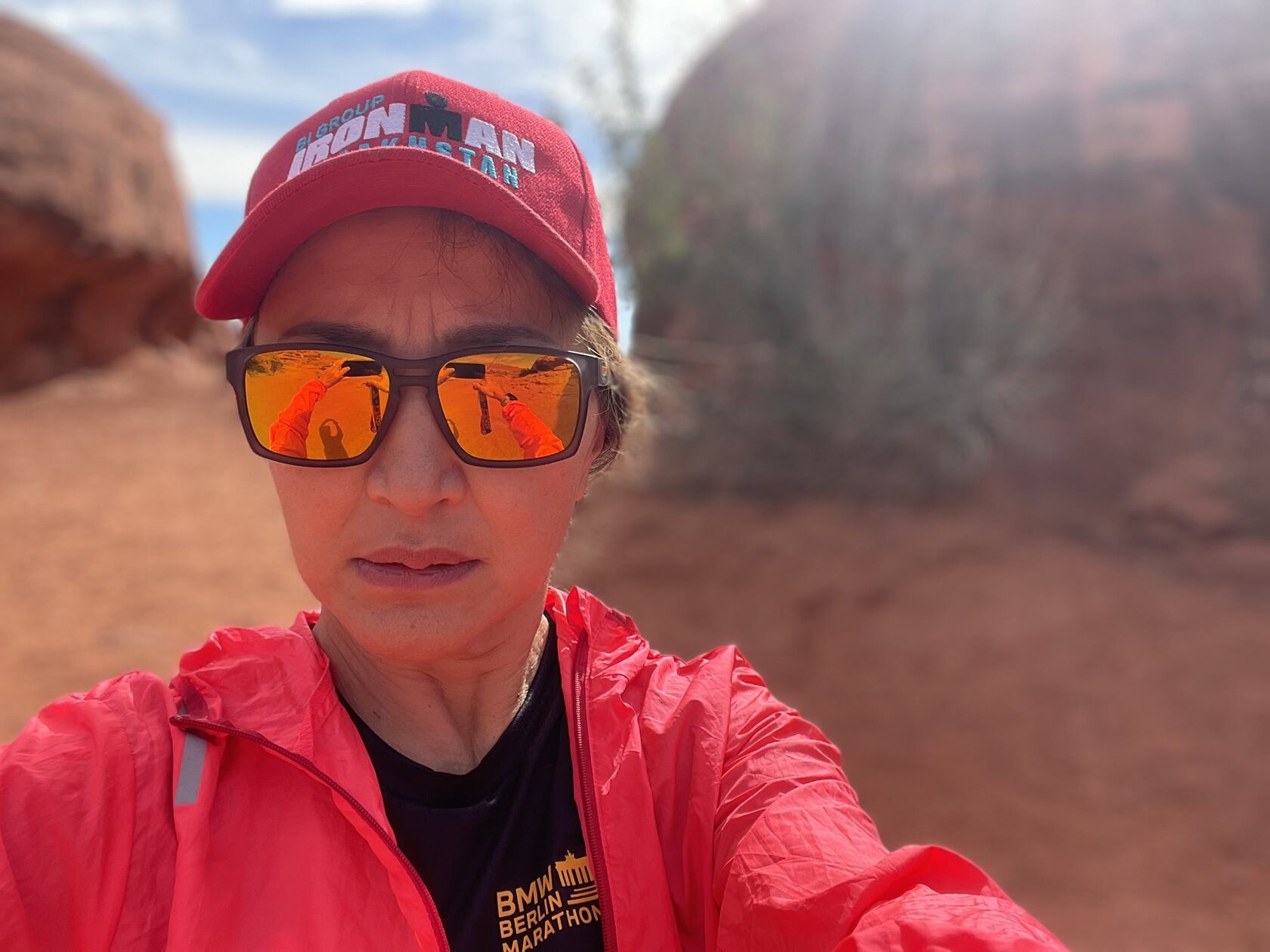
Our Second Breath interviewee is Lyazzat Kurmanova, 56, a mother of four and grandmother of two. She has 13 marathons behind her, four Ironman 70.3 races, one full Ironman and two 5-kilometre Oceanman swims. Her marathon personal best is 3 hours 29 minutes 53 seconds.
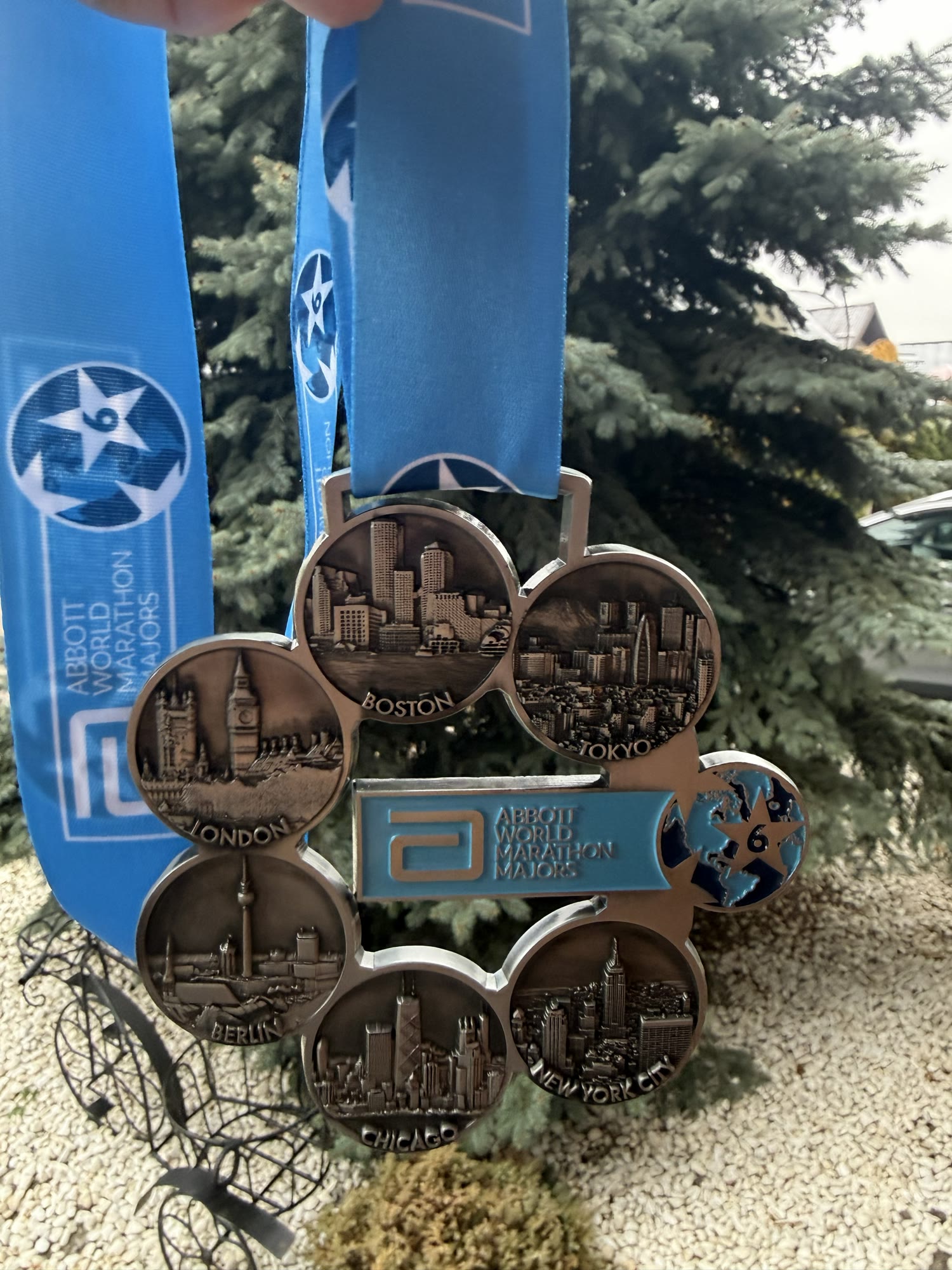
In November 2026, Lyazzat received the Six Star Finisher medal for completing all six marathons of the World Marathon Majors series. Behind that award are five years of persistence, a comeback after a serious injury and the support of a family who at first didn’t quite understand her passion.
In her interview with Second Breath, Lyazzat talks about why she started running once her children had grown up, how she overcame her fear after the fracture, why she still trains six times a week and why she believes life opens up new possibilities at 50–60.
When the children grew up
01Lyazzat, how did your sporting story begin? Was running part of your life before?
— I have four children and two grandchildren. When the children grew up, I had more free time. For years I drove my youngest daughter to gymnastics and waited for her to finish training. At some point I thought: why am I just sitting here waiting? Besides, I had started to notice that I was putting on weight.
I started running on my own. First it was 10-kilometre runs, then half marathons. When I decided I wanted to run a full marathon, I started looking for a running club.
I found I Love Running. In eight months, Timur Artyukhin and Svetlana Bystretskaya prepared me for my first marathon. I ran it in 4 hours 7 minutes and made the podium in my age group for the first time.
It’s hugely motivating! When you take up sport as an adult and suddenly win an award, you want to keep going.
02But you didn’t stop at running. How did swimming and triathlon come along?
— I used to listen to sports podcasts while running. That’s how I found out about triathlon and got interested.
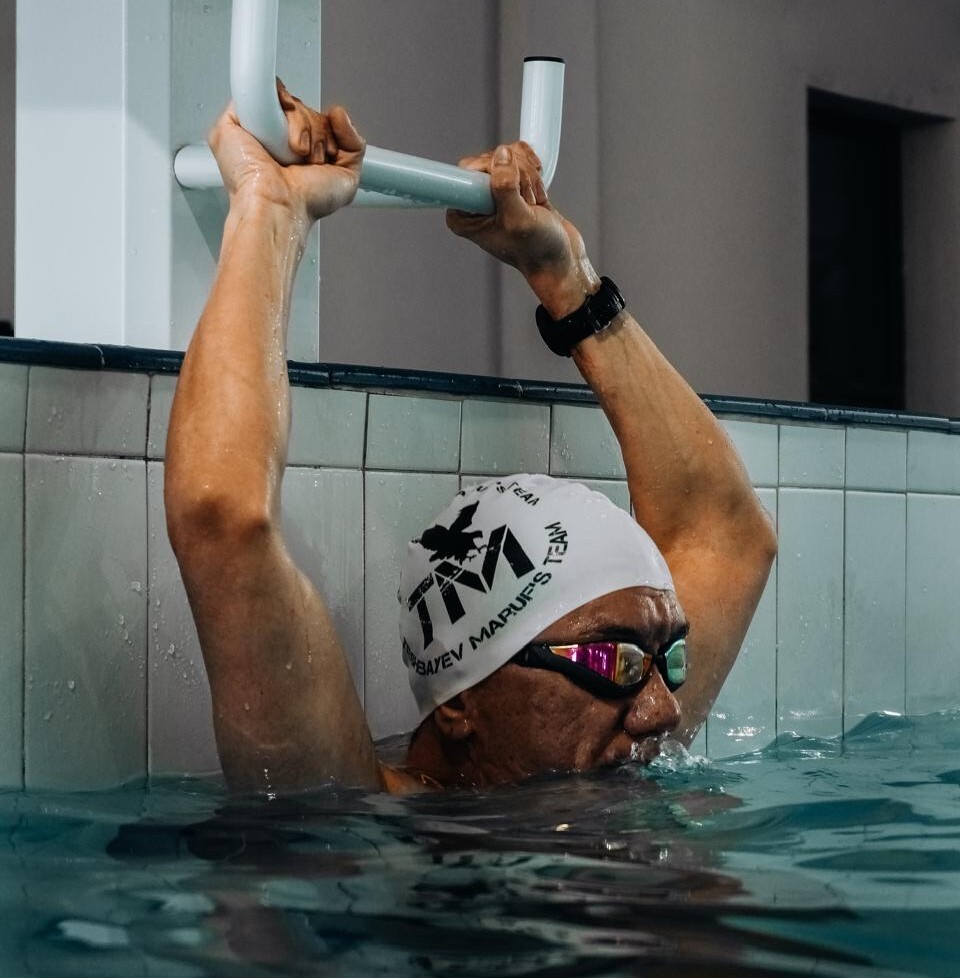
I could only swim breaststroke, and I had dreamed of learning front crawl all my life. In autumn 2018 I went to the pool. It was very hard. I think it took me two months before I could swim a thousand metres of front crawl.
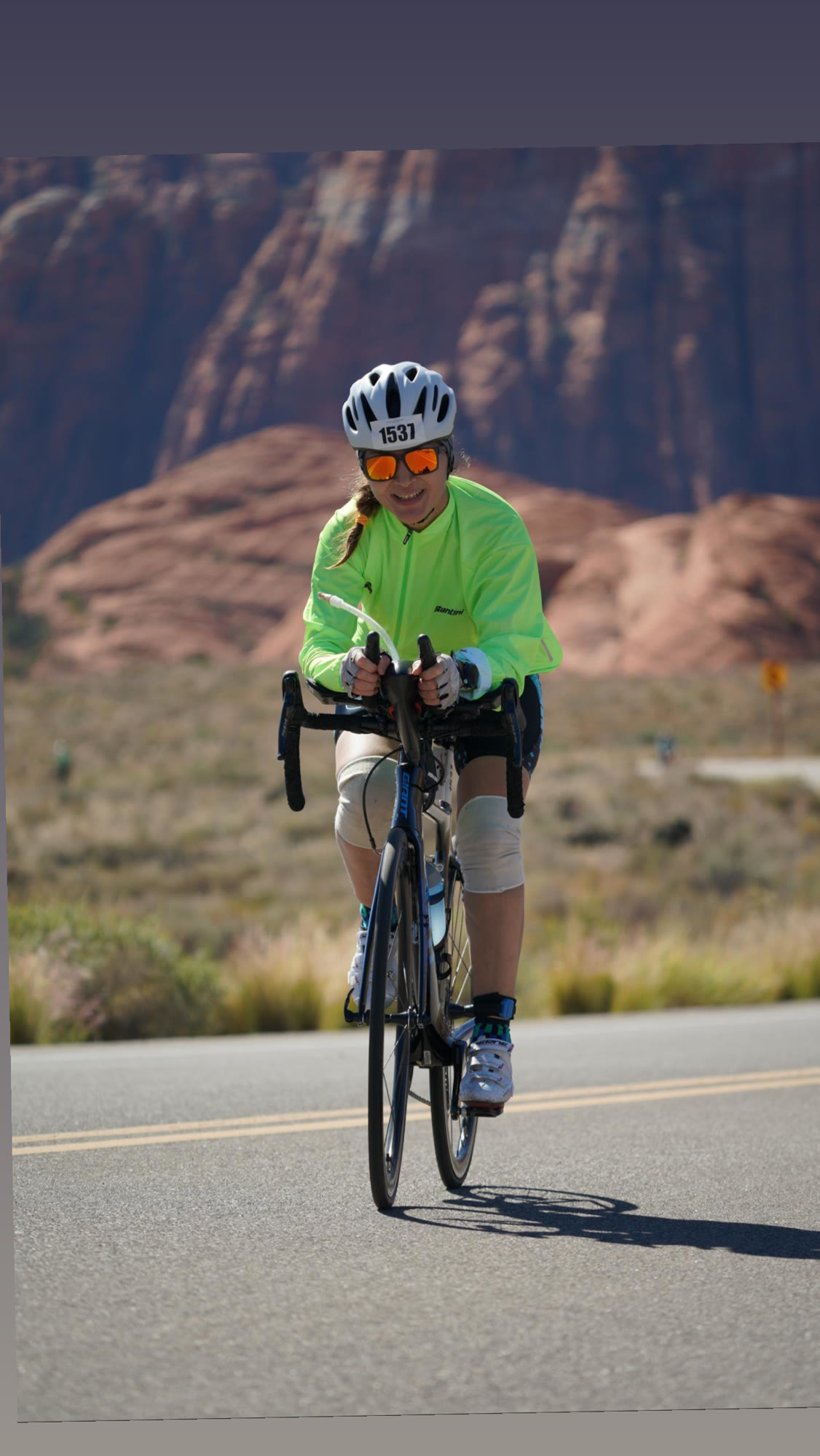
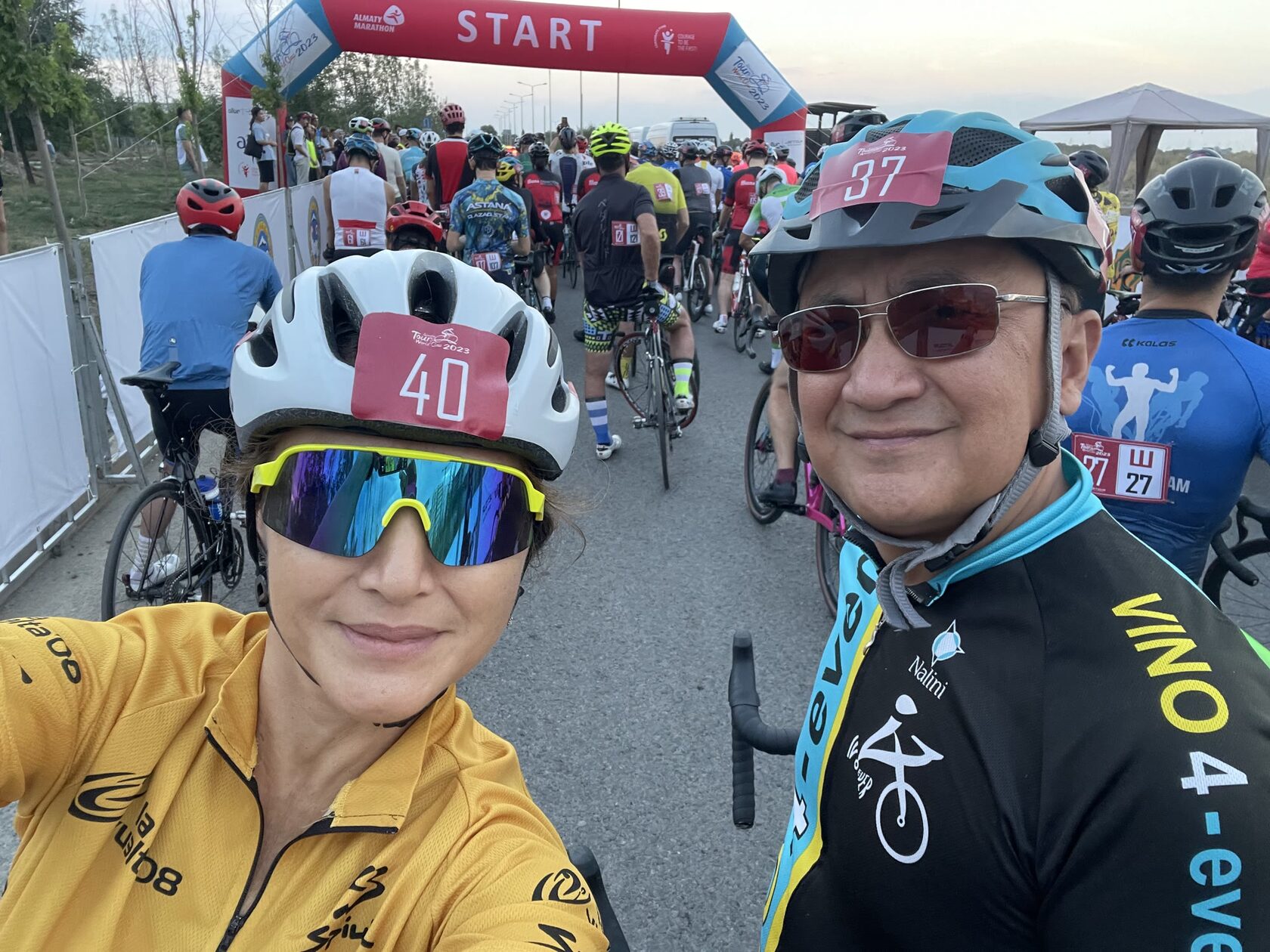
At 48 I got on a bike for the first time. First it was a mountain bike, then my husband bought me a road bike. I had to learn to ride that too, and I fell off many times.
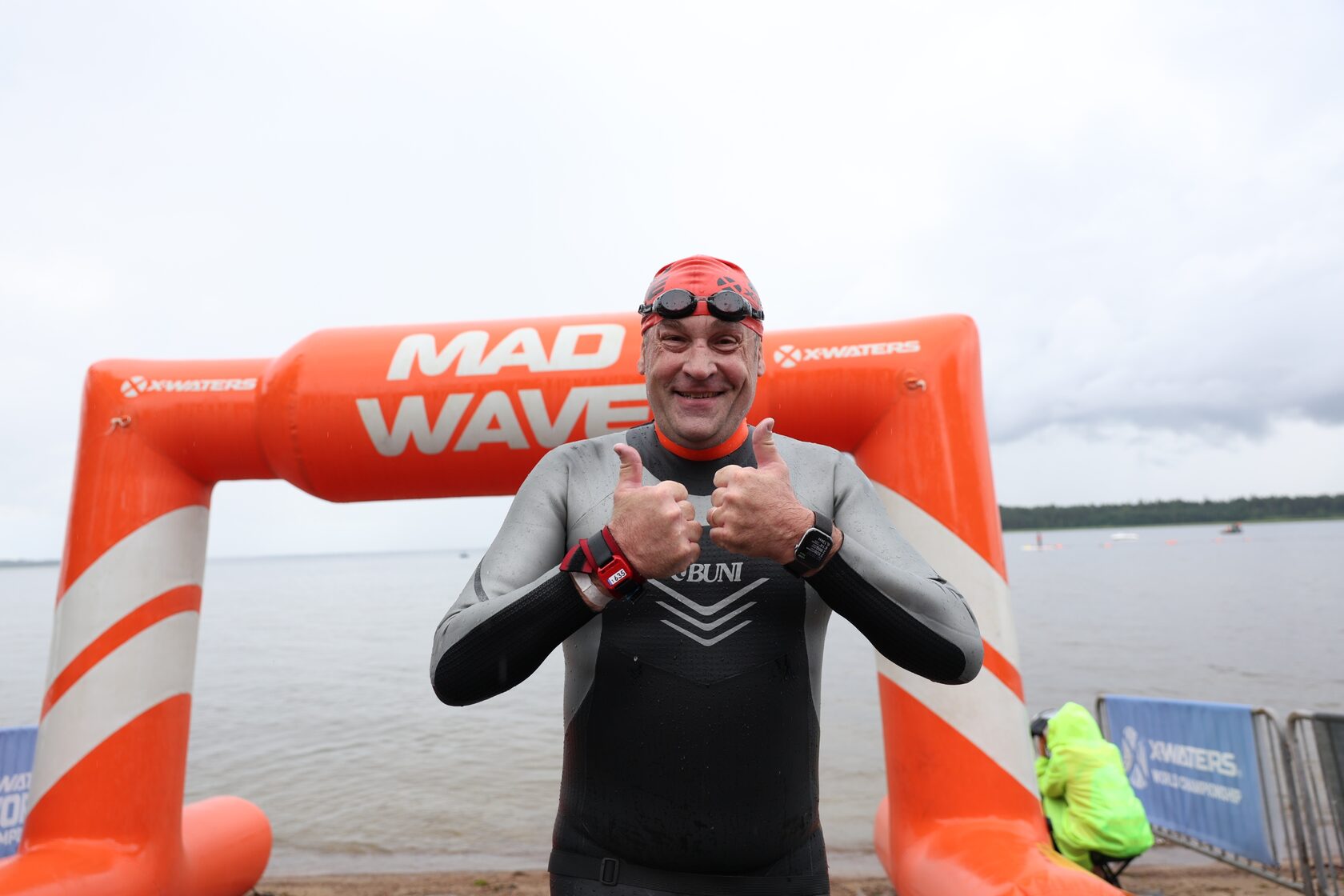
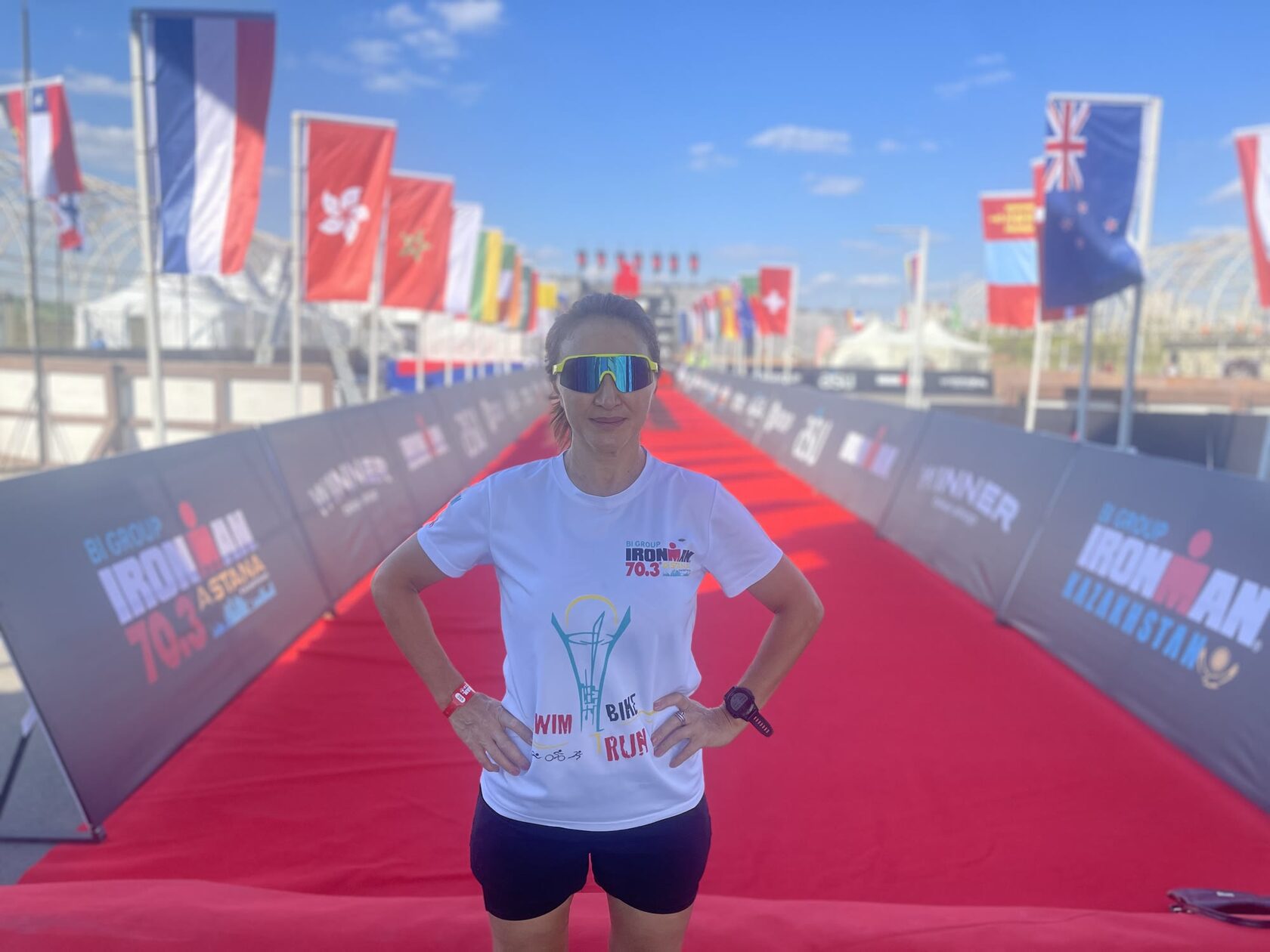
In 2019 I completed my first Ironman 70.3 and won my age group. I got a slot for the World Championship.
Imagine: you’re almost 50, and you get the chance to race at a World Championship! It’s incredibly inspiring.
Back then I had no idea how far my passion for sport would take me.
The fracture that changed everything
03In 2021 you suffered a serious injury. What happened?
— After Covid, my husband and I went to Burabay. He had been ill, and we decided to spend some time in the fresh air. On the second day I fell off my bike and broke my hip.
Instead of taking care of my husband, I ended up in a situation where he had to look after me.
I had surgery in Astana. The doctors talked about a long recovery. And before the operation I kept repeating that I had a full Ironman, a World Championship and the Chicago Marathon ahead of me. I already had slots for races I was training for.
I suppose I still didn’t fully understand how serious it was.
04What was the hardest part of the recovery?
— After the injury I limped for a while. And I was terrified it would stay that way forever.
I had to work on my leg and get my mobility back. I trained and swam. I still had races that I really wanted to complete.
During that period I thought a lot about people who had gone through similar injuries and returned to sport. Alexander Vinokurov, Leonid Boguslavsky and other athletes were examples for me.
I thought: if they could do it, why can’t I?
My family’s support helped enormously, especially my husband’s. And gradually I found a goal — not just to recover, but to complete all the races I had planned.
05Is that when the idea of collecting the world’s six biggest marathons came about?
— Yes. The six-star medal became a symbol of perseverance for me.
After the injury I wanted to prove to myself that I could come back. That the fracture hadn’t put an end to my sporting life.
A year after the injury I completed a full Ironman. Then I raced at the World Championship and kept running marathons.
And five years later I received the coveted six-star medal.
For some people it’s just a pretty medal. For me, behind it lie fear, pain, rehabilitation, training and a huge desire to do what I love again.
I was afraid I would limp forever. The six-star medal became a symbol of the fact that I managed to come back.
Family, coach and the world’s marathons
06How did your family react to your passion? Is it true that at first they weren’t supportive?
— At first my husband really was sceptical about my running. He thought I would run a bit, maybe finish one marathon, and that would be the end of it.
He felt that sport was starting to take up too much of my life and that the family was taking a back seat. But for me, family has always come first and still does.
Gradually he saw how important sport was to me. I come back from a run happy, with shining eyes, in a good mood. And I bring that mood home.
Now my husband is my main sponsor. He pays for my races and travel.
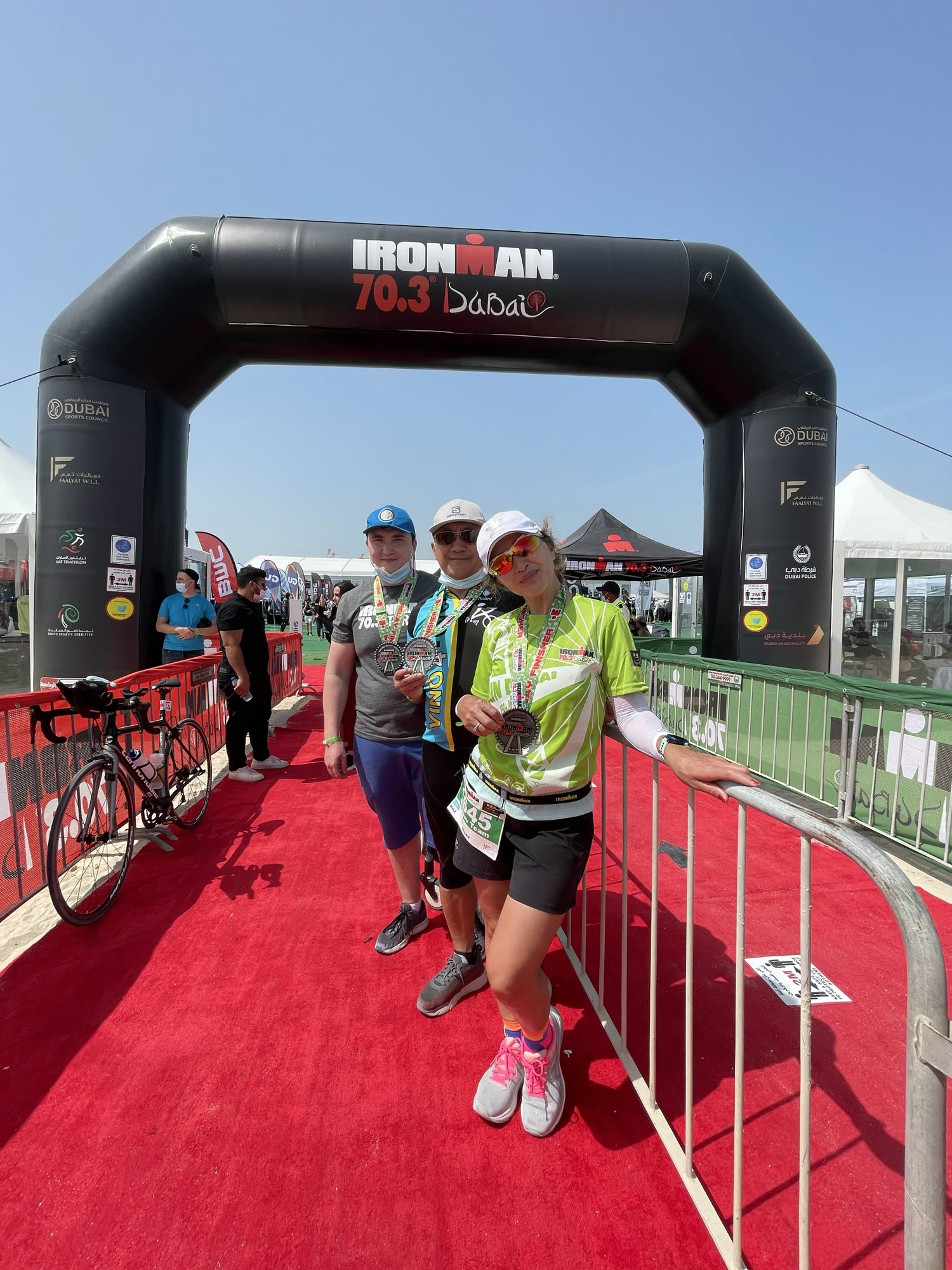
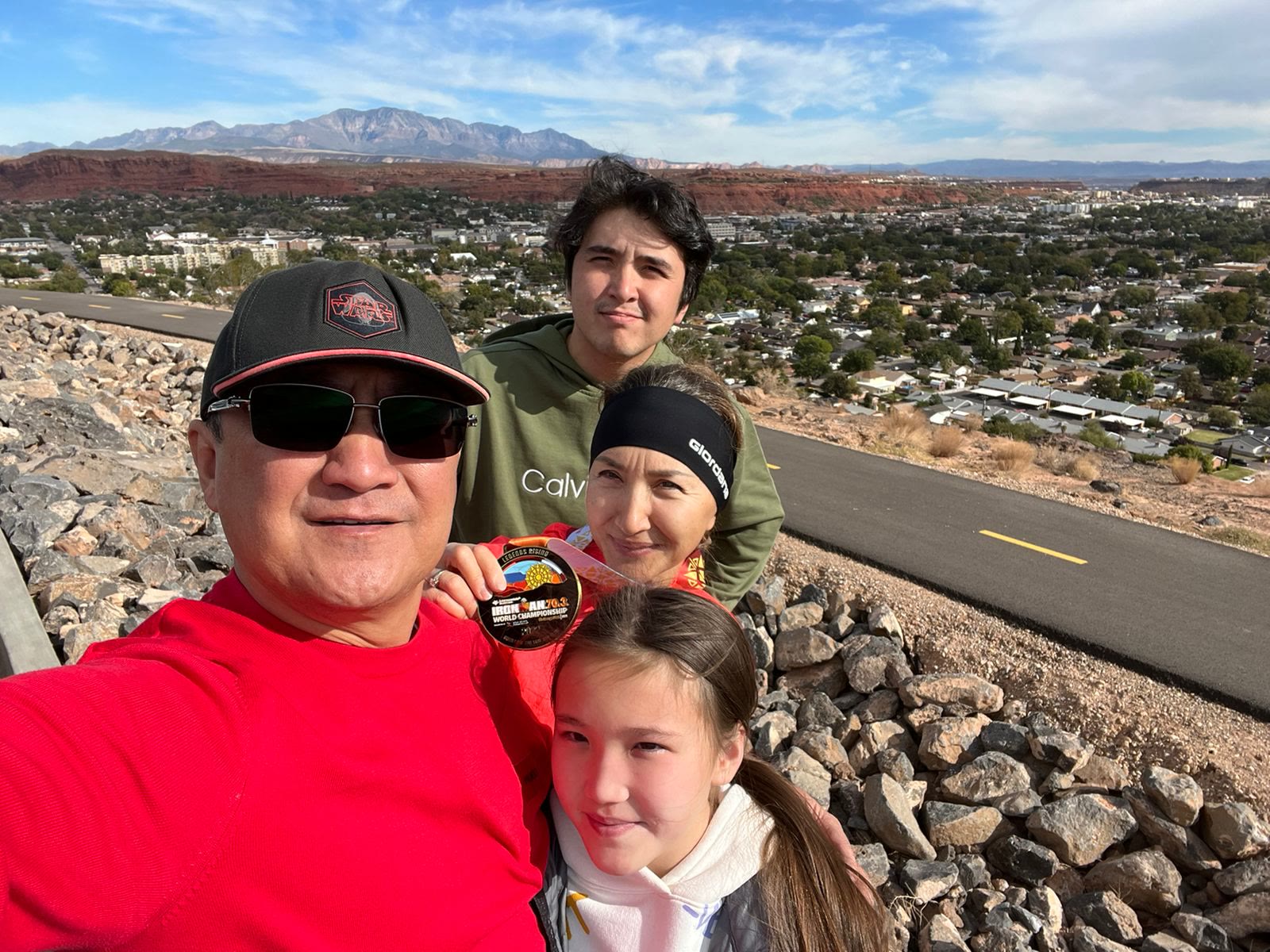
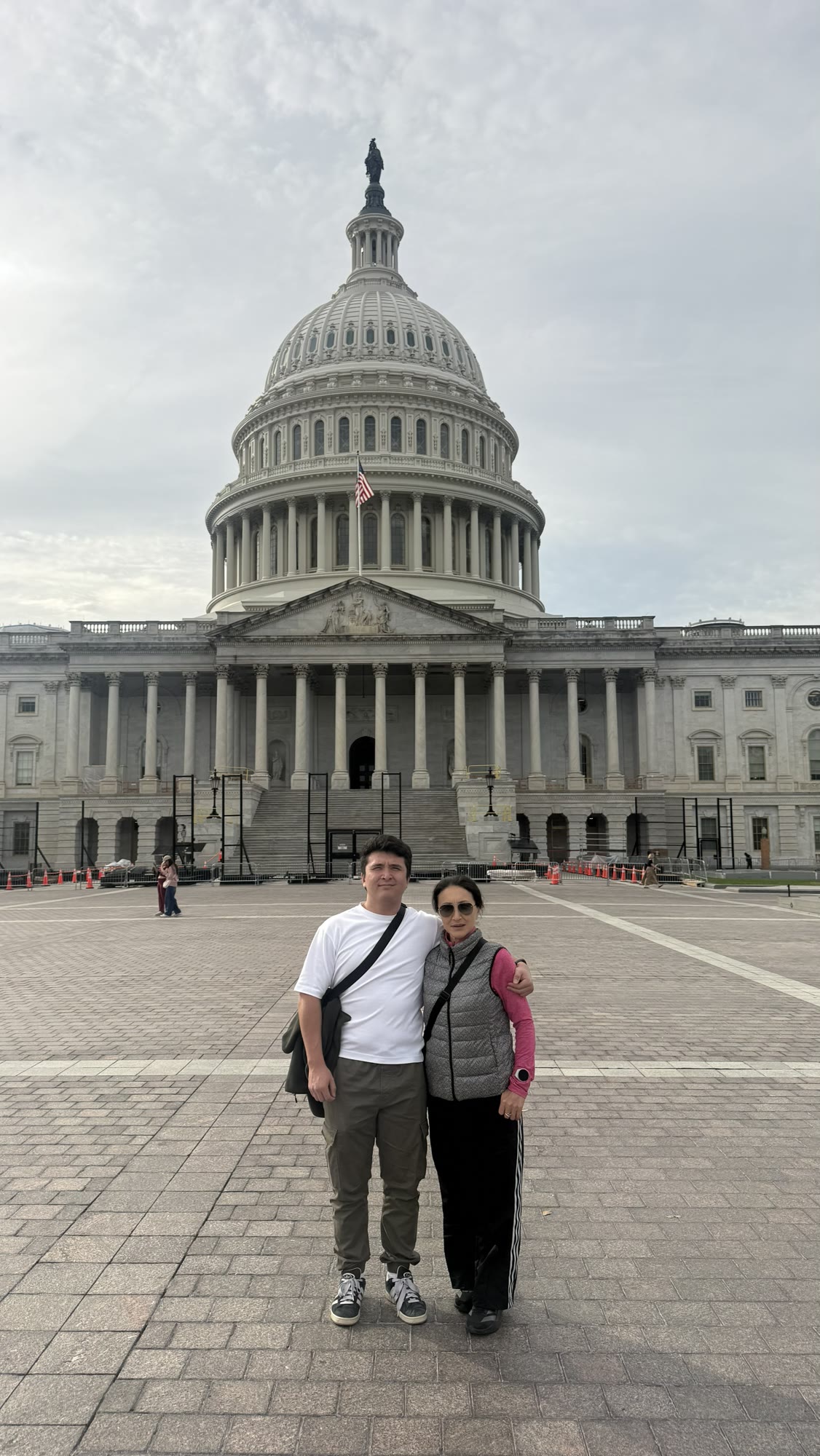
But my family supports me in more than just words. In Dubai, for example, we did a half-Ironman relay together. My children come with me to international marathons.
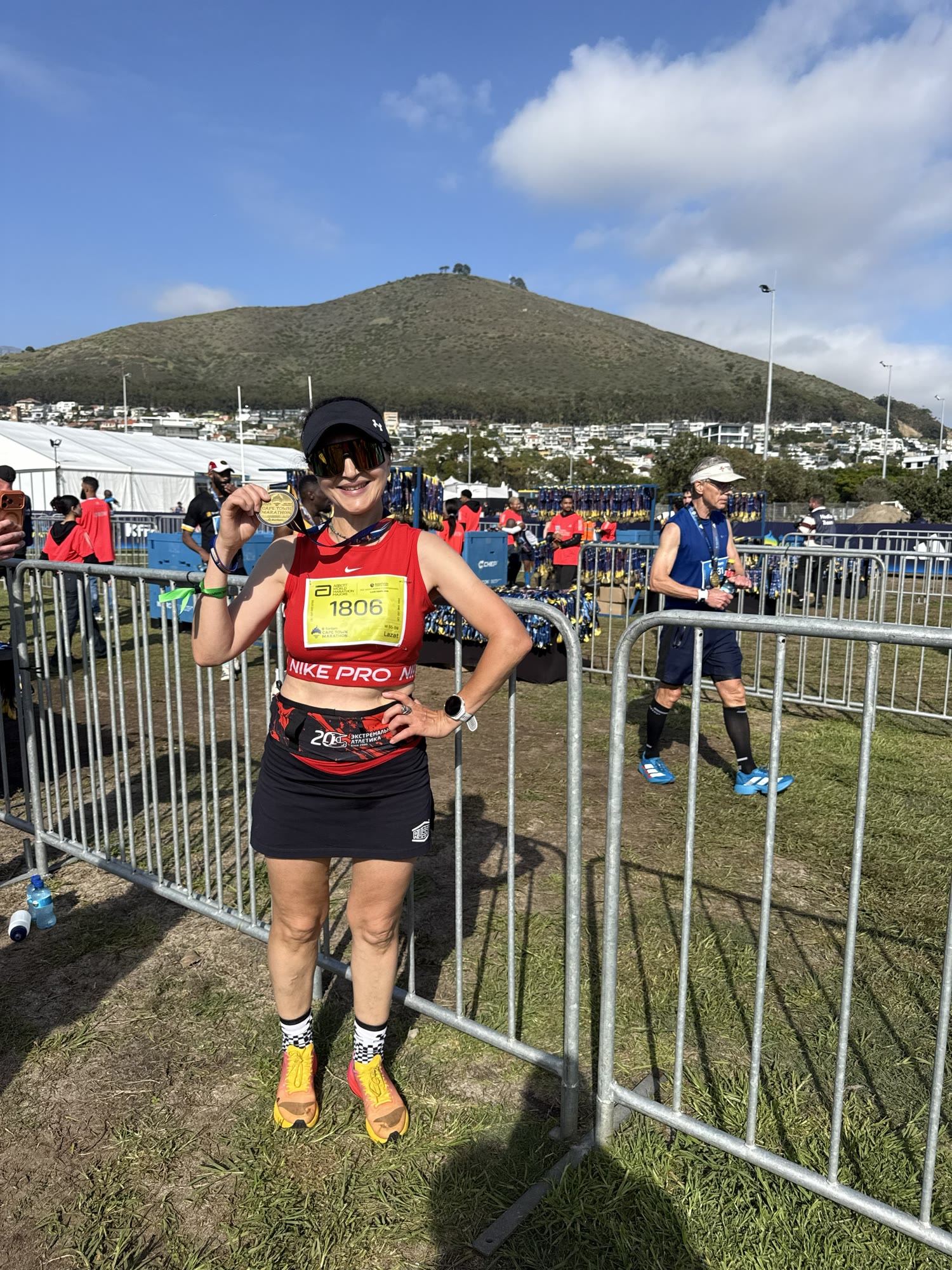
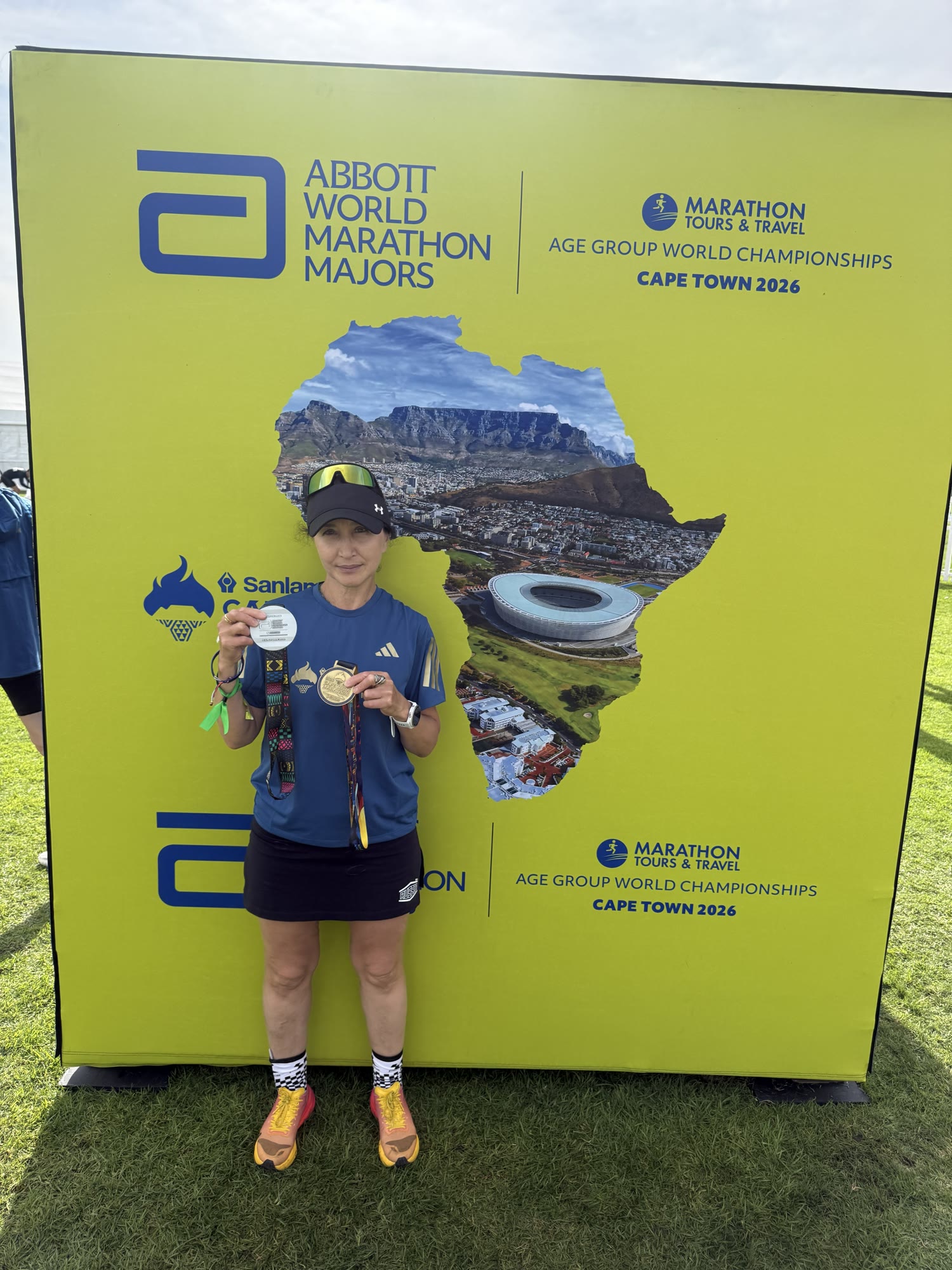
We went to Cape Town with two of our sons. There they said something very touching: “Mum, you open up horizons for us, and Dad gives us opportunities.”
I think that describes our family very accurately.
07Do your children do sport themselves?
— Yes, I have three sons and a daughter. My youngest daughter does gymnastics and has earned national sports ranks. For many years she has trained three to four hours a day and still does well at school.
I’m very proud of her.
I think we have become role models for each other. When she was little, I encouraged her not to give up training. And now she sees me getting up at five in the morning to go running.
My youngest son has also started getting up early to train.
I love that sport has become part of our family life.
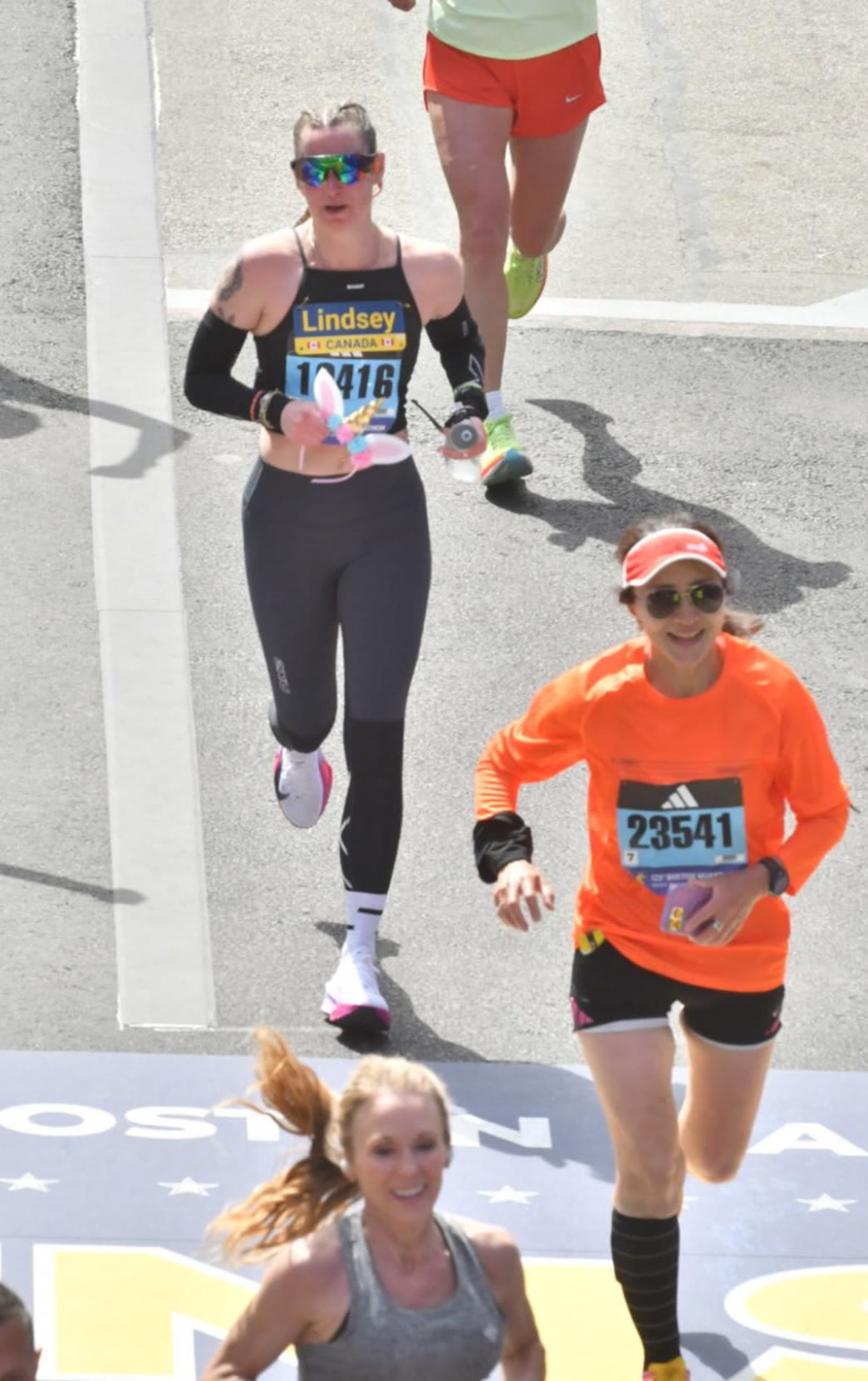
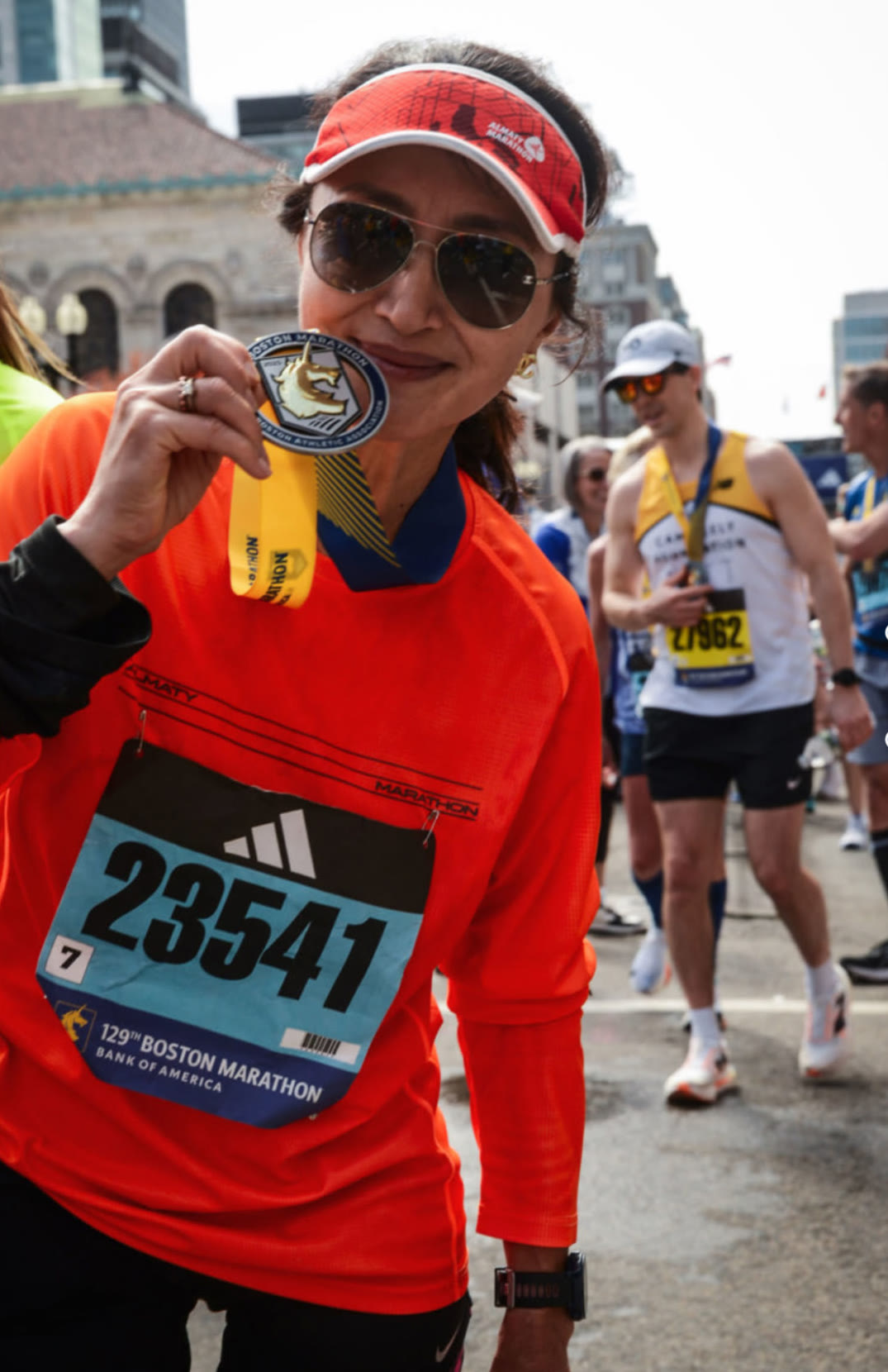
08Your personal best is 3:29:53 at the Boston Marathon. How did you achieve that?
— When I came to Igor Zhavoronok, I already had several marathons behind me, but I was hardly improving. I ran Berlin in 3:55 and London in 3:56.
I realised it was hard to improve on my own, so I came to the coach with a specific goal: I want to qualify for the Boston Marathon.
After five months of training we achieved 3:45 at the Chicago Marathon. That allowed me to meet the Boston qualifying standard.
Then came the winter build-up for Boston itself. Big volumes, training in the cold, on slippery roads, hill running.
But in the marathon itself it felt surprisingly easy. I think our Almaty hills helped. And there I set a personal best — 3:29:53.
09Tell us about your coach. How important is his role?
— Our coach, Igor Zhavoronok, is a true professional. We are very lucky that a specialist like him works with athletes in Almaty.
He has huge experience coaching professional athletes, including those preparing for the Olympic Games.
But most importantly, he takes an individual approach to every runner. Everyone gets their own sessions and their own training load.
I trust my coach completely. I tell him which race I want to prepare for, and he builds the plan from there.
Sometimes I feel like I’m already a professional athlete myself!
10And what does a typical training week look like for you?
— I usually run six times a week. There’s speed work, and long runs on Saturdays.
During a marathon build-up, the long runs gradually increase from 20 to 30 kilometres. Before the race the load is reduced.
In summer I add cycling. There are periods when I run around 400 kilometres a month.
After major races I give myself time to recover — usually about a month. That’s when I can catch up on all the household chores I didn’t have time for while training.
Sport has changed my routine a lot. I used to be a bit lazy here and there, but now I constantly set myself small goals. For example, cycling up to Medeu ten times a season.
I love the process of working towards a goal.
More than medals
11You have run marathons all over the world. What draws you to these races besides the result?
— The atmosphere! Especially at the big international marathons.
People come out onto the streets, cheer the runners on and shout their names. If your name is on your bib, complete strangers will cheer you on.
I remember running in Chicago in a vest that said New Yorker. I heard someone shouting: “New Yorker! New Yorker!” And it took me a while to realise they were shouting at me.
The emotions are incredible.
It’s not only the results that draw me to amateur sport. The positive energy that comes from the people at races keeps me charged for a long time. After one race, you already want to start training for the next.
Sport also gives you the chance to travel, discover new countries and spend time with your family.
12After the Tokyo Marathon you wrote that for the first time you wanted to drop out. Why?
— I was really counting on setting a new personal best. I was well prepared, and my coach also thought I was ready.
But perhaps I wanted it too much. Maybe I burned out.
I started a little faster than my planned pace. I held on for the first half, but then it got very hard.
For the first time in all my marathons, I wanted to stop and drop out.
But I knew how hard it is to get into the Tokyo Marathon. Some runners try for years to get a place. And I decided I had to finish.
In the end I ran it in about 3 hours 41 minutes. That’s a good result for my age, even though I didn’t manage to improve my personal best.
Every marathon teaches you something. Sometimes you are perfectly prepared, but on race day things don’t go the way you planned.
Faster doesn’t always mean better. Sometimes the most important result is the experience you gain.
13How expensive has your passion for international marathons and triathlon turned out to be?
— Of course, it’s expensive. Especially triathlon. A bike alone can cost a great deal of money. I bought mine at a discount a while ago, and I don’t even dare bring up a new one, although sometimes I’m tempted.
My international races are largely possible thanks to my husband. I understand how much it costs, and I’m very grateful for his support.
But over time our sports trips have become family holidays. Thanks to races, we have been to countries we might never have visited otherwise.
I sometimes think: after all, one of the reasons we earn money is to do what we love, travel and have new experiences.
Of course, you can simply run at home, in Almaty. And that doesn’t require huge expenses.
But we only live once. And for our family, these trips have become part of our shared story.
14How has your attitude to training load and health changed with age?
— I believe you need a sensible approach to everything.
I have regular check-ups, see a cardiologist, have my blood vessels checked and get blood tests. As you get older, you need to pay more attention to your health.
I don’t like the claim that after a certain age you shouldn’t run any more. At international marathons you see people of all ages, young and old. Everyone enjoys moving.
But that doesn’t mean you should overload your body without thinking. It’s important to monitor your health, choose the right load and not overdo it.
Right now I’m interested in discovering what I’m capable of. How much more can I improve my 10K, half marathon and marathon times?
Yes, it’s harder to progress as you get older. But I want to try.
15What sporting goals are you setting yourself now?
— I want to keep running and improving my results.
Another goal is to complete the TAN marathon series, which brings together races in Almaty, Turkestan, Baku, Bishkek and Samarkand.
I’ve already run the first one, in Samarkand. Four more to go.
I like having a goal ahead of me. It gives me extra motivation to train.
16What would you say to a woman of 50–60 who has never run but would like to start?
— The main thing is the desire. And you don’t need to set yourself big goals straight away.
You can start with walking, gradually increase the load and then add running. Don’t rush, and don’t compare yourself with others.
If you have any health problems, be sure to consult a doctor and find the right level of exercise.
You don’t need expensive gear to start. I started in ordinary tracksuit bottoms, without a Garmin watch. I ran with my phone to know the distance. The main thing is a good, comfortable pair of running shoes.
Then, if you enjoy it, you can set yourself a goal: run five or ten kilometres, take part in a race.
And most importantly — enjoy it.
Life doesn’t end at 50 or 60. On the contrary, when the children have grown up and you have more time for yourself, you can discover completely new possibilities.
Sport should bring you joy. Then you’ll want to keep going.